Quick answer
- Marrakech by day
- About 20 °C
- Nights around 7 °C
- Sahara at night
- Around 5–6 °C
- Sunny days around 20 °C
- Season
- Shoulder season
- Quiet early in the month, busier in mid-February
- Ramadan
- From about 8 February 2027
- Dates depend on the moon
Need a driver? We can arrange your transfer — message us on WhatsApp.
February is when Morocco starts to wake up from winter. The days get longer and warmer, almond trees blossom in the valleys of the Anti-Atlas, the High Atlas is still capped with snow, and the Sahara has some of the most comfortable weather of the year.
Nights are still cool and a few rainy days are possible in the north, but most of the country is bright and pleasant. This guide explains what February is really like in each region, where to go, how Ramadan may affect your trip, and how to enjoy the desert at its best.
The short answer: is February a good time to visit Morocco?
- Yes. February is one of the best months for touring, with sunny days of 17–22 °C in the cities, the south and the desert.
- Nights are cool rather than freezing: around 5–7 °C in Marrakech, Fes and Merzouga, colder in the mountains.
- It is the start of spring in the south. Almond trees blossom around Tafraoute and in the Anti-Atlas, usually in February.
- The first half of the month is quiet. European school holidays in mid-February bring more visitors, so book the desert early for those weeks.
- In 2027, Ramadan is expected to start around 8 February. Travel is still easy, but daily rhythms change.
February weather in Morocco, city by city
Typical February values. Real days can be warmer or colder, and the weather changes quickly in the mountains.
| Place | Day | Night | Rainy days | What it feels like |
|---|---|---|---|---|
| Marrakech | 20 °C | 7 °C | About 4 | Warm and sunny by day, cool evenings |
| Fes | 17 °C | 5 °C | About 7 | Mild, with some showers |
| Chefchaouen | 15 °C | 6 °C | About 9 | Green and fresh, the wettest stop |
| Ouarzazate | 20 °C | 4 °C | Rare | Bright days, cold nights |
| Merzouga (Sahara) | 20 °C | 6 °C | Rare | Dry and sunny, ideal for the dunes |
| Agadir | 22 °C | 9 °C | About 3 | The warmest city; sea around 17 °C |
| Imlil (High Atlas, 1,740 m) | 9 °C | −1 °C | Several | Snow still likely on the peaks |
Approximate climate averages, not a forecast. Rain usually comes in short spells.
Pros and cons of visiting in February
| Good reasons to go | Things to plan for |
|---|---|
| Warm, sunny days in the south and the desert | Cool nights, especially in the desert and mountains |
| Almond blossom in the Anti-Atlas | Mid-February school holidays fill camps and riads |
| Snowy Atlas views without deep winter cold | Some rain in Fes, Chefchaouen and the north |
| Longer days, with about 11 hours of light | Ramadan may start during the month |
| Prices still lower than in March and April | Atlantic coast can be windy |
Almond blossom in Tafraoute and the Anti-Atlas
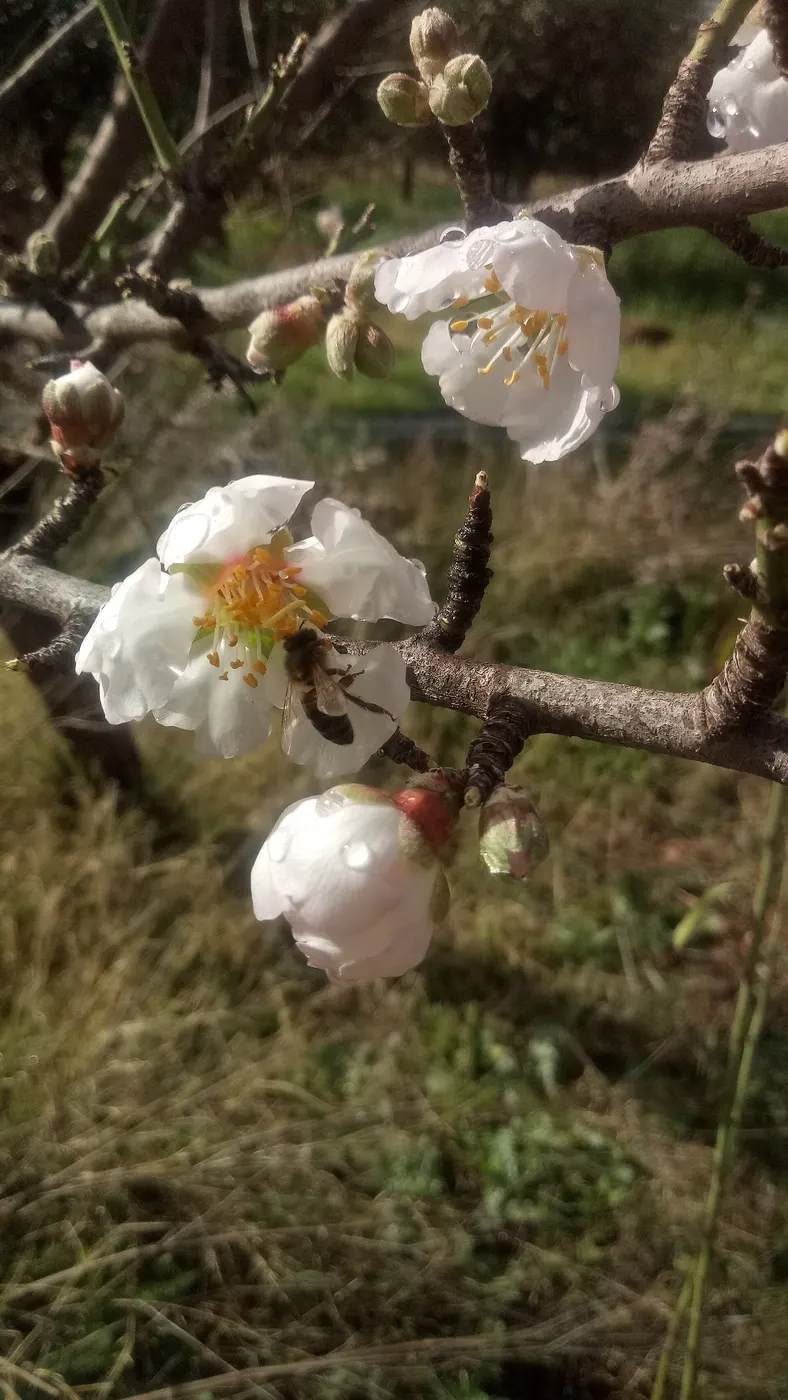
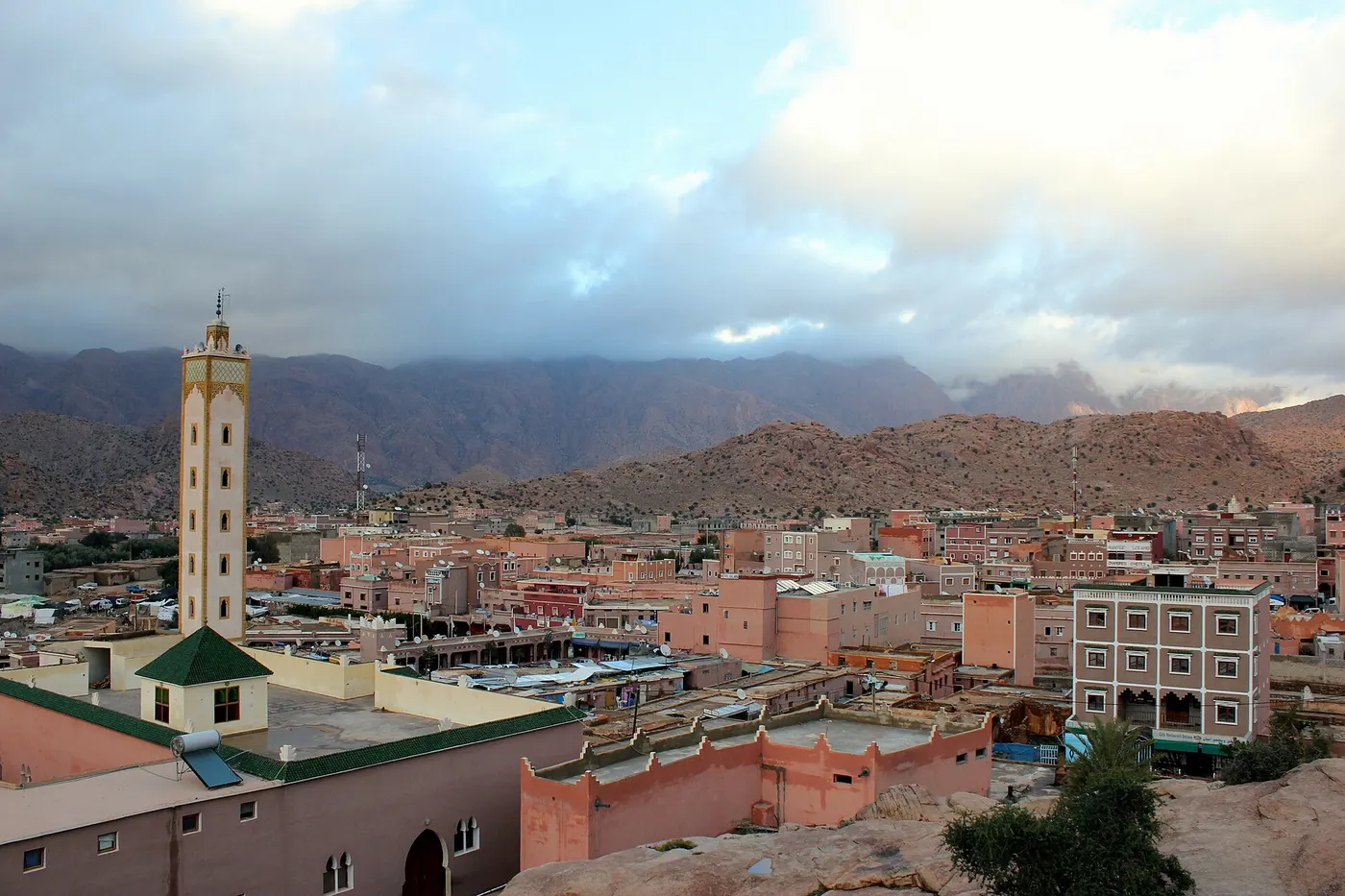
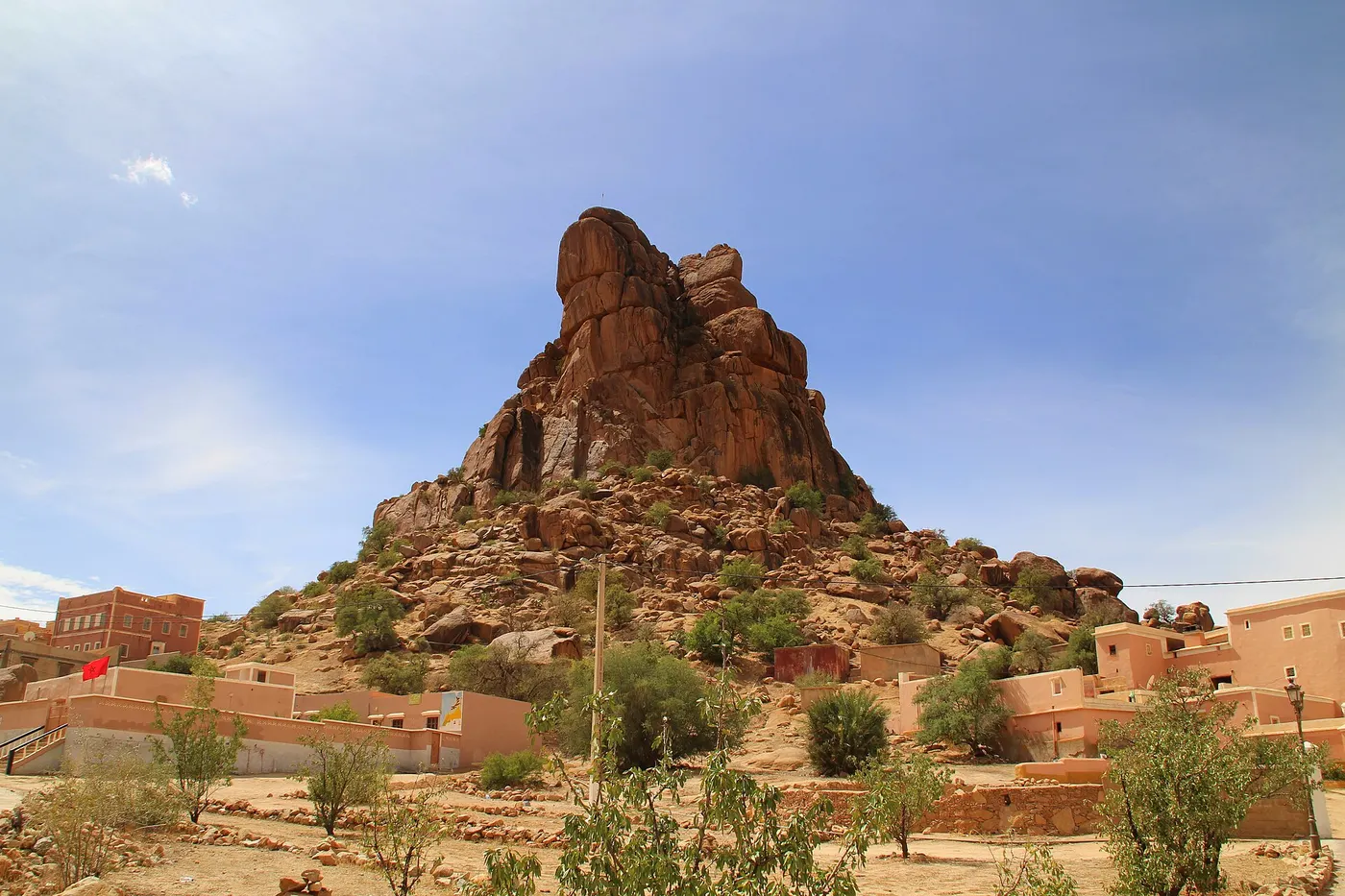
February’s special sight is the almond blossom. In the Ameln Valley around Tafraoute, in the Anti-Atlas south of Agadir, thousands of almond trees flower white and pale pink between pink granite boulders and old stone villages. Blossom usually peaks in February, but it can come earlier or later depending on the winter rains.
Tafraoute often celebrates with an almond festival around this time, with music, local products and dancing; dates change every year, so check locally. Nearby, Napoleon’s Hat rock, the Painted Rocks and the palm-filled Aït Mansour gorge make a beautiful two- or three-day detour from Agadir or Marrakech.
Marrakech in February
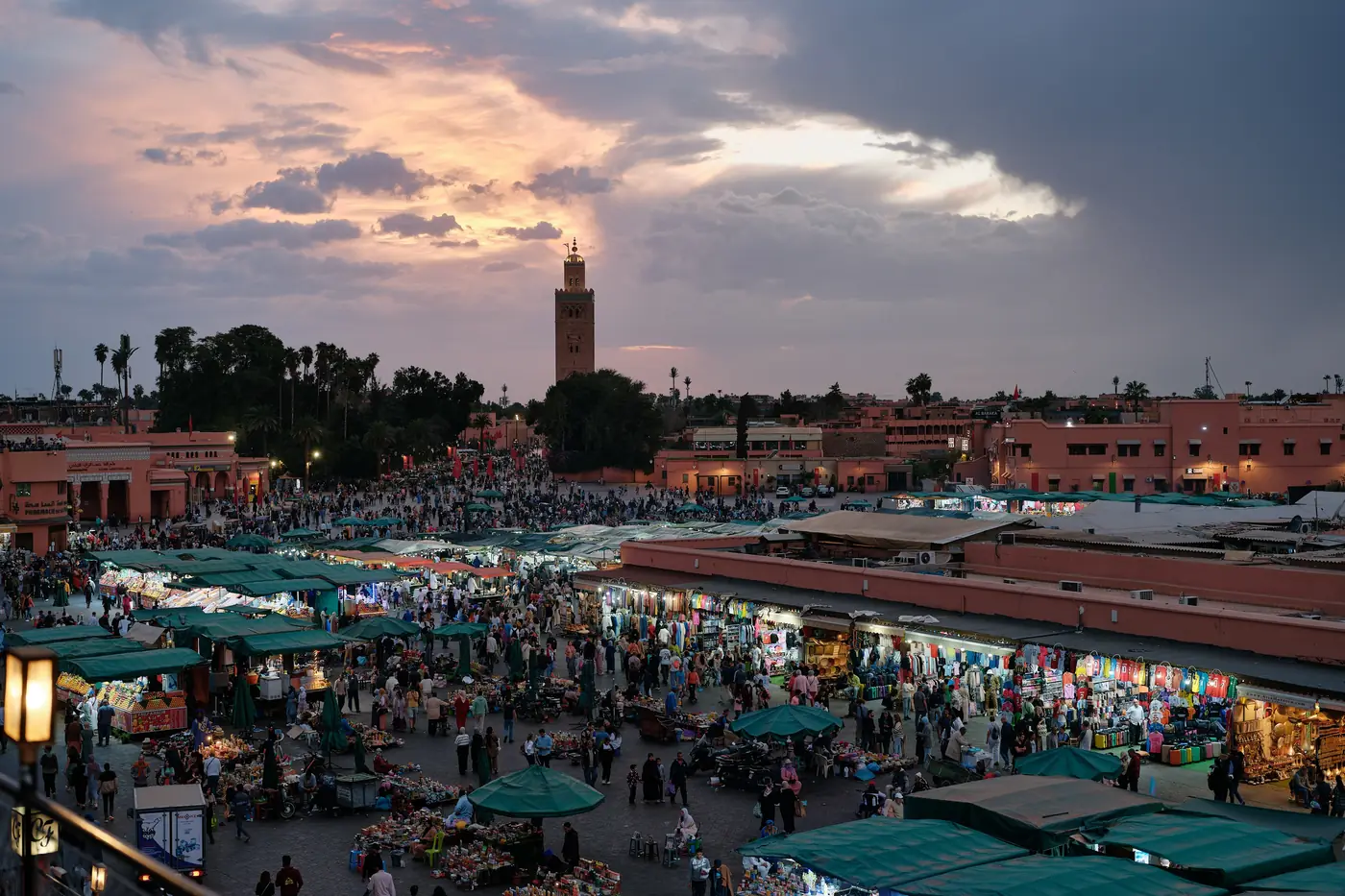
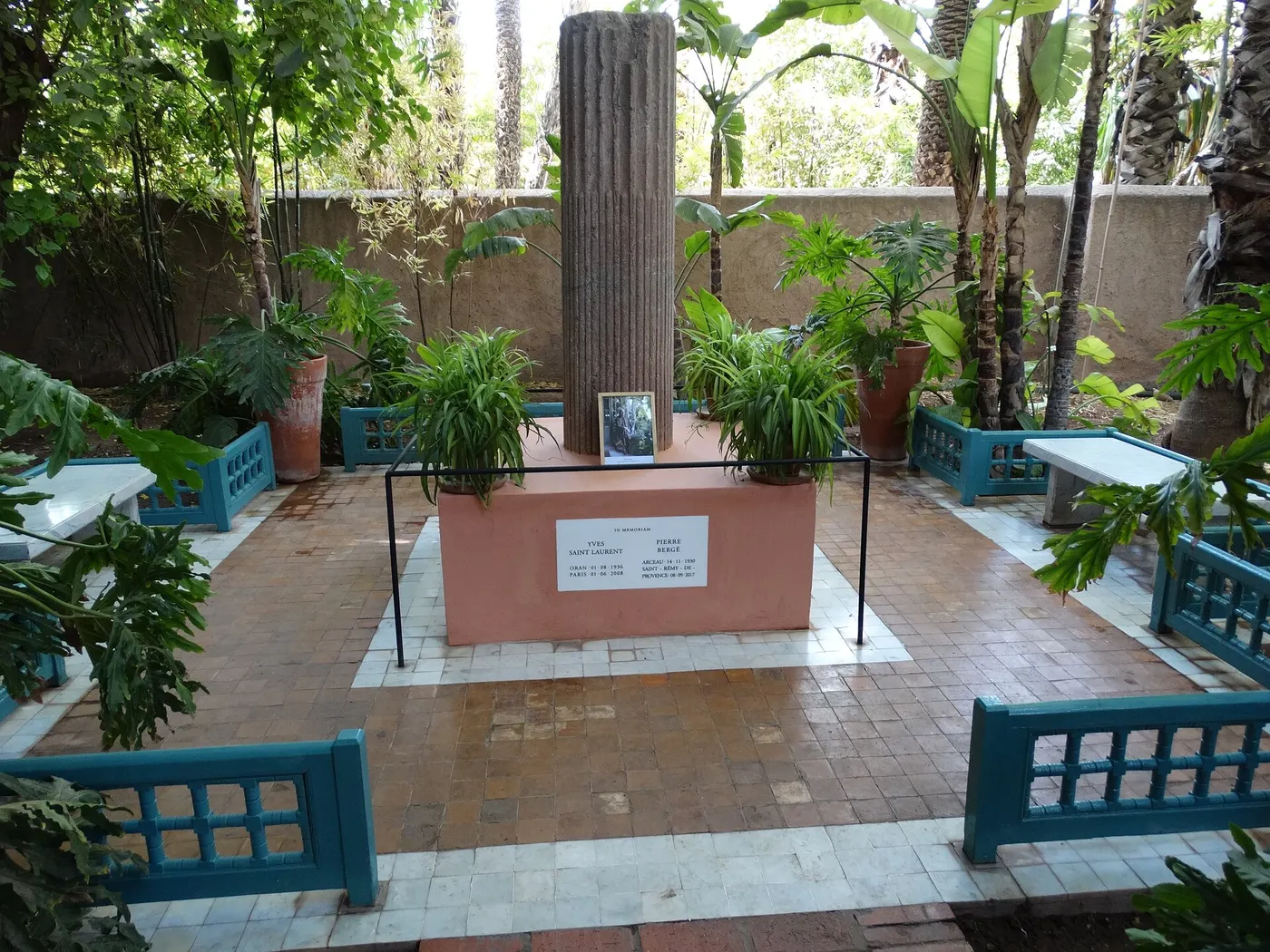
Marrakech is at its most pleasant in February. Afternoons are warm enough to sit on café terraces and wander the souks without the summer heat, gardens such as the Jardin Majorelle and the Agdal begin to bloom, and the snowy High Atlas often shines on the horizon.
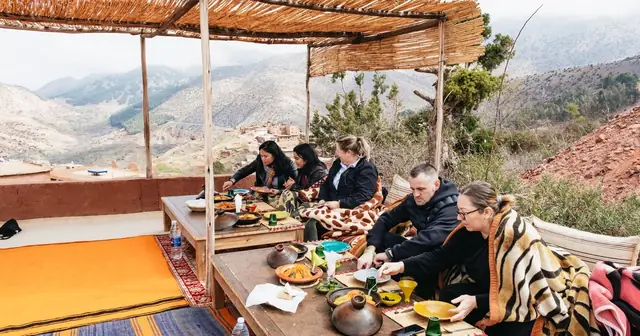
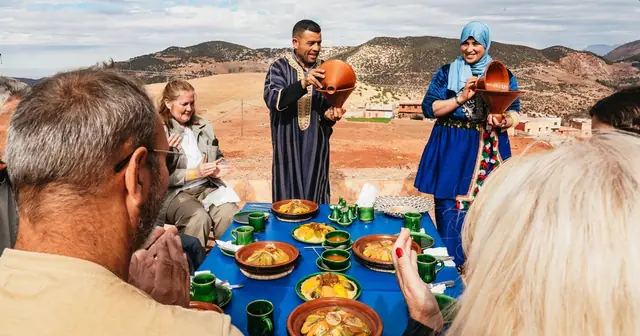
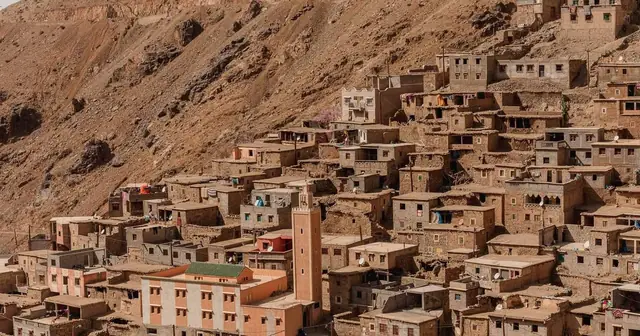
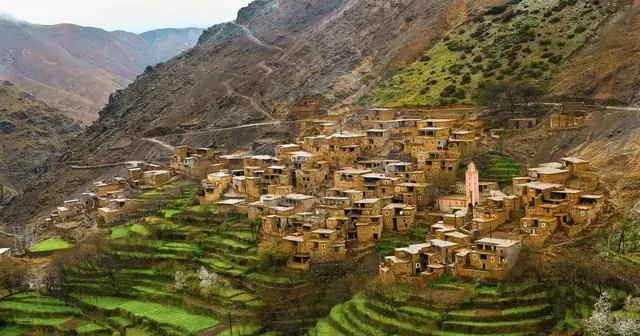
Evenings are still cool, so bring a layer for dinner. From Marrakech, the Atlas Mountains, Imlil and the Ourika Valley are easy day trips, with snow on the peaks and flowing streams in the valleys.
Atlas Mountains day trips from Marrakech for February
Partner links: if you book through GetYourGuide we may earn a small commission, at no extra cost to you. Tours are run by independent operators.
Fes, Chefchaouen and the north
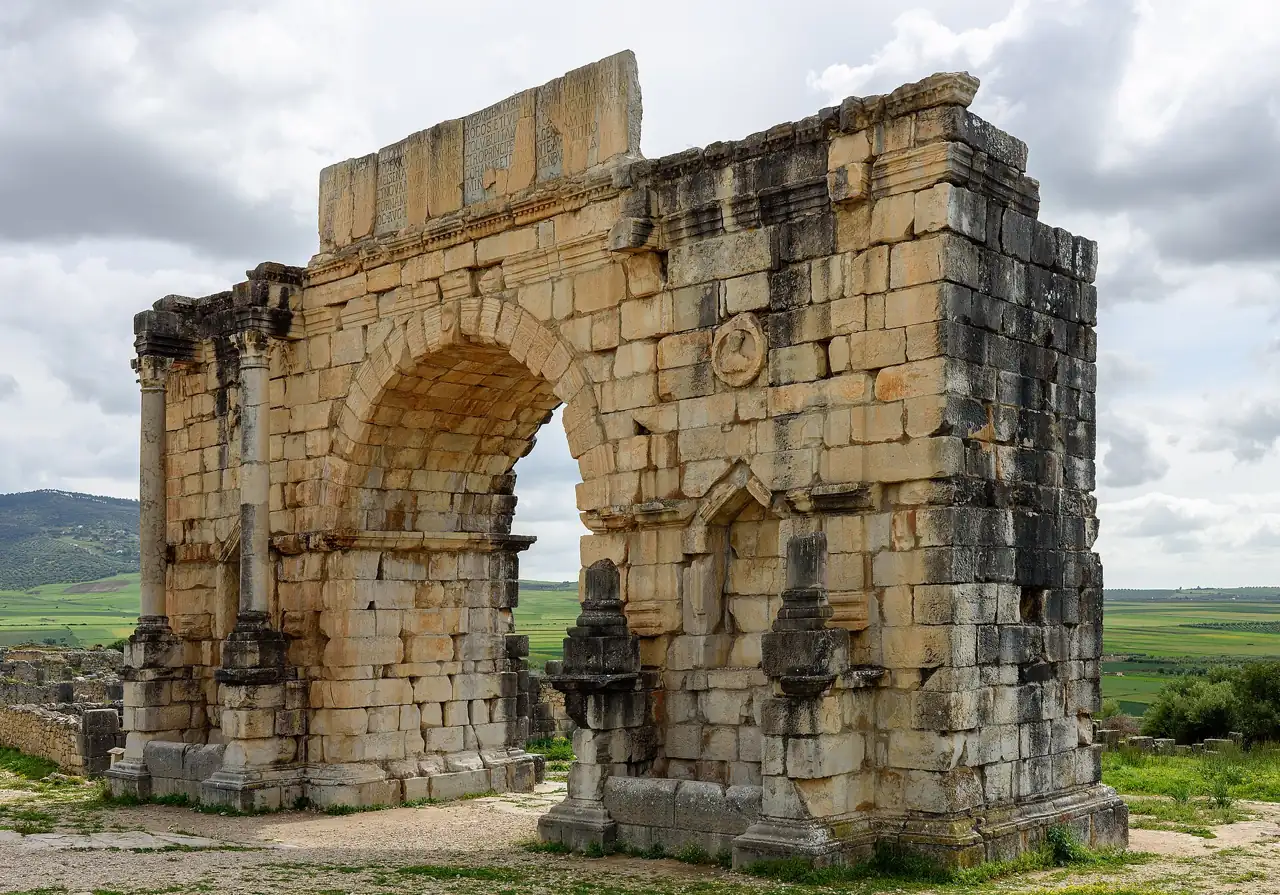
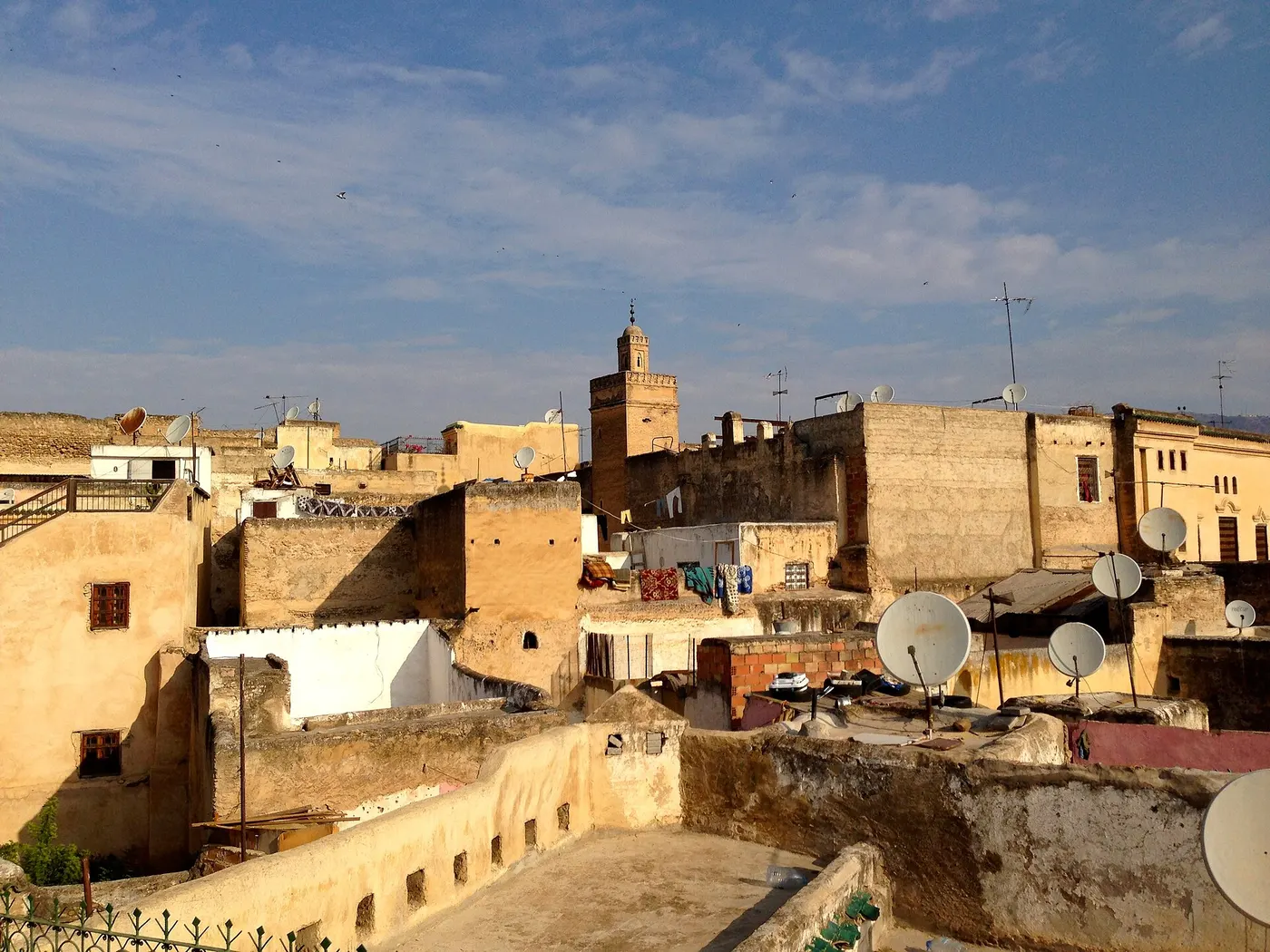
Fes is mild in February, with a mix of sunny and showery days. It is a good month for the medina: comfortable for walking, with few groups in the tanneries and madrasas. On a dry day, Volubilis and Meknes make an excellent day trip.
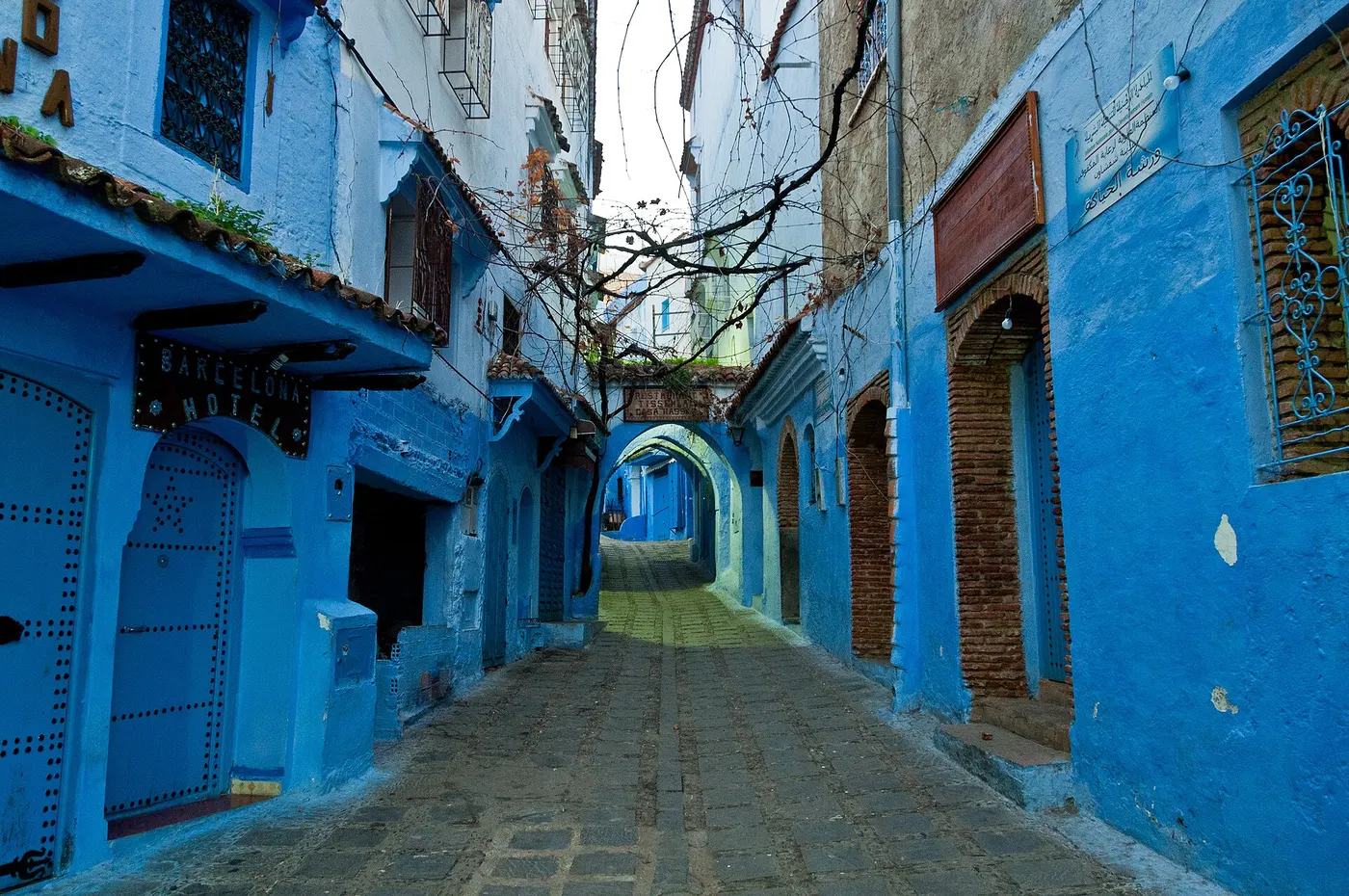
Chefchaouen is fresh and green after the winter rain. Keep its day flexible and bring a waterproof jacket. From Fes, the road to the Sahara crosses the Middle Atlas, where cedar forests around Ifrane and Azrou may still have snow.
The south: Ouarzazate, the Draa and the valleys
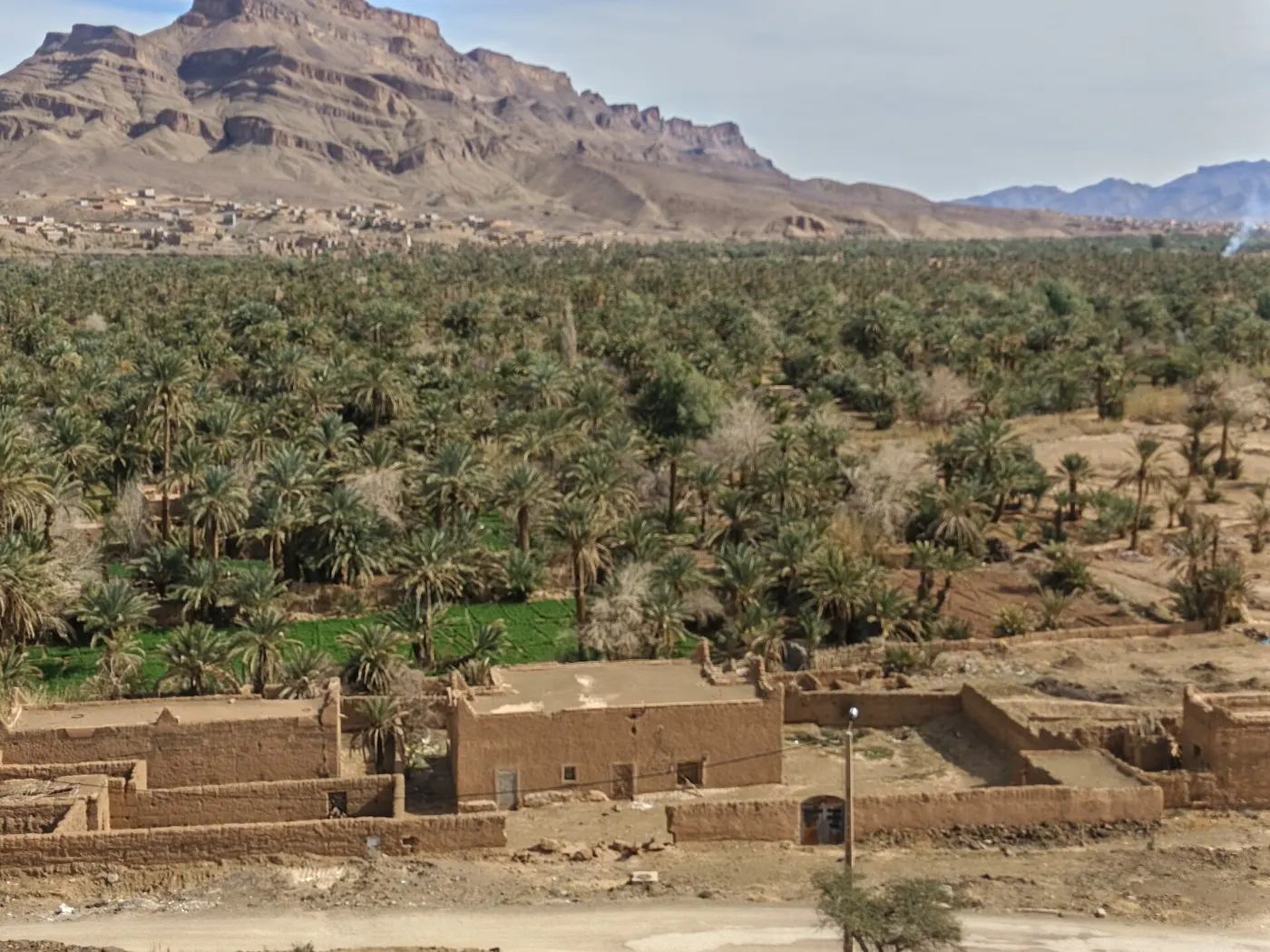
South of the High Atlas, February is sunny and dry. Aït Ben Haddou, Ouarzazate and the Skoura oasis are comfortable to explore, and the palm groves of the Draa Valley around Agdz are green against the bare mountains. The Dades Valley and the Todra Gorge are lovely in the soft winter light, though the gorge stays cold in the shade.
Nights are cold in this high desert region, so choose heated rooms. The Tizi n’Tichka pass between Marrakech and Ouarzazate is usually open, but it can close for a few hours after a snowfall.
The Sahara in February
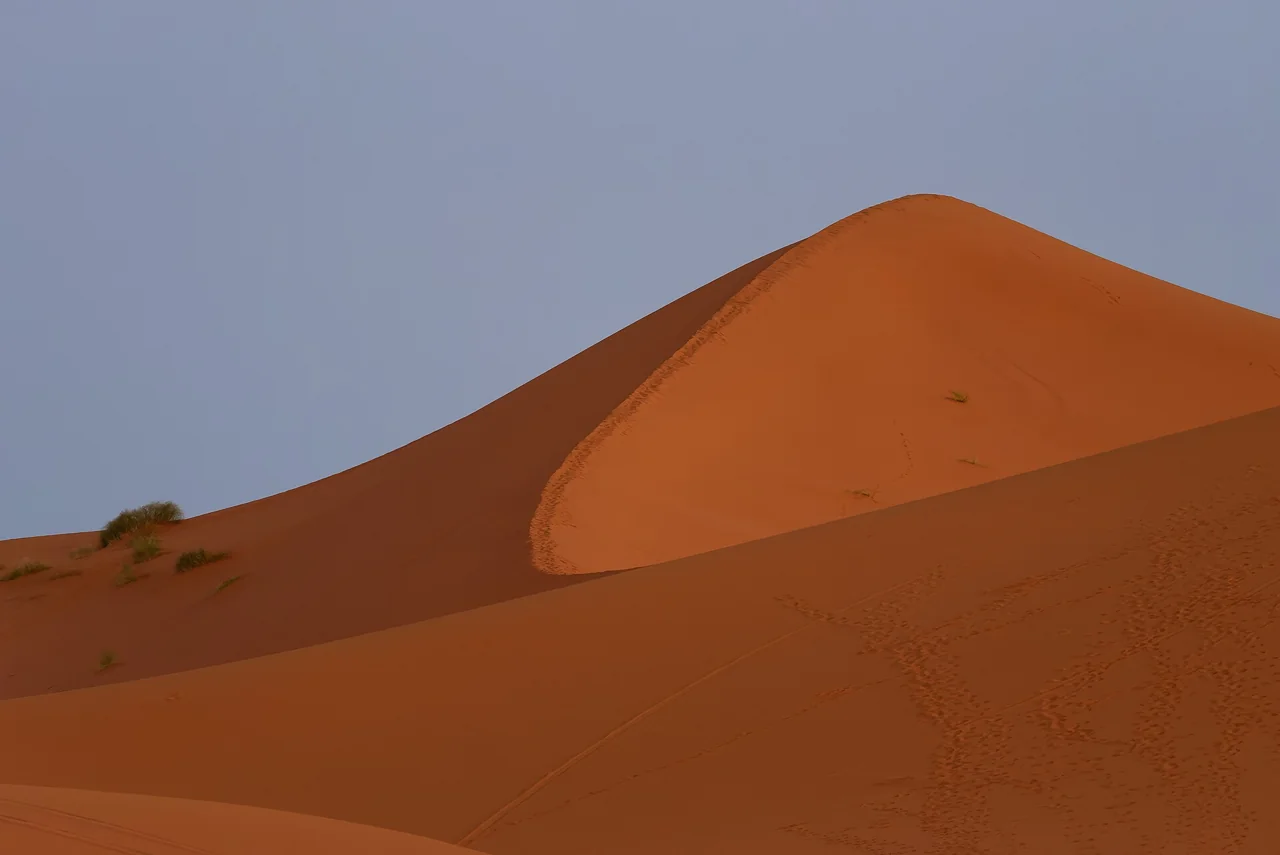
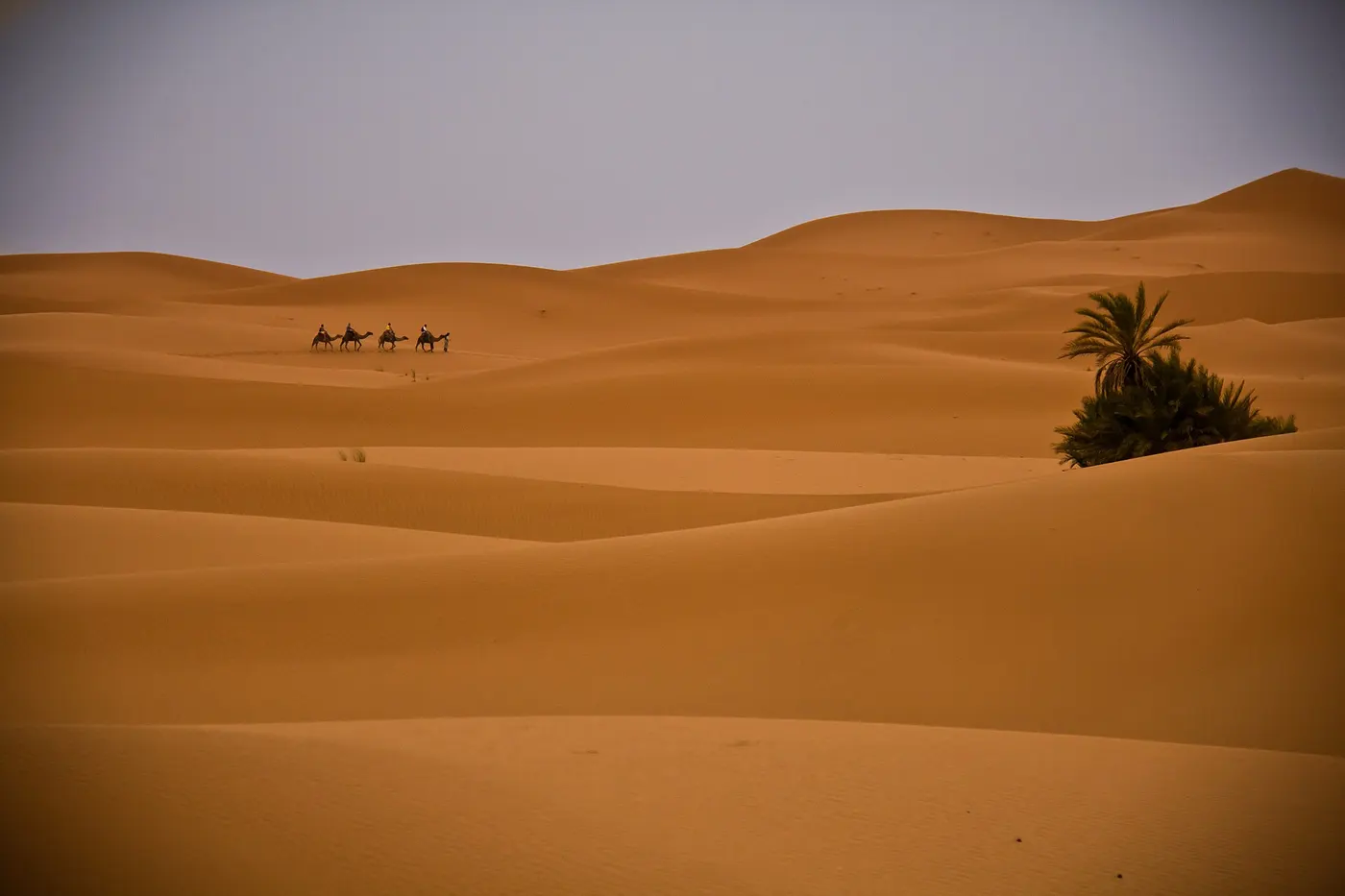
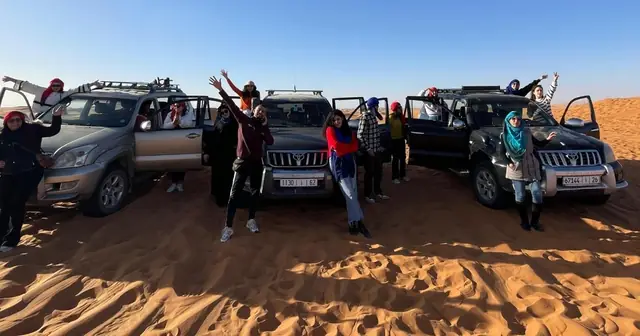
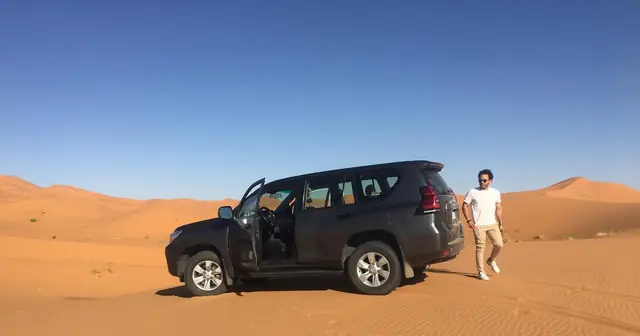
February is one of the best months in the desert. Days in Merzouga are usually sunny and around 20 °C, perfect for a camel ride, a 4x4 tour, sandboarding or horse riding, and for climbing the high dunes of Erg Chebbi in the afternoon.
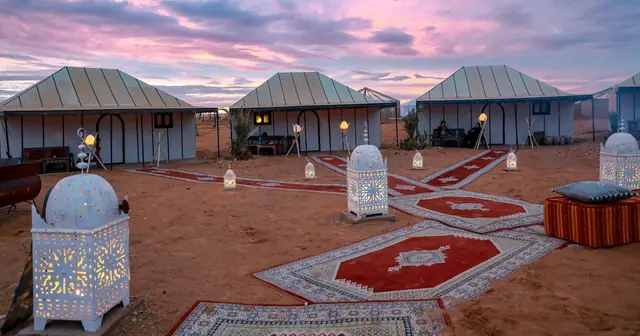
After sunset it cools quickly, to around 5–6 °C, so evenings are spent by the fire under a sky full of stars. Sandstorms are rare but possible towards the end of the month, when the spring winds begin. A heated tent with a private bathroom makes the night comfortable.
These hand-picked activities in Merzouga are easy to enjoy at any time of day in February.
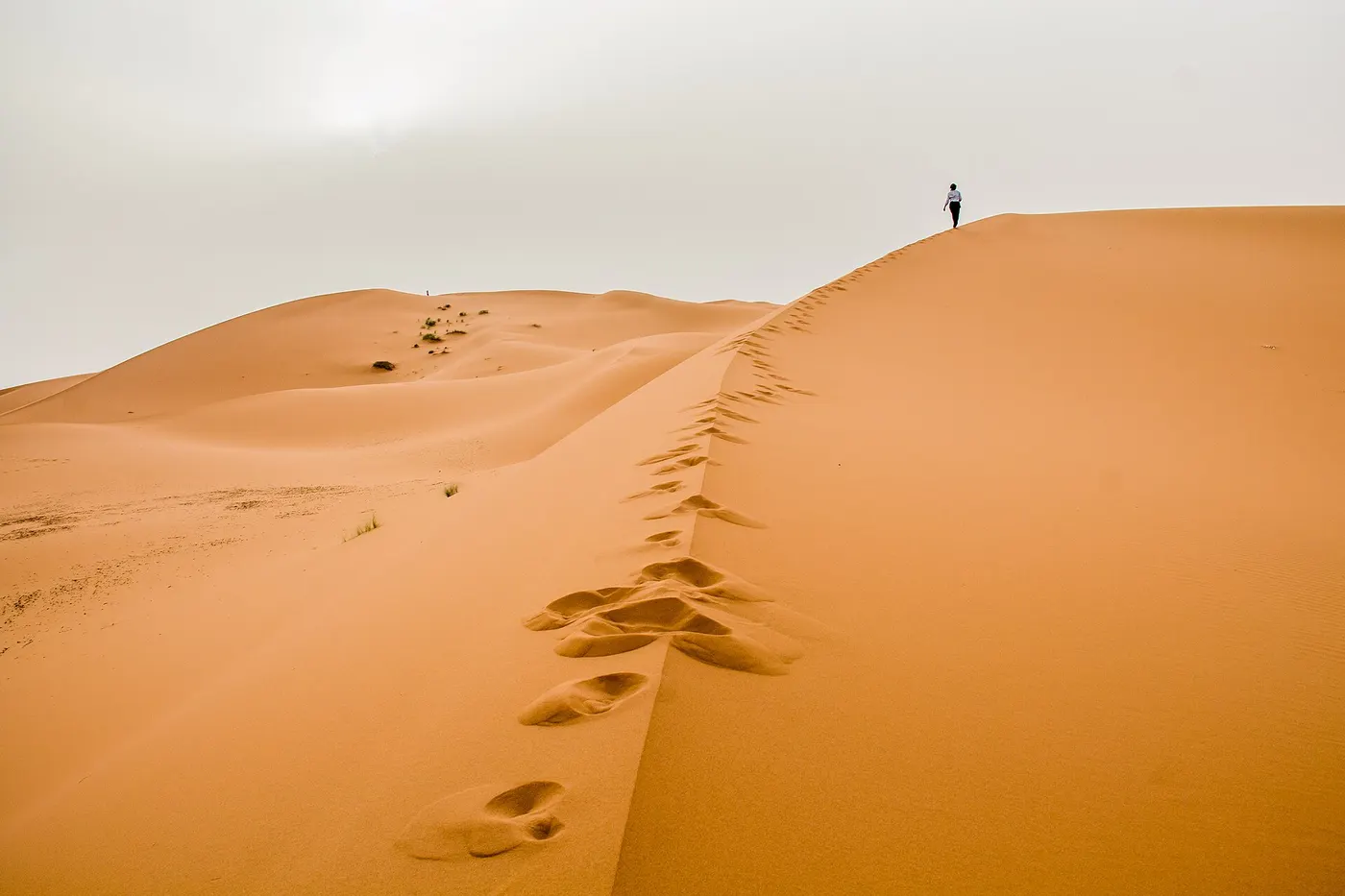
Things to do in Merzouga
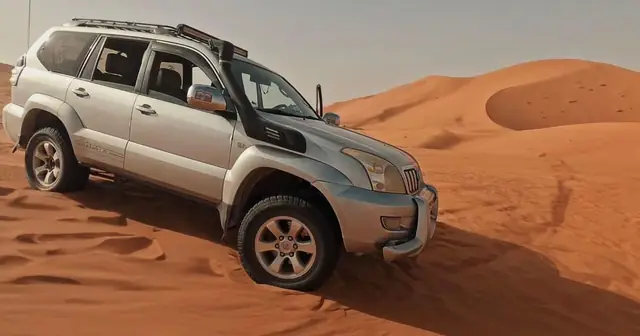
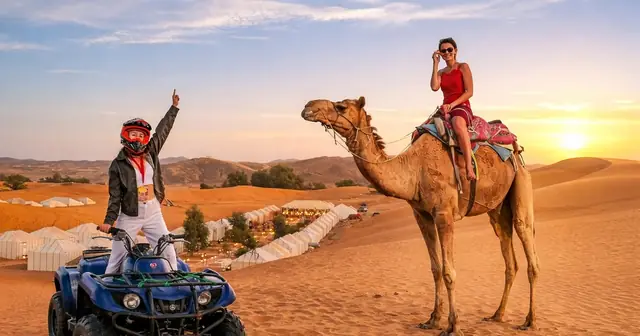
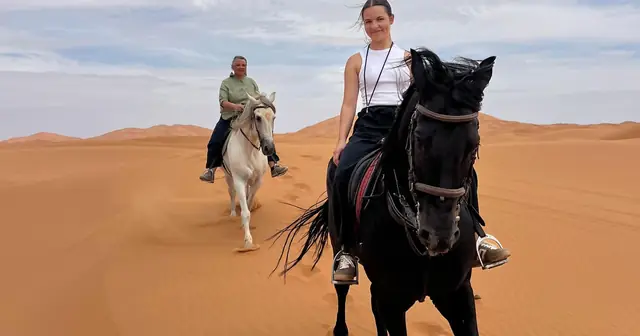
Partner links: if you book through GetYourGuide we may earn a small commission, at no extra cost to you. Tours are run by independent operators.
The coast: Essaouira and Agadir
Agadir is the warmest place in February, around 22 °C, with long sunny beaches, though the sea is fresh. It is also the gateway to Tafraoute and the almond valleys.
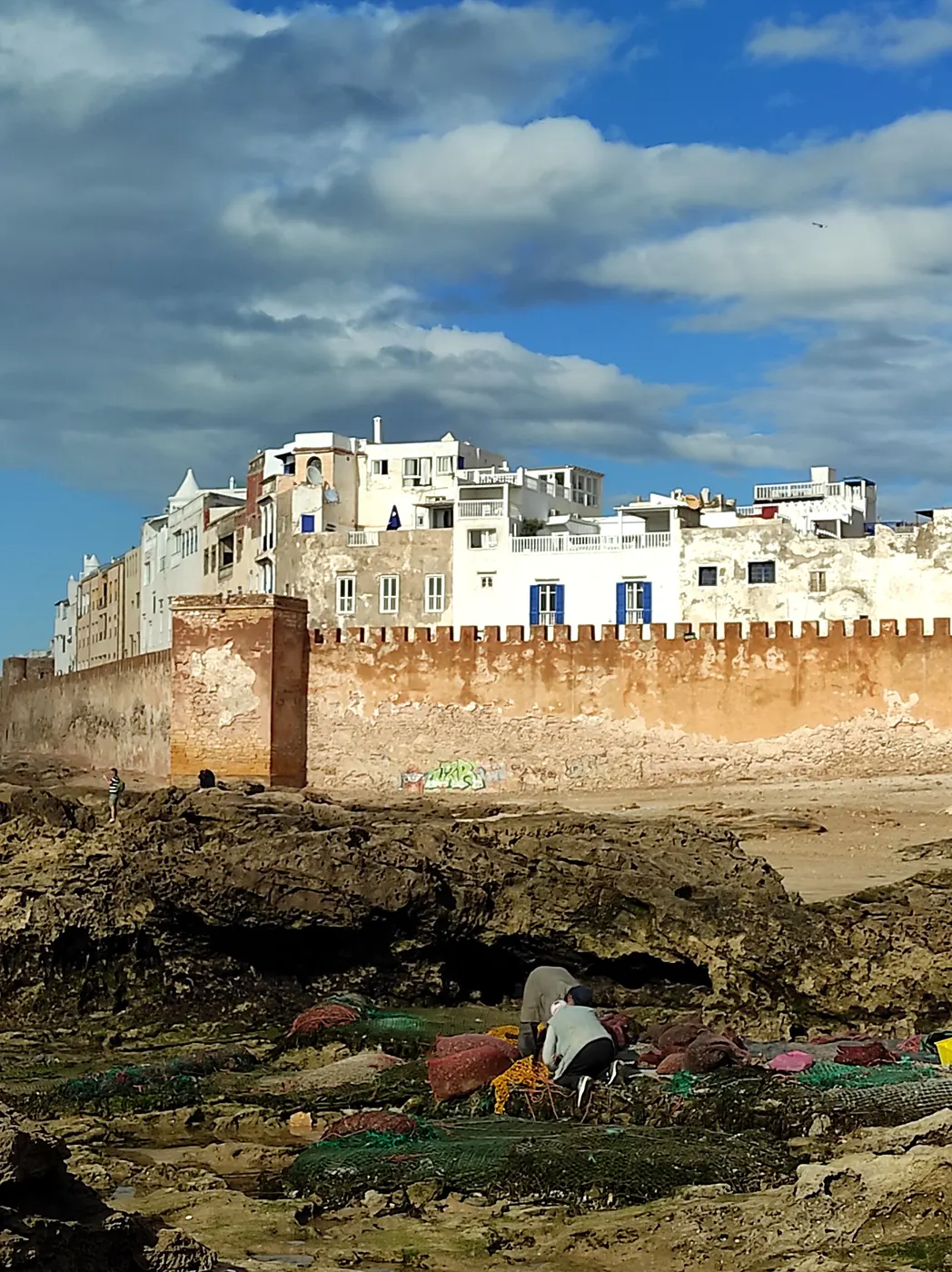
Essaouira is mild but windy, which makes it popular with kitesurfers and windsurfers. Its white medina, blue boats and sea walls make a relaxing stop after the desert or an easy day trip from Marrakech.
Ramadan and events in February
- Morocco has no fixed public holidays in February, so banks, sites and shops keep normal hours outside Ramadan.
- In 2027, Ramadan is expected to begin around 8 February and end around 9 March with Eid al-Fitr. The exact dates depend on the sighting of the moon.
- During Ramadan, many Moroccans fast from dawn to sunset. Tourist sites, hotels and desert camps stay open, and restaurants for visitors serve food, but some cafés close during the day and opening hours are shorter.
- Evenings come alive after the sunset meal, called ftour. Trying harira, dates and chebakia at ftour is a memorable experience.
- Be discreet about eating, drinking and smoking in public during the day. Ramadan moves about 11 days earlier each year, so check the dates for your own trip.
- Tafraoute’s almond festival is usually held in February or March; dates change every year.
A 9-day February route: blossom, valleys and the Sahara
This route follows the sun, includes the almond valleys and gives you two nights in the desert. It ends in Fes; reverse it if you fly into Fes.
- 1
Days 1–2 · Marrakech
Souks, palaces and gardens in the spring sunshine, plus a day trip to the snowy Atlas.
- 2
Day 3 · To Tafraoute
Drive south over the Atlas to the Anti-Atlas and the almond valleys around Tafraoute.
- 3
Day 4 · Almond country
Explore the Ameln Valley, Napoleon’s Hat, the Painted Rocks and the Aït Mansour gorge.
- 4
Day 5 · To Ouarzazate
Cross to Ouarzazate and visit Aït Ben Haddou in the late-afternoon light.
- 5
Day 6 · Dades and Todra to Merzouga
Drive through the Dades Valley, walk the Todra Gorge and reach the dunes for sunset.
- 6
Day 7 · The Sahara
A 4x4 tour, a camel ride, sandboarding or horse riding, then a starry night at the camp.
- 7
Days 8–9 · To Fes
Drive north through the Ziz Valley and the Middle Atlas cedars to Fes, then explore the medina.
Desert tours to Merzouga in February
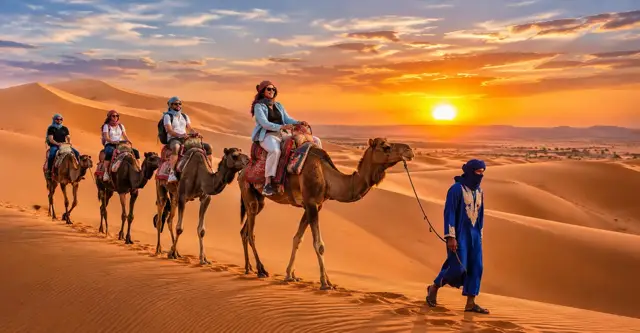
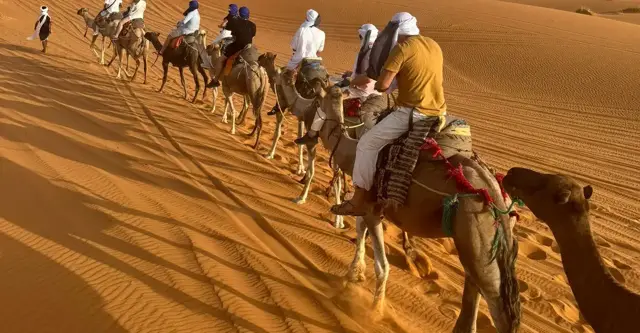
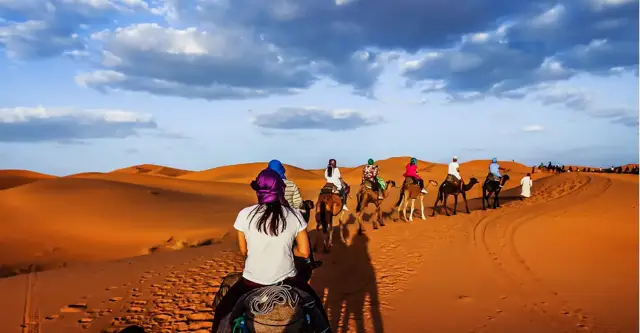
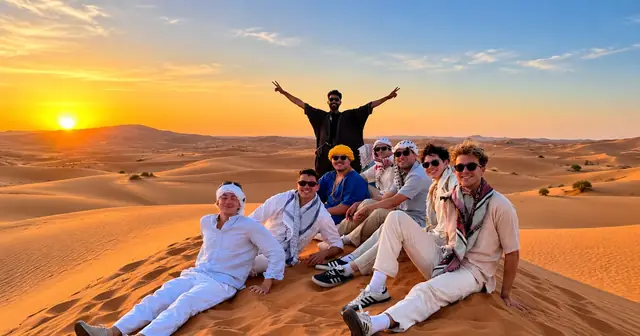
If you prefer not to drive, a guided tour is the easiest way to reach the dunes. We picked four tours that go to Merzouga: a 3-day and a 4-day tour from Marrakech, a 2-day tour from Fes and a 3-day tour from Fes to Marrakech.
In mid-February and during school holidays, book a few weeks ahead, and ask whether the camp has heated tents and private bathrooms.
Desert tours to Merzouga for February
Partner links: if you book through GetYourGuide we may earn a small commission, at no extra cost to you. Tours are run by independent operators.
What to pack for Morocco in February
- A warm jacket or fleece for evenings, the desert and the mountains.
- Layers: T-shirts and long-sleeved tops for warm afternoons, plus a jumper for cool mornings.
- A beanie and light gloves for desert sunrises and mountain days.
- A light waterproof jacket for Fes, Chefchaouen and the north.
- Sunglasses, a hat and sun cream: the February sun is strong on the sand.
- Comfortable walking shoes for medina lanes and the dunes.
- Modest clothes that cover shoulders and knees, especially during Ramadan.
What does February cost?
February is still good value, especially in the first half of the month.
| Period | Prices | Availability |
|---|---|---|
| Early February | Low-season prices | Easy to find riads, drivers and camps |
| Mid-February school holidays | Higher | Book the desert and riads a few weeks ahead |
| Late February | Rising towards spring | Popular camps start to fill |
| During Ramadan | Often normal or lower | Quieter, with shorter opening hours |
General trend for tourist services; exact prices depend on the property and the tour.
Spend a February night in the Sahara
Merzouga Glamping is a family-run camp at the edge of Erg Chebbi with private ensuite tents. Heating in winter and air conditioning in summer run day and night, dinner is served in our indoor restaurant, and a sunset camel ride and sandboarding are included.
Stays start from €70 per person per night, and a single tent is €85. Our camp can be reached by normal car. After we confirm availability, a 20% deposit is paid in euros by PayPal; the balance is paid at the camp by card in dirhams, or in cash in euros or dirhams.
- What a night at a luxury desert camp is really like
- Can you reach a Merzouga desert camp by normal car?
- See our tents
- See all activities
Planning Morocco in February? Tell us your dates and we will check availability in our heated tents.
Ask about your datesWeather, tour and photo notes
Temperatures and rainy days are approximate climate averages, with our own observations for Merzouga; they are not a forecast. Ramadan and festival dates are estimates and can change, so check them before you travel. Tour listings were checked on GetYourGuide on 21 November 2026; prices and inclusions can change.
- Merzouga dunes and caravan photo · Dieglop · CC BY-SA 4.0
- Almond blossom photo · Samarrows · CC BY-SA 4.0
- Tafraoute photo · Julian Nyča · CC BY-SA 3.0
- Napoleon’s Hat photo · Just Booked A Trip · CC BY 2.0
- Jardin Majorelle photo · Haimed mohamed · CC BY-SA 4.0
- Fes rooftops photo · Andrew Nash · CC BY-SA 2.0
- Chefchaouen street photo · Mark Fischer · CC BY-SA 2.0
- Agdz palm grove photo · Sylvestre Bocco · CC BY-SA 4.0
- Merzouga dune crest photo · Dieglop · CC BY-SA 4.0
- Essaouira sea walls photo · CastlesCatalog · CC BY-SA 4.0
Frequently asked questions
Is February a good time to visit Morocco?+
Yes. February has sunny, mild days in most of the country, almond blossom in the Anti-Atlas and comfortable weather in the Sahara. Nights are cool, so bring warm layers.
How warm is the Sahara in February?+
Days in Merzouga are usually around 20 °C and sunny. Nights fall to around 5–6 °C, so a warm jacket and a heated tent make evenings comfortable.
Where can I see almond blossom in Morocco?+
Around Tafraoute and the Ameln Valley in the Anti-Atlas, south of Agadir. Blossom usually peaks in February, depending on the winter rains.
Is Ramadan in February?+
In 2027, Ramadan is expected to start around 8 February and end around 9 March. The exact dates depend on the moon. Travel is still easy, but some cafés close during the day.
Is February busy in Morocco?+
The first half of the month is quiet. European school holidays in mid-February bring more visitors, so book desert camps and riads a few weeks ahead for those dates.
What should I wear in Morocco in February?+
Light layers for warm afternoons, a fleece or warm jacket for evenings, a light rain jacket for the north, and modest clothes that cover shoulders and knees.
Plan the rest of your desert stay
Stay with us in Merzouga
Private ensuite tents with air conditioning and heating, dinner and breakfast, the sunset camel ride and sandboarding — all included.
Request availability