Quick answer
- Distance from Fes
- About 85 km to Volubilis
- Around 1 hour 20 minutes by road
- Time needed
- One full day
- Volubilis, Moulay Idriss and Meknes
- UNESCO sites
- Volubilis and Meknes
- Listed in 1997 and 1996
- Best seasons
- Spring and autumn
- Start early in summer: there is little shade
Need a driver? We can arrange your transfer — message us on WhatsApp.
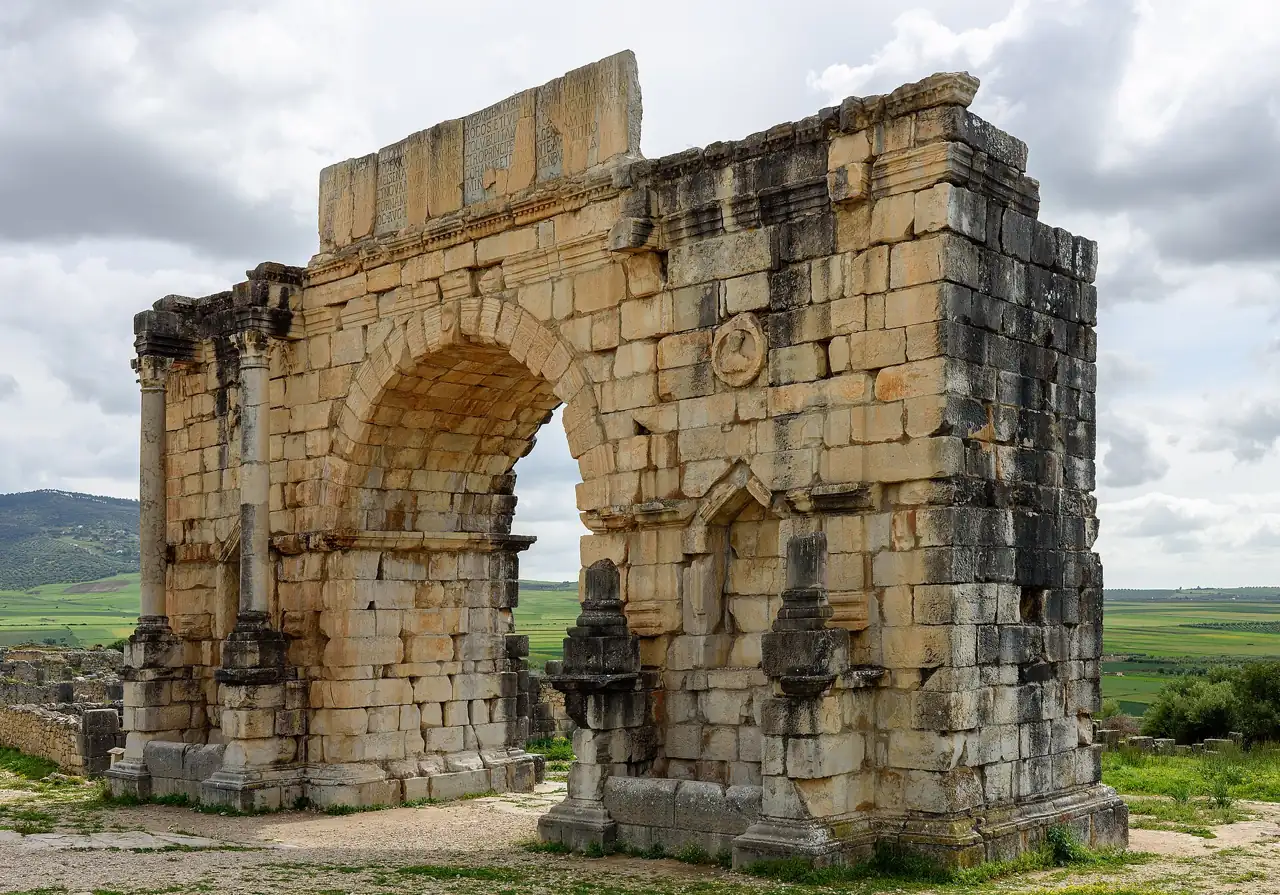
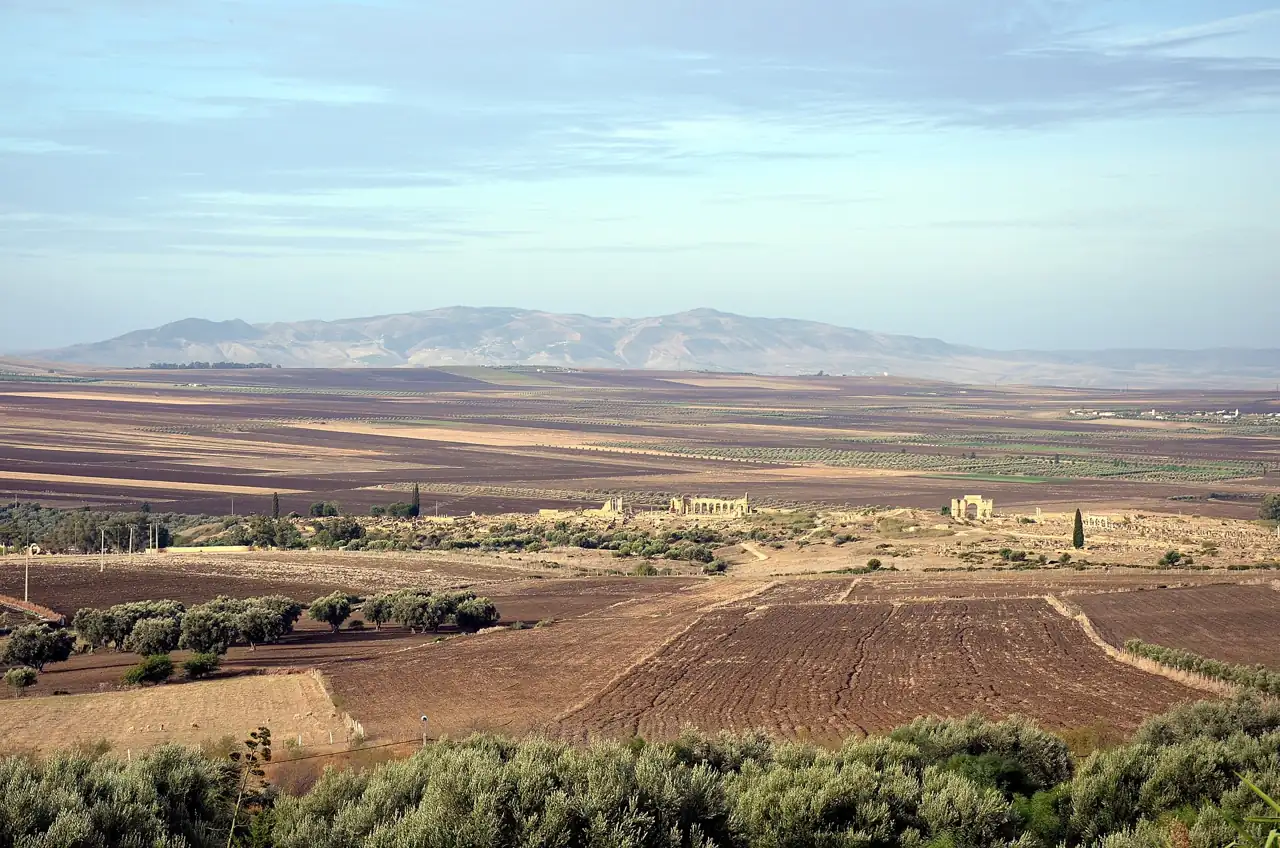
Just over an hour from Fes, the ruins of Volubilis spread across a green plateau below the Zerhoun mountains: columns, mosaics and a triumphal arch from the time when this was one of the most remote cities of the Roman Empire. A few kilometres away, the white town of Moulay Idriss climbs two hills, and half an hour further on, Meknes hides one of Morocco’s grandest imperial gates.
Together they make one of the best day trips from Fes. Many of our guests at the camp visit them the day before they drive south to the Sahara, so here is how we suggest doing it.
What is Volubilis?
Volubilis was a Berber and Carthaginian town long before the Romans arrived. After Rome annexed the kingdom of Mauretania in the 40s AD, it became one of the most important cities of the province of Mauretania Tingitana, living from olive oil, grain and trade. At its height, perhaps 20,000 people lived here.
Rome withdrew from the region in the late 3rd century, but the town lived on. In 788, Idris I, the founder of Morocco’s first Islamic dynasty, was welcomed here before founding Fes. Later, an earthquake in 1755 and the reuse of stone for building Meknes left the ruins we see today. Excavations began in the early 20th century, and Volubilis was listed as a UNESCO World Heritage Site in 1997.
What to see at Volubilis
The site is large but easy to follow on a loop of marked paths. Allow about two hours, more if you love archaeology or photography.
- The Arch of Caracalla: built in AD 217 in honour of the emperor Caracalla and his mother, it is the symbol of Volubilis and frames the plain beautifully.
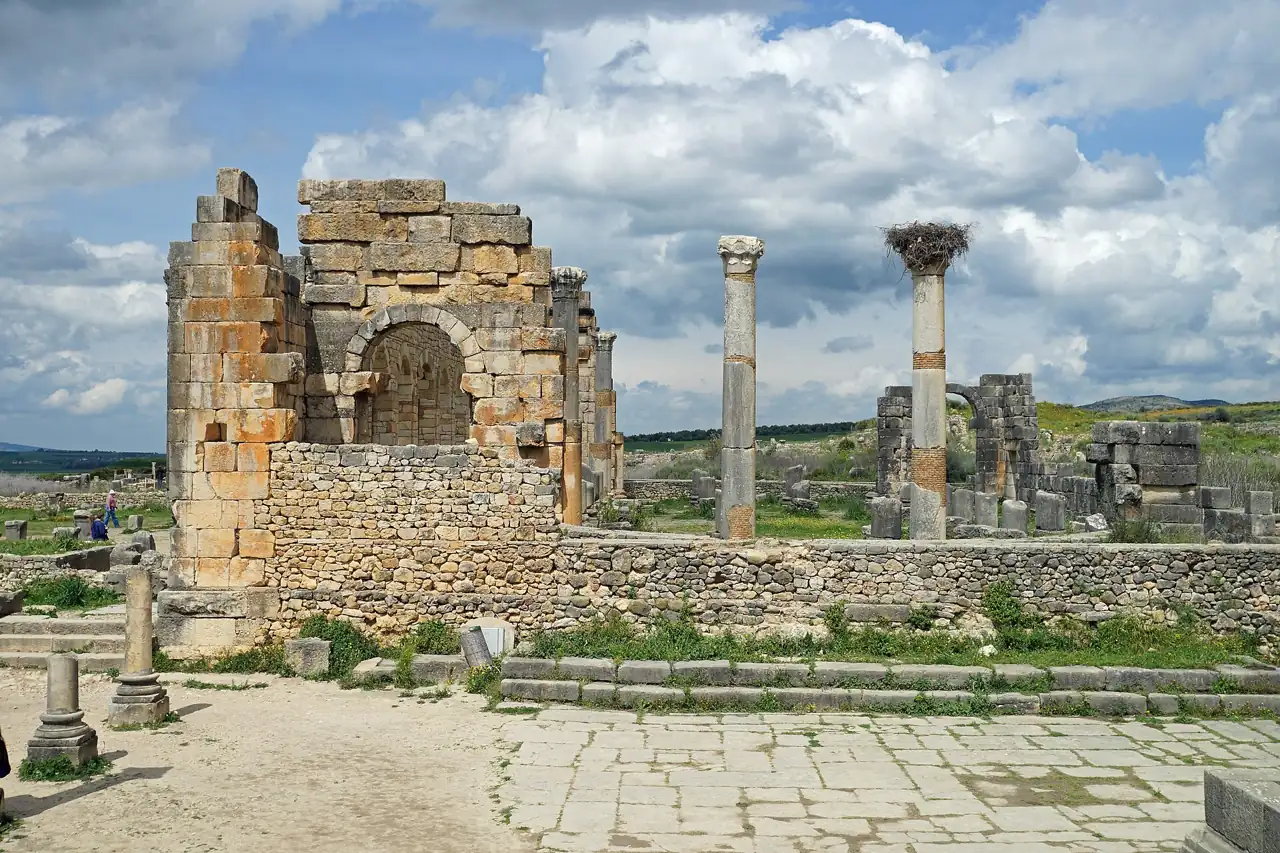
- The Basilica, Capitol and Forum: the civic heart of the town. Several tall columns of the basilica still stand, and white storks often nest on top of them in spring.
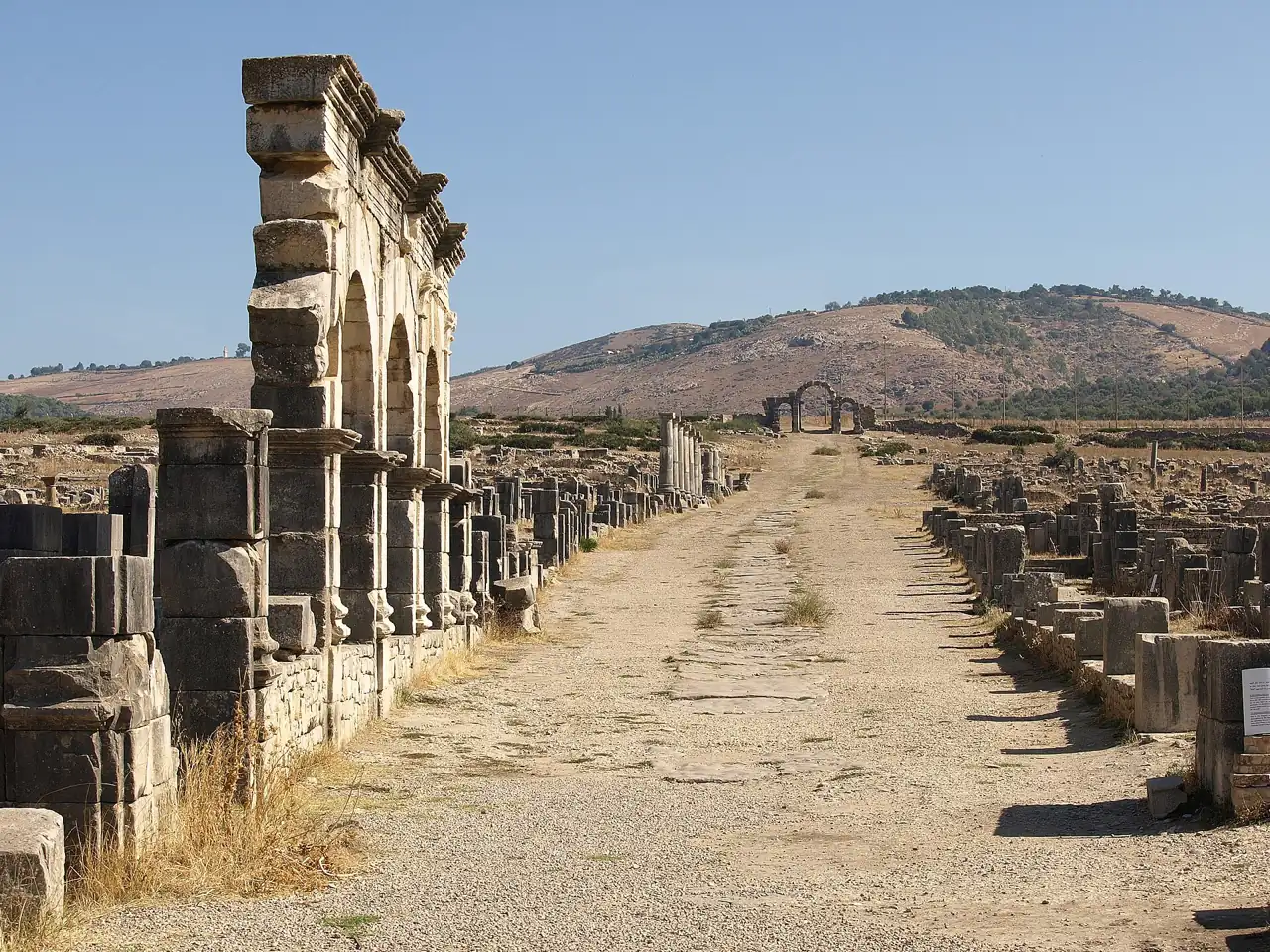
- The Decumanus Maximus: the main street, once lined with shops and arcades, runs from the arch to the Tingis Gate.
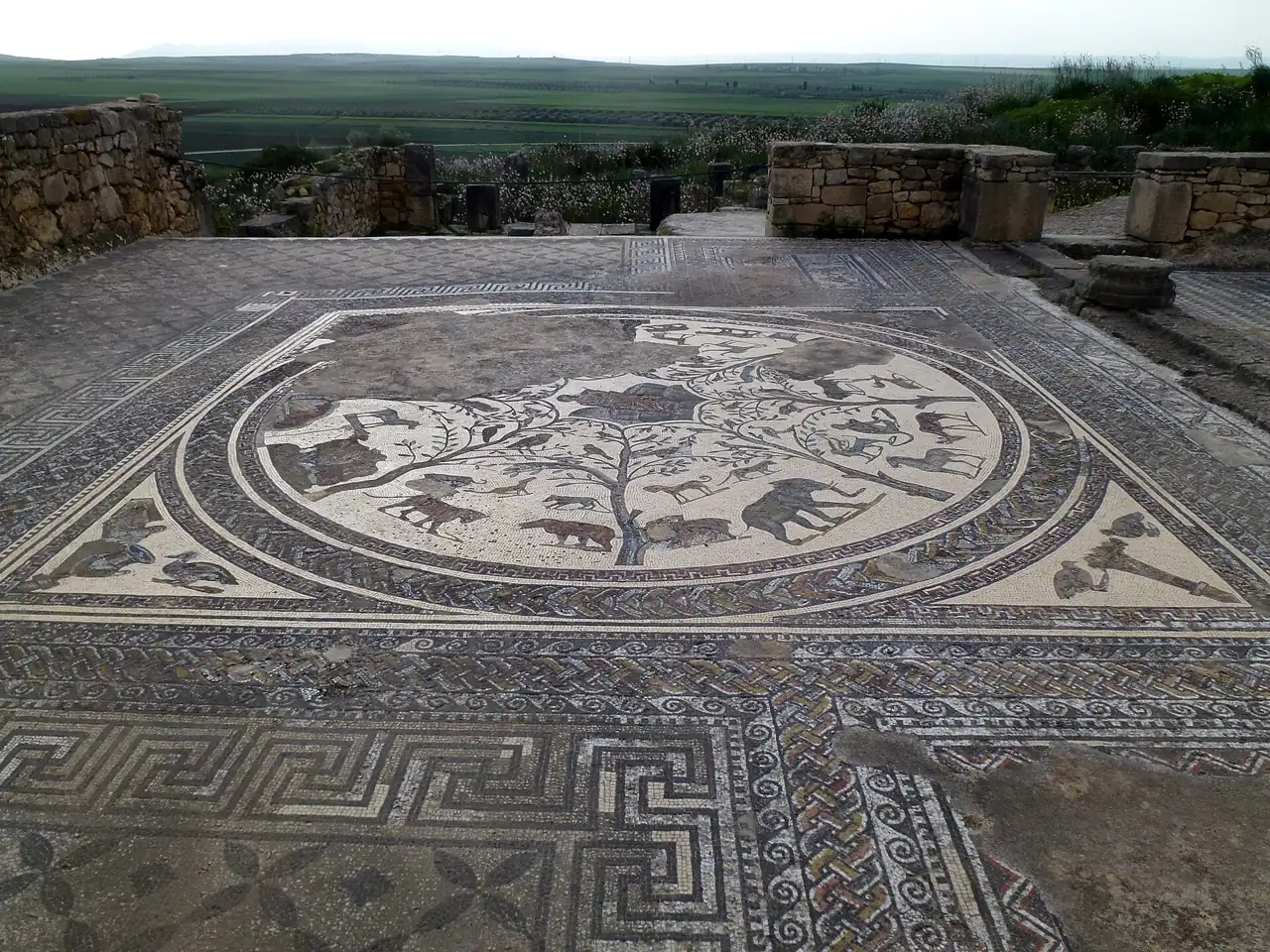
- The mosaics: many houses kept their floors in place. Look for the House of Orpheus, the Labours of Hercules, Dionysus and the Four Seasons, and the dolphins and sea creatures.
- Olive presses: dozens of oil presses show how important olive oil was to the town’s wealth. Olive groves still surround the site today.
Tickets, opening hours and practical tips
Volubilis is open every day from the morning until around sunset. Entry is a modest fee paid at the ticket office; prices change from time to time, so check the current rate when you arrive and bring some cash in dirhams just in case.
There is almost no shade on the site. Come early or in the late afternoon, wear a hat and comfortable shoes, and carry water. The paths are uneven, and some mosaics are seen from the edges of the rooms rather than walked on.
| Practical point | What to expect |
|---|---|
| Opening hours | Daily, from morning until around sunset |
| Time on site | About 2 hours |
| Shade | Very little: hat, sunscreen and water are essential |
| Facilities | Ticket office, visitor centre, toilets and a small café |
| Guides | Official guides available at the entrance |
Hours and fees can change; confirm them locally before your visit.
Moulay Idriss Zerhoun: Morocco’s holy town
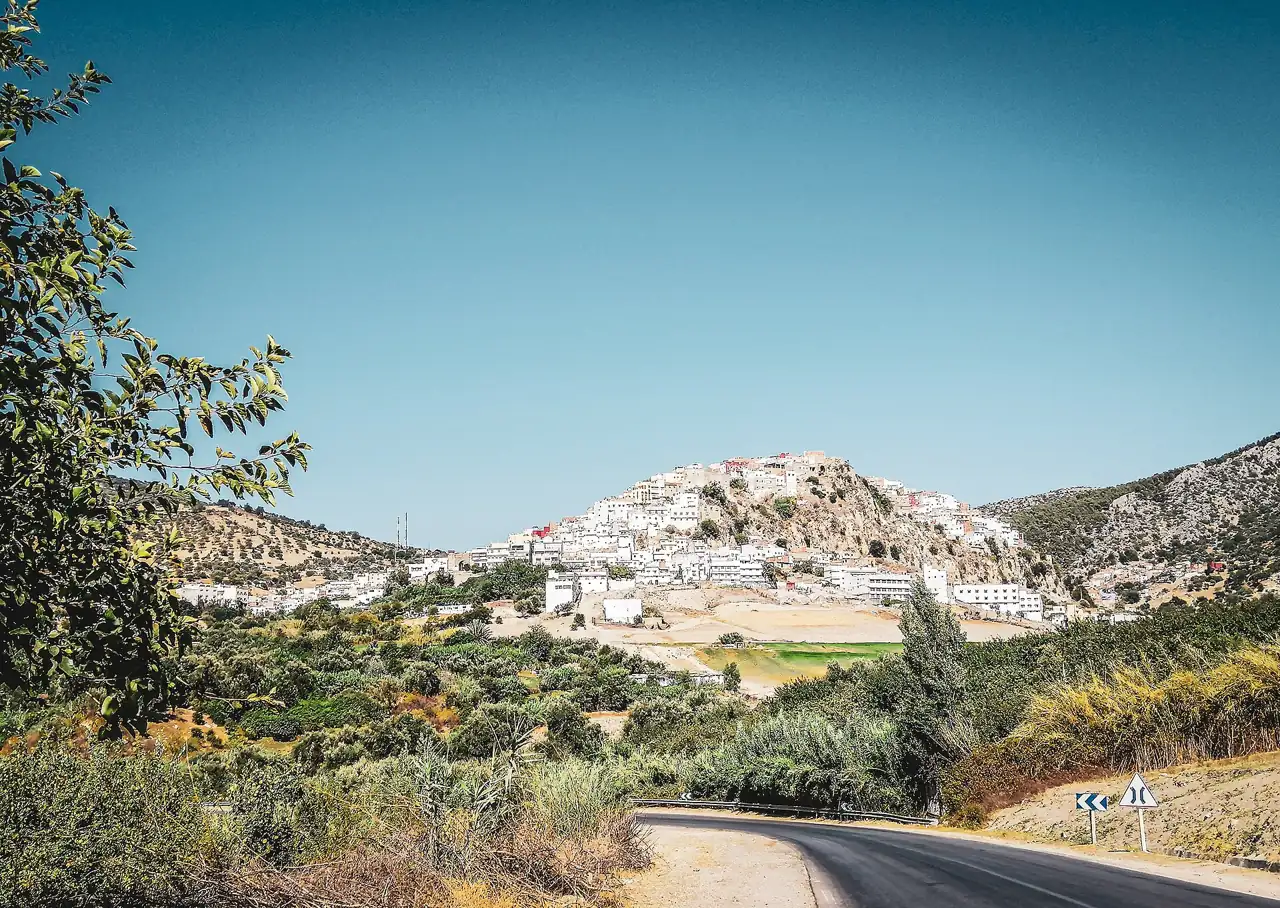
About 4 km from Volubilis, Moulay Idriss Zerhoun is built around the tomb of Idris I, who brought Islam and a new dynasty to Morocco in the 8th century. It is one of the country’s most important pilgrimage sites, and a large festival, or moussem, takes place here each year in late summer.
The shrine itself is open only to Muslims, but the town is a pleasure to walk. Climb to the viewpoints above the rooftops for a view over the green-roofed sanctuary, and look for the unusual round minaret covered in green tiles with Quranic verses. Lunch here is simple and good: grilled meat, kefta and fresh bread in the small restaurants near the main square.
Meknes: the imperial city of Moulay Ismail
Meknes is the quietest of Morocco’s four imperial cities, and many visitors love it for exactly that reason. Sultan Moulay Ismail, who ruled from 1672 to 1727, made it his capital and surrounded it with kilometres of walls, gates, palaces, stables and granaries. The historic city was listed by UNESCO in 1996.
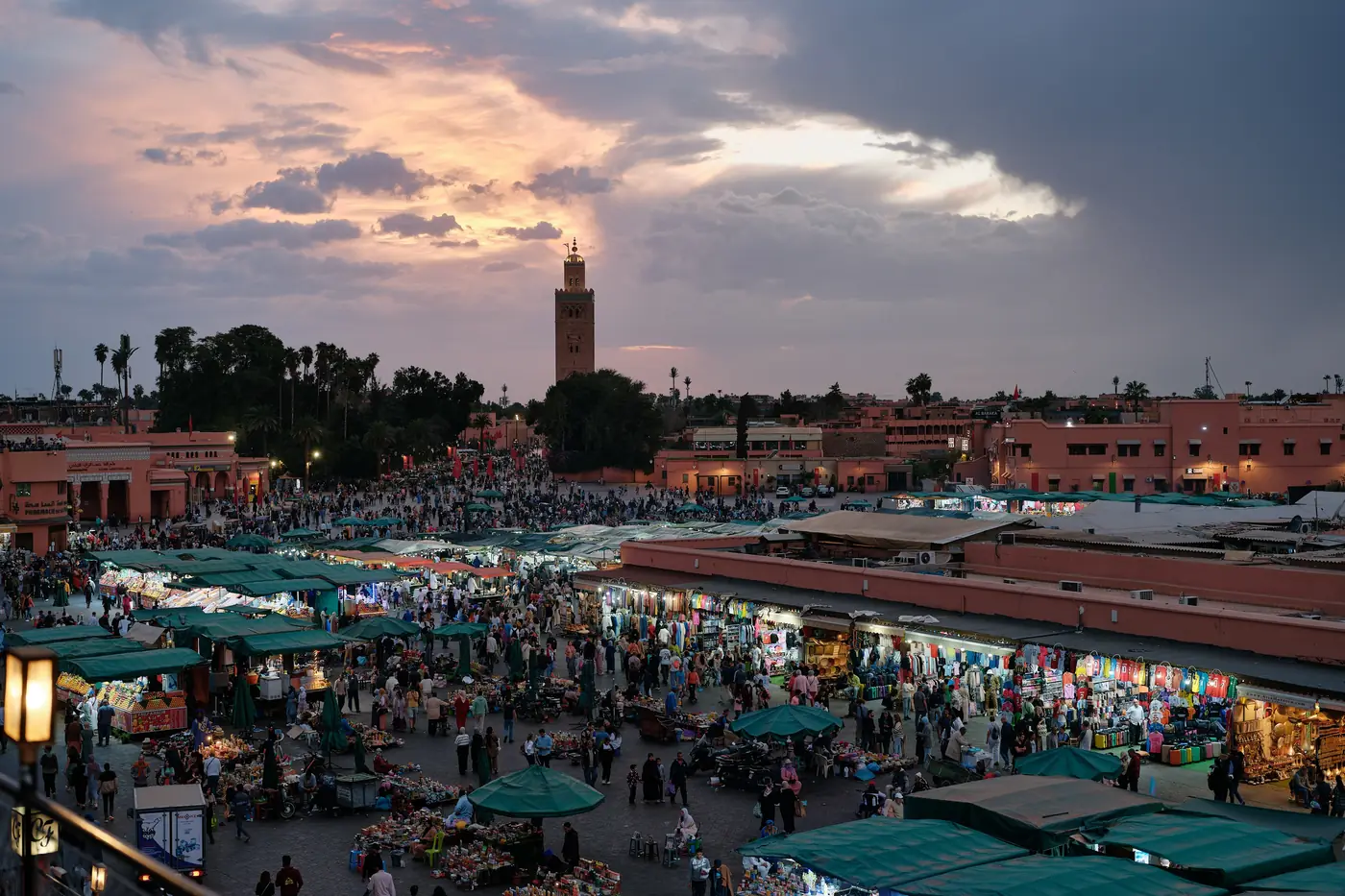
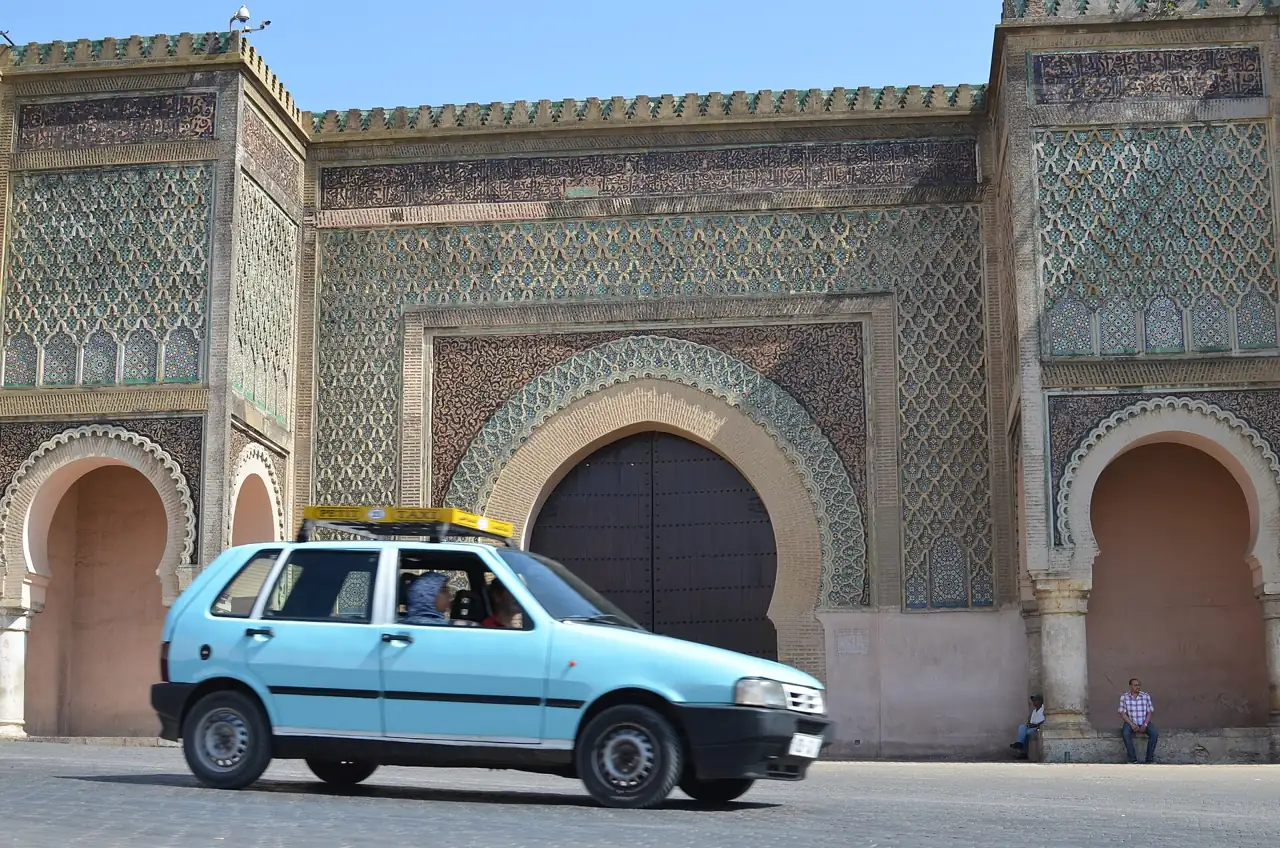
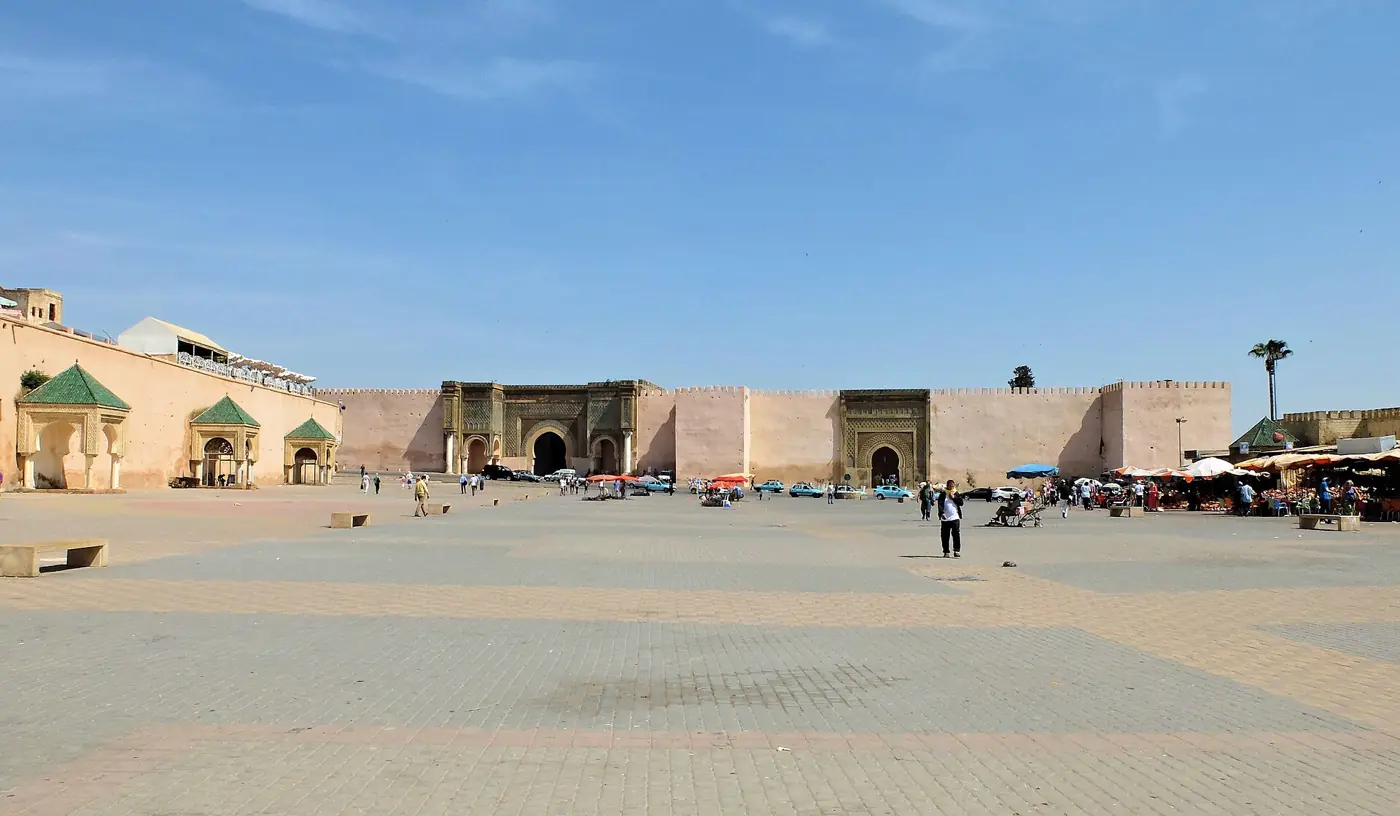
Start at Bab Mansour, one of the most beautiful gates in North Africa, finished in 1732 and covered in green tiles and carved patterns. In front of it, Place el-Hedim fills with families, food stalls and storytellers in the late afternoon, a calmer version of Marrakech’s Jemaa el-Fnaa.
More to see in Meknes
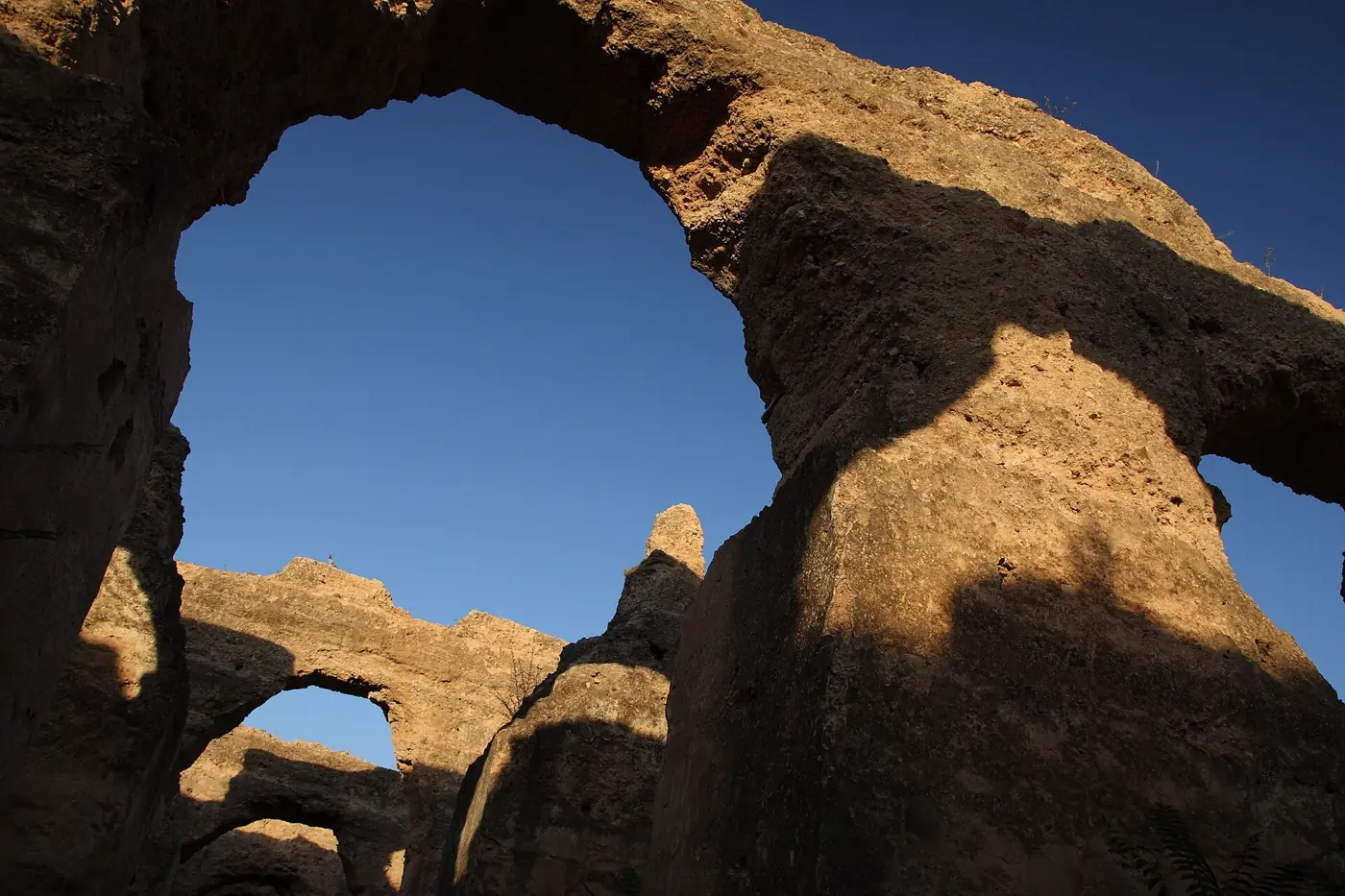
- Heri es-Souani: the enormous granaries and stables of Moulay Ismail, with thick earthen walls and long rows of arches that once housed thousands of horses.
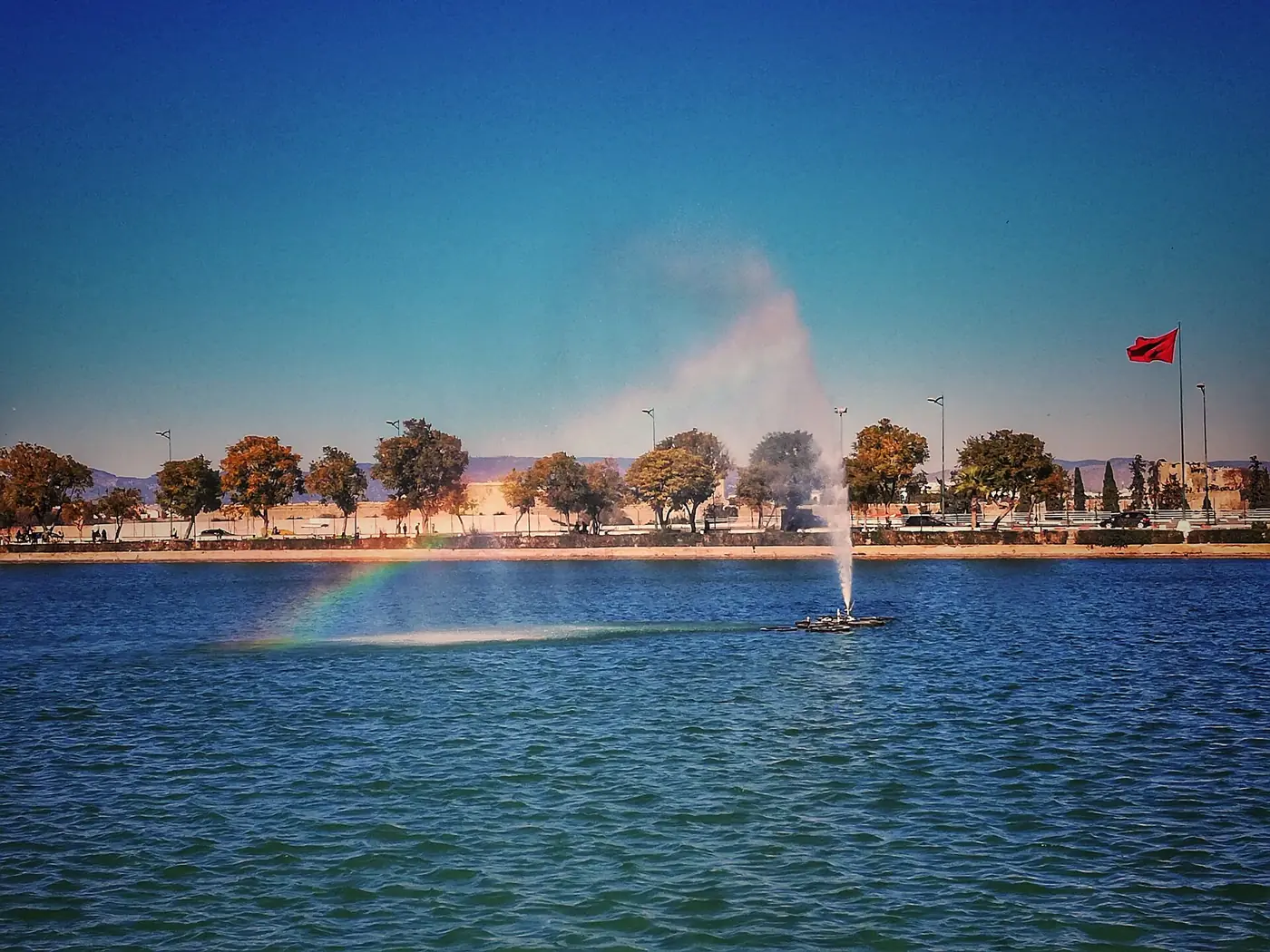
- The Agdal basin: a huge reservoir built to water the royal gardens, today a favourite place for an evening walk.
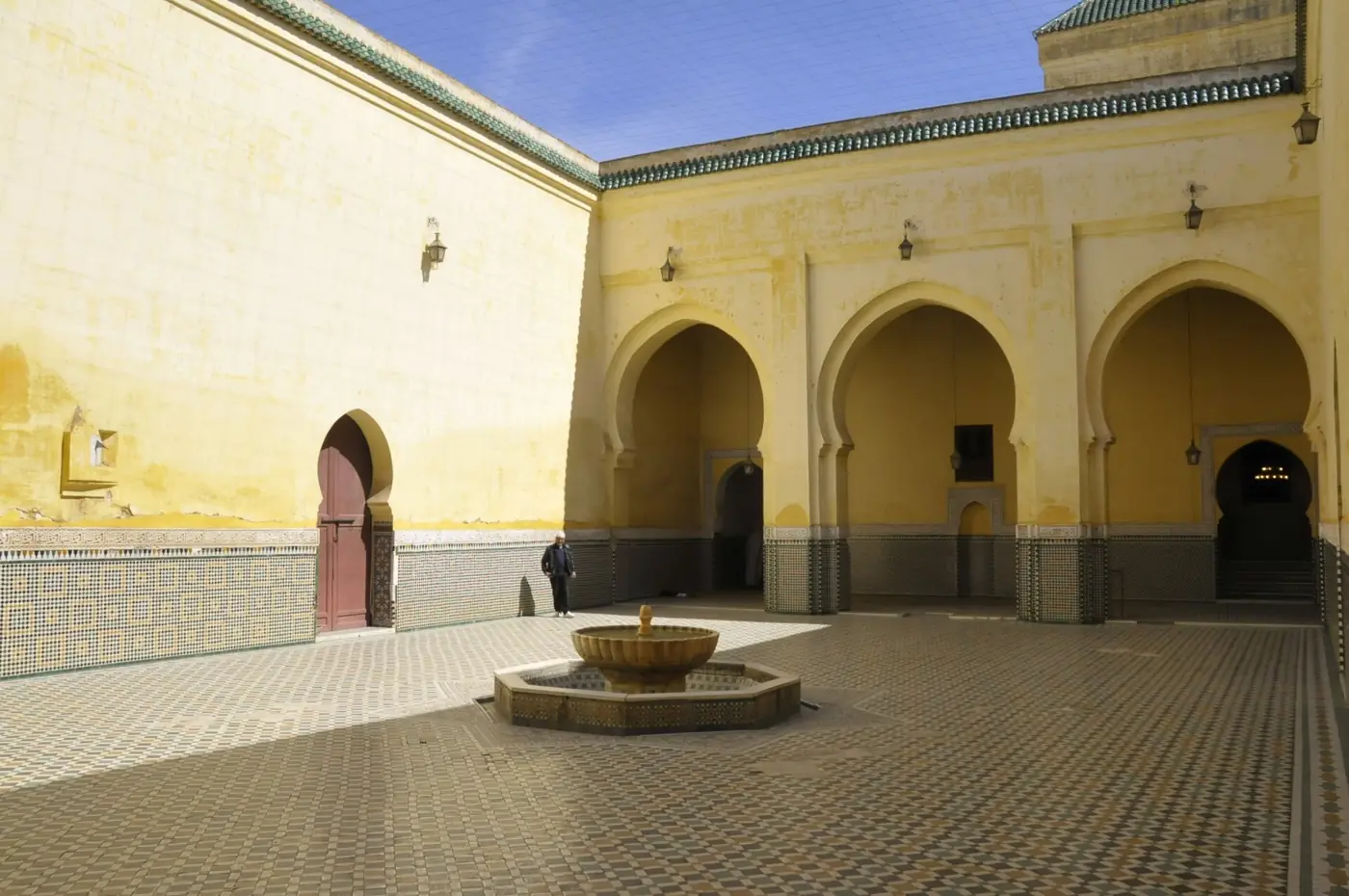
- The Mausoleum of Moulay Ismail: a peaceful series of courtyards and fountains leading to the sultan’s tomb. Non-Muslims may visit the outer rooms; opening can change during restoration work.
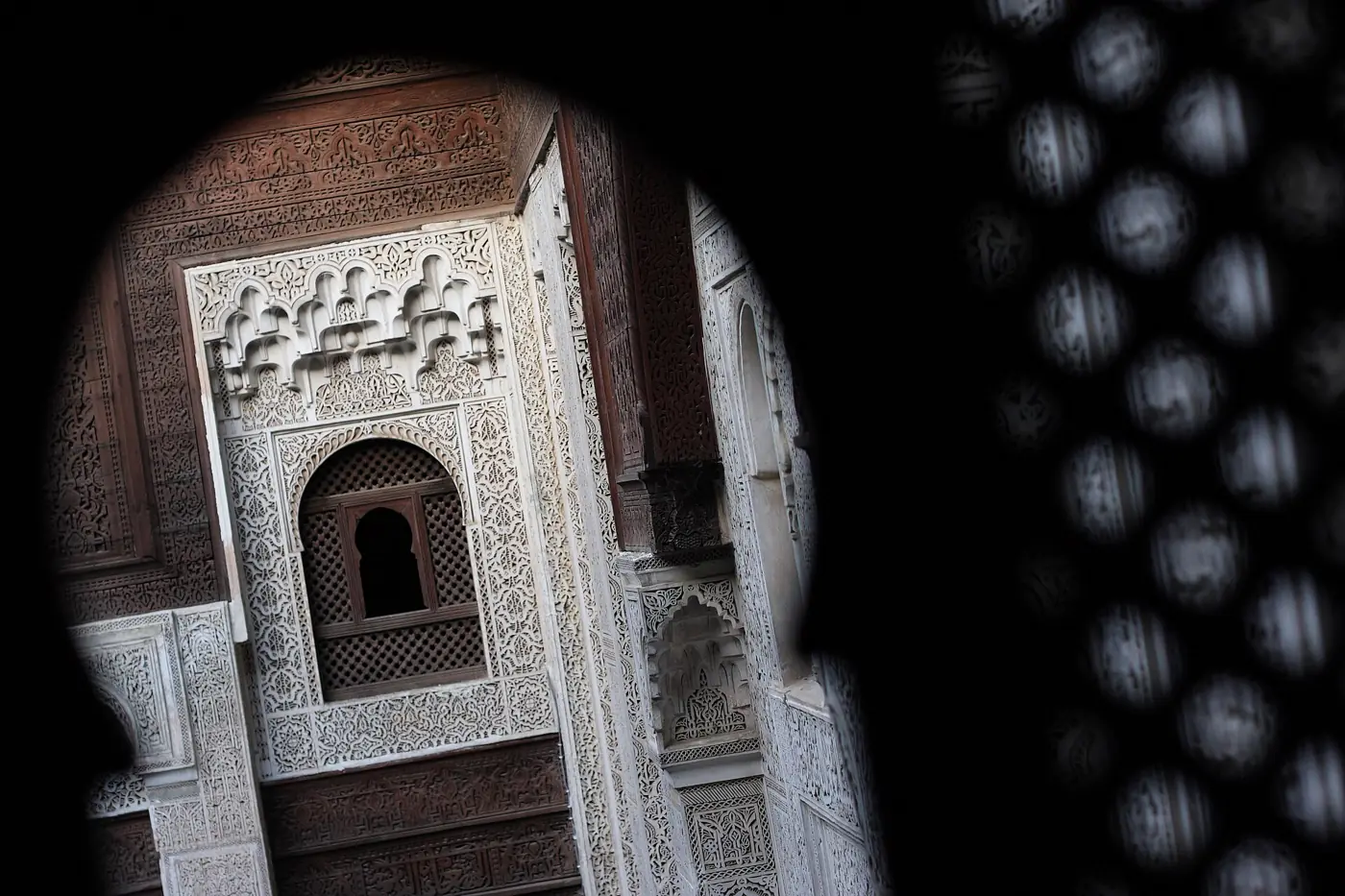
- Bou Inania Madrasa: a 14th-century religious school in the medina, with carved cedar, stucco and tiles, and a view from the roof.
- The medina souks: smaller and calmer than those of Fes, with good places to buy olives, spices and local crafts.
How to get to Volubilis from Fes
The easiest way is a guided day trip or a private driver from Fes: everything is on one loop, and you avoid waiting for taxis between sites. Most tours visit Volubilis in the morning, lunch in Moulay Idriss and finish in Meknes.
On your own, take one of the frequent trains from Fes to Meknes (about 40 minutes to an hour), then a shared grand taxi to Moulay Idriss. From there, Volubilis is a short petit-taxi ride or a pleasant 45-minute walk through the olive groves. If you drive, the roads are good and well signposted, with parking at the entrance of the site.
| Leg | Distance | Driving time |
|---|---|---|
| Fes → Volubilis | About 85 km | About 1 h 20 |
| Volubilis → Moulay Idriss | About 4 km | About 10 minutes |
| Moulay Idriss → Meknes | About 30 km | About 40 minutes |
| Meknes → Fes | About 65 km | About 1 hour |
Approximate times without stops. The full loop is around 185 km.
Volubilis, Moulay Idriss and Meknes day trips from Fes
Partner links: if you book through GetYourGuide we may earn a small commission, at no extra cost to you. Tours are run by independent operators.
A one-day itinerary from Fes
- 1
Early morning · Leave Fes
Set off after breakfast to reach Volubilis before the heat and the tour groups.
- 2
Morning · Volubilis
About two hours for the arch, the basilica, the main street and the mosaics, ideally with an official guide.
- 3
Midday · Moulay Idriss
Walk up to a viewpoint over the town, then have lunch near the main square.
- 4
Afternoon · Meknes
Bab Mansour, Place el-Hedim, Heri es-Souani and the Agdal basin, plus a short walk in the medina.
- 5
Evening · Back in Fes
Return to your riad in about an hour, ready for the drive south to the desert the next day.
When to visit
Spring, from March to May, is the loveliest season: the fields are green, wildflowers grow among the ruins and storks nest on the columns. Autumn, from September to November, is warm and golden. Summer days often pass 35°C on the open plateau, so start very early. Winter is mild and quiet but can be rainy.
From Volubilis to the Sahara
Volubilis lies north-west of Fes, while the desert is to the south, so it works best as a day trip from Fes before your desert journey rather than as a stop on the way. Many travellers spend two nights in Fes, use one day for Volubilis and Meknes, then cross the Middle Atlas to Merzouga.
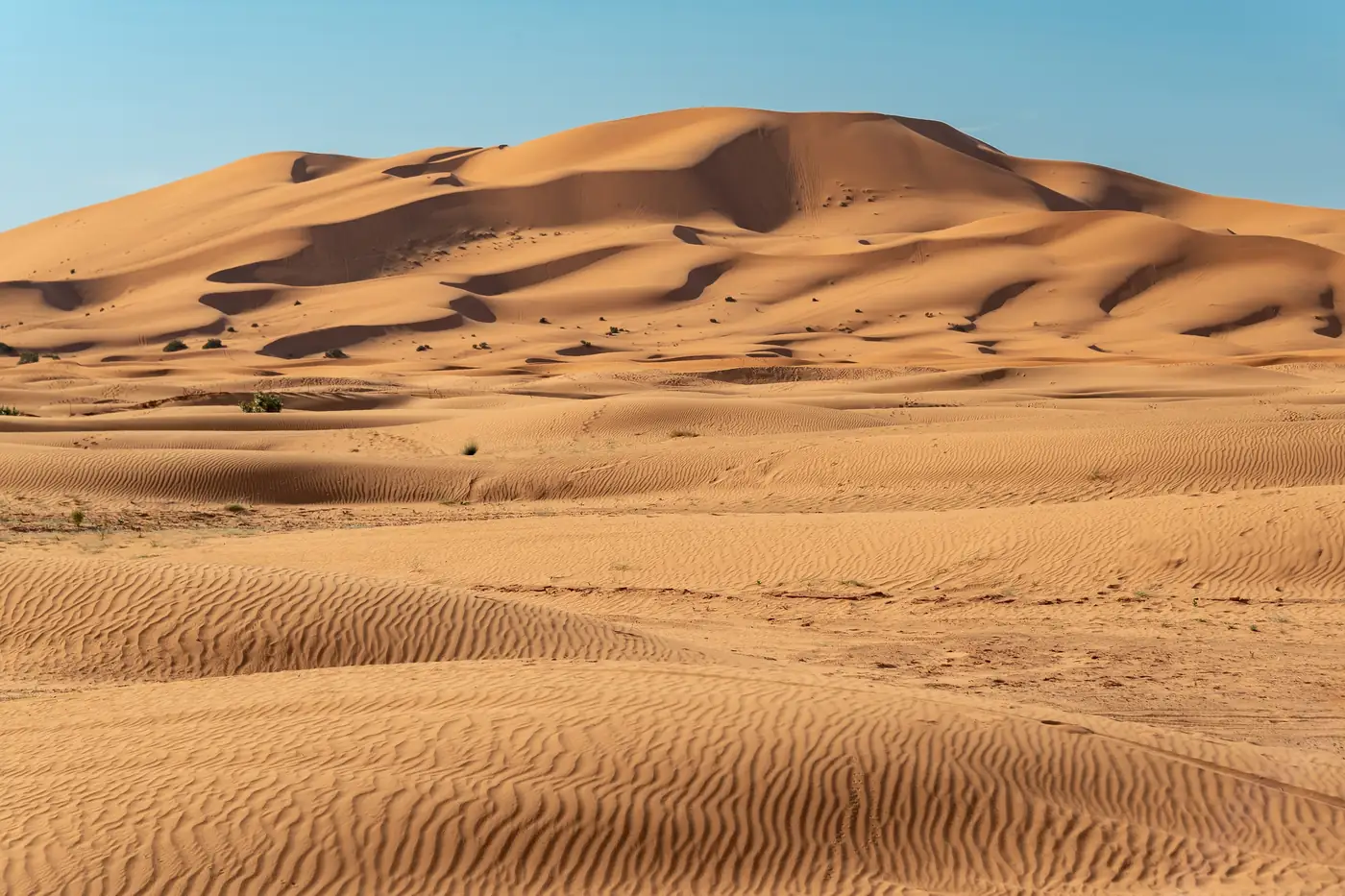
The drive from Fes to Merzouga takes about eight hours through Ifrane, the cedar forests of Azrou, Midelt and the Ziz Valley, with Erfoud and Rissani on the last stretch. Two or three days give you time to enjoy the route and at least one full night in the dunes of Erg Chebbi.
Continue from Fes to the Sahara
Partner links: if you book through GetYourGuide we may earn a small commission, at no extra cost to you. Tours are run by independent operators.
- Fes to Merzouga: 2 days or 3 days?
- How to get to Merzouga from Fes and Marrakech
- Erfoud and Rissani: what to see on the way to Merzouga
- Casablanca to Merzouga desert tour
- Marrakech or Fes: which city should you choose?
- Fes to Chefchaouen day trip
- A 7-day Morocco itinerary with the Sahara
- Erg Chebbi: a complete guide to the Merzouga dunes
End your journey in the dunes with us
Merzouga Glamping is a family-run desert camp at the edge of Erg Chebbi with private ensuite tents. Air conditioning in summer and heating in winter run day and night, dinner is served in our indoor restaurant, and a sunset camel ride and sandboarding are included.
Stays start from €70 per person per night, and a single tent is €85. Our camp can be reached by normal car. After we confirm availability, a 20% deposit is paid in euros by PayPal; the balance is paid at the camp by card in dirhams, or in cash in euros or dirhams.
Coming from Fes after Volubilis? Tell us your dates and we will help you plan the drive to the desert.
Ask about your datesFacts, tour and photo notes
Historical dates follow UNESCO and standard references on Volubilis and Meknes. Distances and times are approximate and based on our own drives; opening hours and entry fees can change. Tour listings were checked on GetYourGuide on 18 November 2026; prices and inclusions can change.
- UNESCO: Archaeological Site of Volubilis
- UNESCO: Historic City of Meknes
- Arch of Caracalla photo · Mustang Joe · CC0
- Volubilis panorama photo · Иерей Максим Массалитин · CC BY-SA 2.0
- Basilica photo · Mhobl · CC BY-SA 4.0
- Decumanus Maximus photo · Christian Rosenbaum · CC BY-SA 3.0
- Orpheus mosaic photo · Hiroki Ogawa · CC BY 3.0
- Moulay Idriss Zerhoun photo · Zaineb Hachami · CC BY-SA 4.0
- Bab Mansour photo · Steven Lek · CC BY-SA 4.0
- Place el-Hedim photo · Robert Prazeres · CC BY-SA 4.0
- Heri es-Souani photo · yeowatzup · CC BY 2.0
- Agdal basin photo · Mohammed.salhi · CC BY-SA 4.0
- Moulay Ismail mausoleum photo · CTHOE · CC BY-SA 4.0
- Bou Inania Madrasa photo · yeowatzup · CC BY 2.0
Frequently asked questions
How far is Volubilis from Fes?+
About 85 km, or around 1 hour 20 minutes by road. Meknes is about 30 km from Volubilis, so most visitors combine the two in one day.
How long do you need at Volubilis?+
About two hours is enough to see the arch, the basilica, the main street and the best mosaics. Add time if you love archaeology or photography.
Can you visit Volubilis without a tour?+
Yes. Take a train from Fes to Meknes, a grand taxi to Moulay Idriss, then a short taxi ride or a 45-minute walk to the site. A tour or private driver is simpler if you want to see all three places in one day.
Is Volubilis worth visiting?+
Yes, especially if you enjoy history. It is the best-preserved Roman site in Morocco, with beautiful mosaics still in place and a wonderful setting among olive groves and hills.
Can non-Muslims visit Moulay Idriss?+
Yes. Anyone can visit the town and its viewpoints, but the shrine of Moulay Idriss is open only to Muslims. Dress modestly and be respectful.
Can I visit Volubilis on the way from Fes to Merzouga?+
Not really: Volubilis is north-west of Fes and the desert is to the south. Visit it as a day trip from Fes, or on the drive from Casablanca or Rabat to Fes, then continue to Merzouga.
Plan the rest of your desert stay
Stay with us in Merzouga
Private ensuite tents with air conditioning and heating, dinner and breakfast, the sunset camel ride and sandboarding — all included.
Request availability