Included in your stay
Stargazing
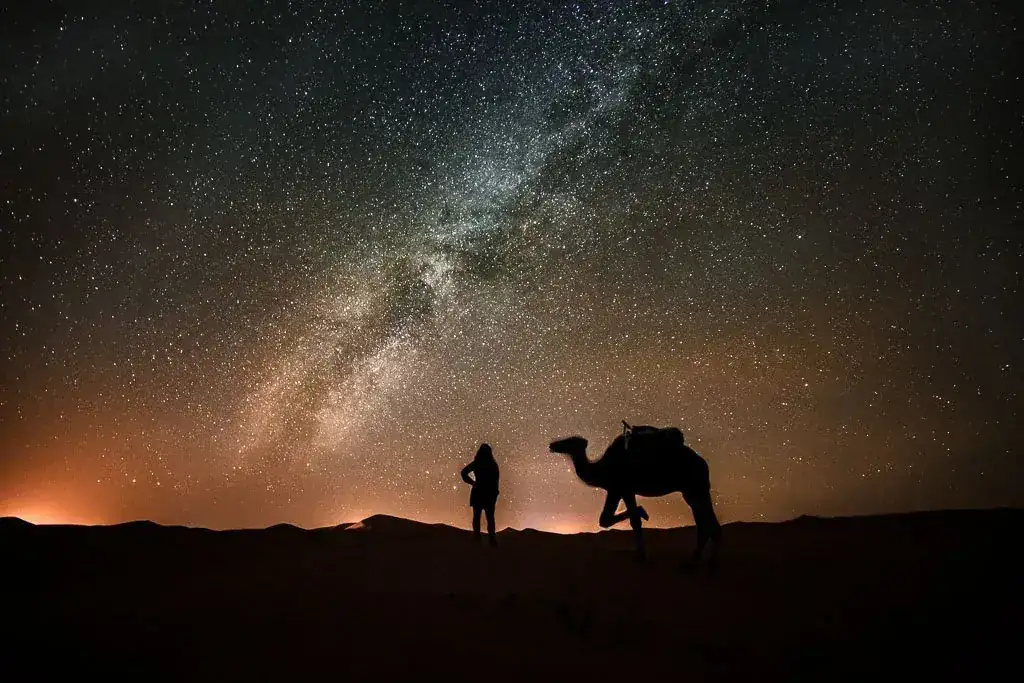
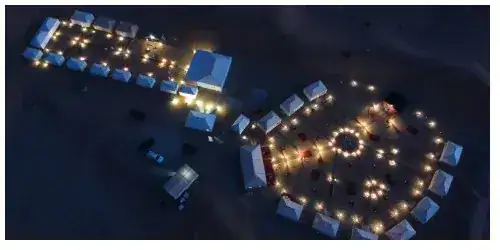
Merzouga sits far from any city, and that shows the moment the camp lights go down. After dinner we dim the lanterns and most guests simply lie back on the sand.
What you can see
Between roughly April and September the core of the Milky Way rises over the dunes and is visible with the naked eye. Through the rest of the year the sky is still exceptional — Orion, Cassiopeia, satellites crossing overhead and, most nights, shooting stars.
The clearest skies are around the new moon. If astrophotography is the reason you are coming, tell us your dates and we will tell you honestly what the moon will be doing.
How we set it up
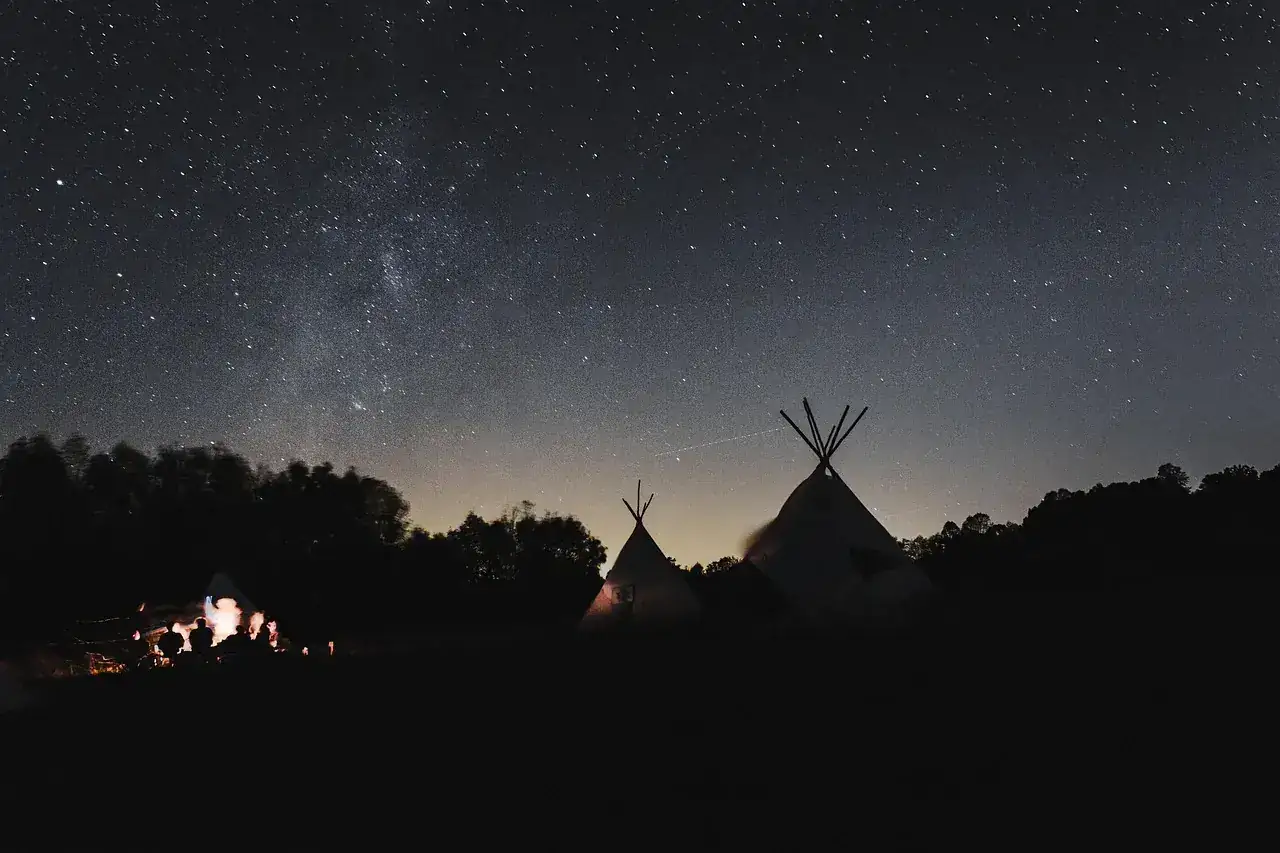
Blankets and floor cushions are brought out after dinner, and the team keeps the fire low so it does not spoil your night vision. Our staff grew up here and will point out what nomads use to navigate.
Highlights
- Bortle-class dark sky with essentially no light pollution
- Camp lights dimmed after dinner
- Blankets and cushions brought out onto the sand
- Milky Way core visible in summer months
Good to know
- Desert nights are cold from October to March — bring a jacket even in summer.
- For photography, a tripod and a fast wide lens are worth the luggage space.
- Check the moon phase before choosing your dates.
In pictures

Other experiences


Enquire
Add this to your stay
Book your stay
Ready to sleep under the Sahara sky?
Tell us your dates and who is travelling. We reply personally, usually within a few hours, with availability and a plan for your stay.