Quick answer
- Currency
- Moroccan dirham (MAD)
- Cash is still king outside cities
- Languages
- Arabic, Amazigh, French
- English is common in tourist areas
- Ideal first trip
- 7–10 days
- Including at least one night in the Sahara
- Best seasons
- Spring and autumn
- Winter is sunny; summer is hot inland
Need a driver? We can arrange your transfer — message us on WhatsApp.
Morocco is close to Europe but feels like another world: busy medinas, call to prayer, mint tea at every meeting and, a day’s drive away, the dunes of the Sahara. A little preparation makes the difference between a stressful trip and a wonderful one.
We are a Moroccan family team running a desert camp in Merzouga, and we welcome first-time visitors every week. These are the tips we give our own guests and friends, from money and clothes to taxis, souks and the desert.
Before you go: visas, seasons and trip length
Citizens of the EU, the UK, the US, Canada, Australia and many other countries can visit Morocco without a visa for up to 90 days. Your passport should be valid for your whole stay, and many airlines prefer six months of validity, so check your own government’s advice before you book.
Spring (March to May) and autumn (September to November) are the most comfortable seasons almost everywhere. Winter is sunny and mild on the coast and in Marrakech, but nights are cold in the mountains and the desert. Summer is lovely by the sea and very hot inland.
For a first trip, 7 to 10 days is ideal: enough for Marrakech or Fes, the Atlas Mountains and one or two nights in the Sahara without rushing. With only five days, choose one city and the desert rather than trying to see everything.
Money, cards and tipping
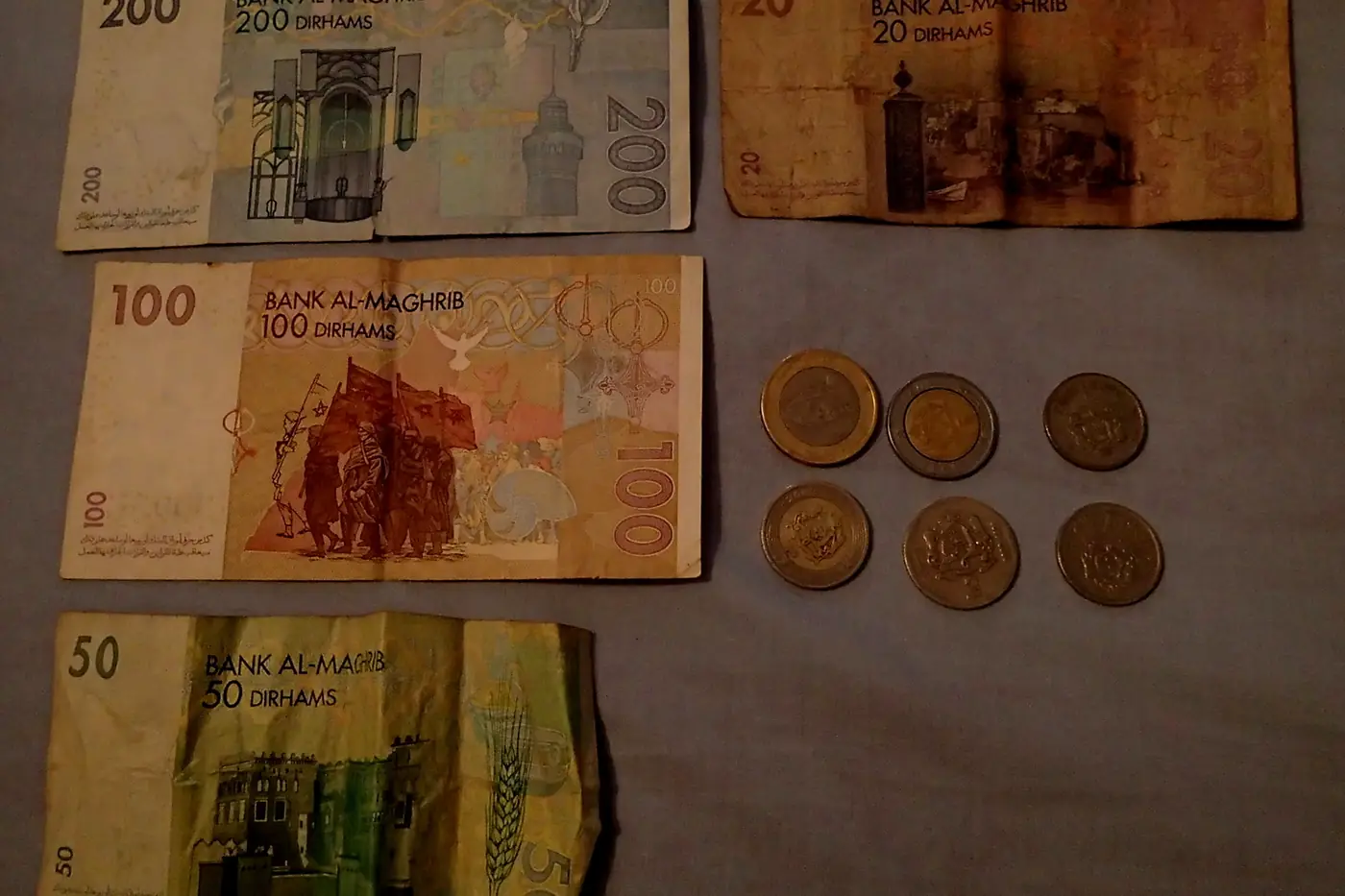
Morocco’s currency is the dirham (MAD). It is a closed currency, so you usually cannot buy it before you travel. Change money at the airport or a bank on arrival, or use a cash machine. As a rough guide, one euro is worth around 10–11 dirhams; check a live rate on xe.com before you go.
Cards are accepted in most hotels, larger restaurants and modern shops, but taxis, souks, cafés and small guesthouses usually want cash. Cash machines are easy to find in cities and towns, but rare in villages and in the desert, so take out enough before long drives.
| Situation | Typical tip |
|---|---|
| Café or simple restaurant | Round up, or a few dirhams |
| Sit-down restaurant | About 10% if service is not included |
| Porter, parking attendant, small help | 5–20 dirhams |
| Local guide for a half day | 50–100 dirhams per person |
| Driver or camel guide on a multi-day tour | At your discretion, at the end of the trip |
Suggestions, not rules. Tips are appreciated and an important part of many incomes.
What to wear and local etiquette
There is no legal dress code for visitors, but Morocco is a Muslim country and dressing modestly will make you feel more comfortable and attract less attention. For both women and men, covering shoulders and knees is a good rule in medinas, villages and religious places. Light, loose clothes in natural fabrics work in every season, with a warm layer for evenings.
Greet people before asking a question: a simple “salam alaykum” goes a long way. Use your right hand to eat from a shared dish, pass objects and shake hands. Public displays of affection are best kept discreet.
Friday is the main prayer day, and some shops close around midday. During Ramadan, many Moroccans fast from dawn to sunset; restaurants for visitors stay open, but avoid eating, drinking or smoking in the street during the day. The dates move about 11 days earlier each year.
Most mosques are closed to non-Muslims. The big exception is the Hassan II Mosque in Casablanca, which offers guided visits. You can still admire many mosques, madrasas and mausoleums from their doors or courtyards.
Languages and a few useful words
Morocco’s official languages are Arabic and Amazigh (Berber). In daily life people speak Darija, Moroccan Arabic, and in the south many families speak Tamazight. French is widely understood, Spanish is common in the north, and English is spoken in most hotels, camps and tourist areas.
A few words in Darija always bring smiles.
| English | Darija | Pronunciation |
|---|---|---|
| Hello | Salam alaykum | sa-LAAM a-LAY-kum |
| Thank you | Shukran | SHOOK-ran |
| No, thank you | La, shukran | LA SHOOK-ran |
| How much? | Bshhal? | b-SHHAL |
| Goodbye | Bslama | b-SLA-ma |
| God willing | Insha’Allah | in-SHA-al-LAH |
Getting around Morocco
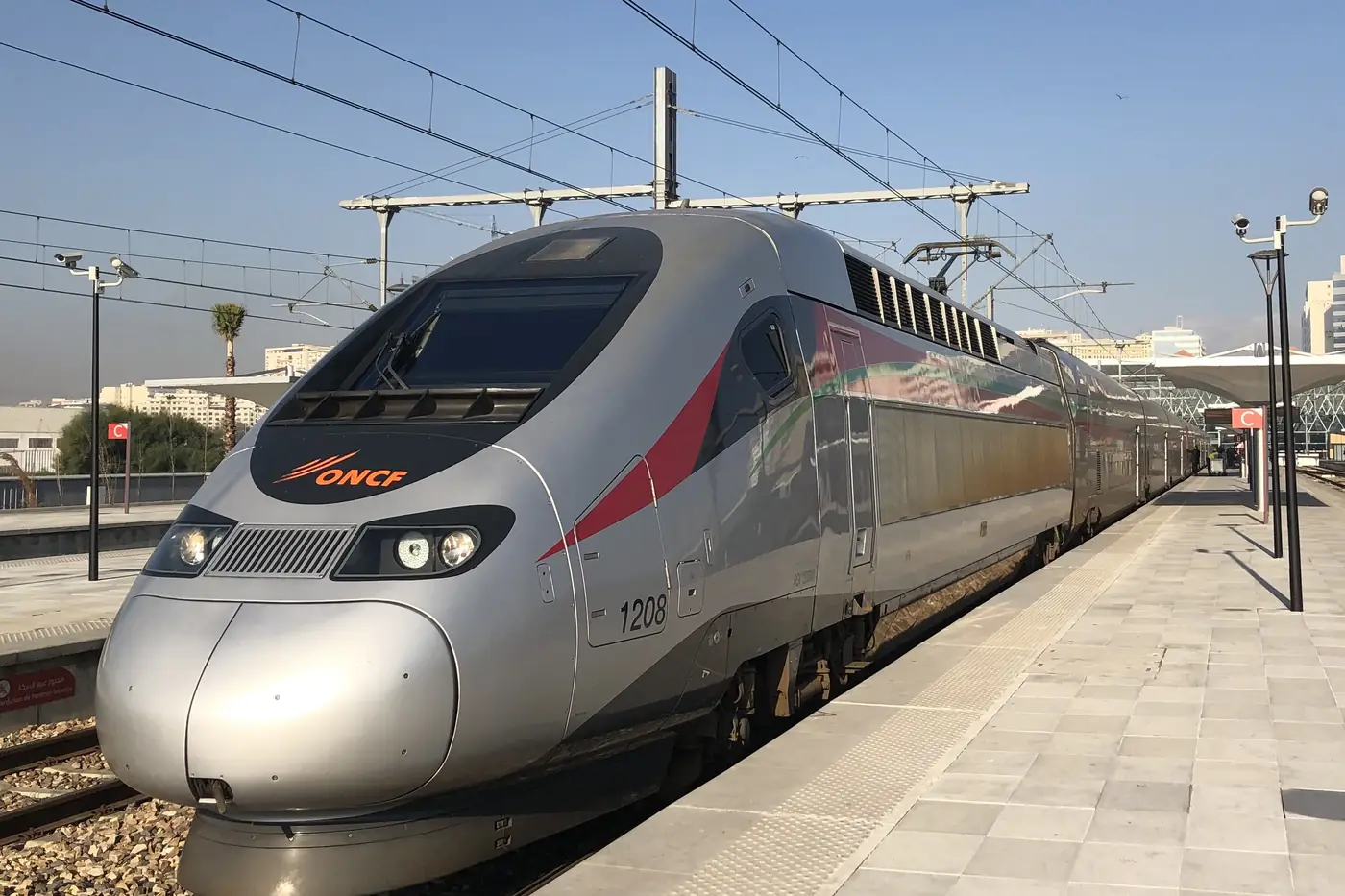
Trains run by ONCF are comfortable and cheap between the main cities: Tangier, Rabat, Casablanca, Fes, Meknes and Marrakech. The Al Boraq high-speed train links Tangier and Casablanca in about two hours. Book ahead on busy weekends and holidays.
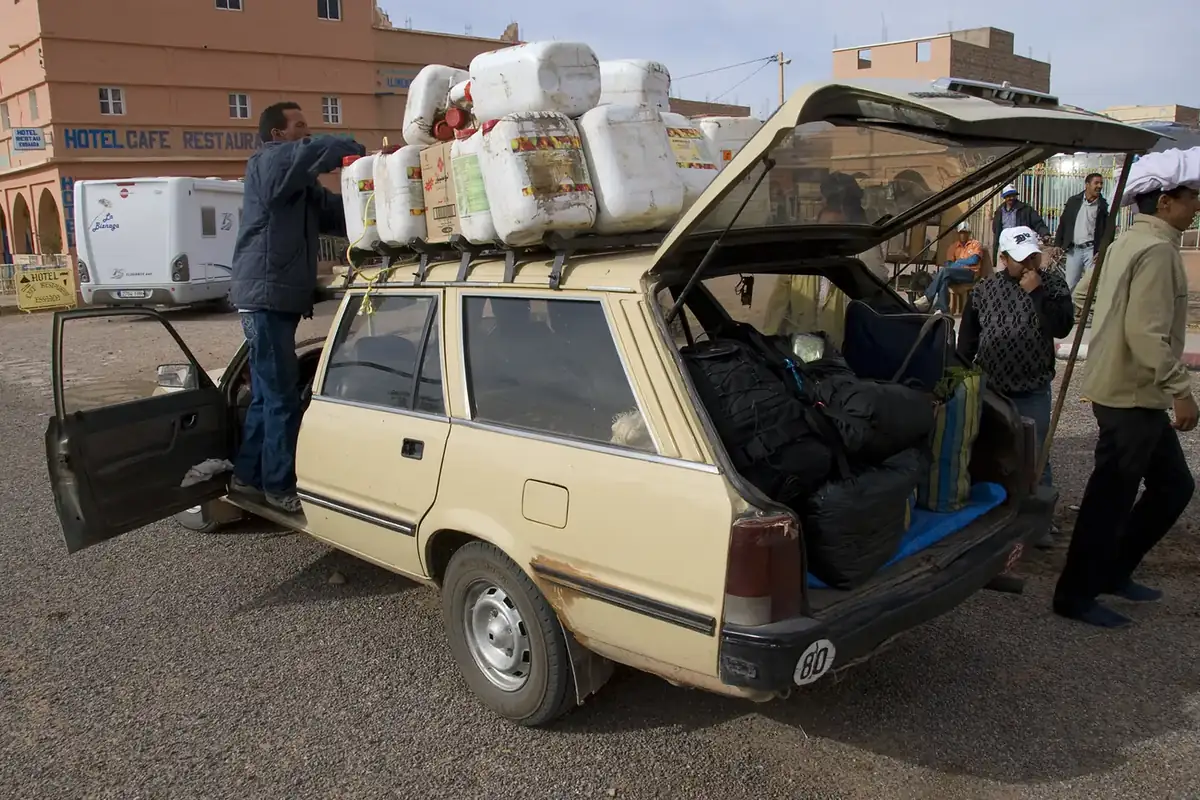
Where trains do not go, including the desert, CTM and Supratours buses are reliable and air-conditioned. Supratours runs to Merzouga. In cities, small “petits taxis” should use the meter: ask for “le compteur” before you set off, or agree the price first. Shared “grands taxis” connect towns and leave when all seats are full.
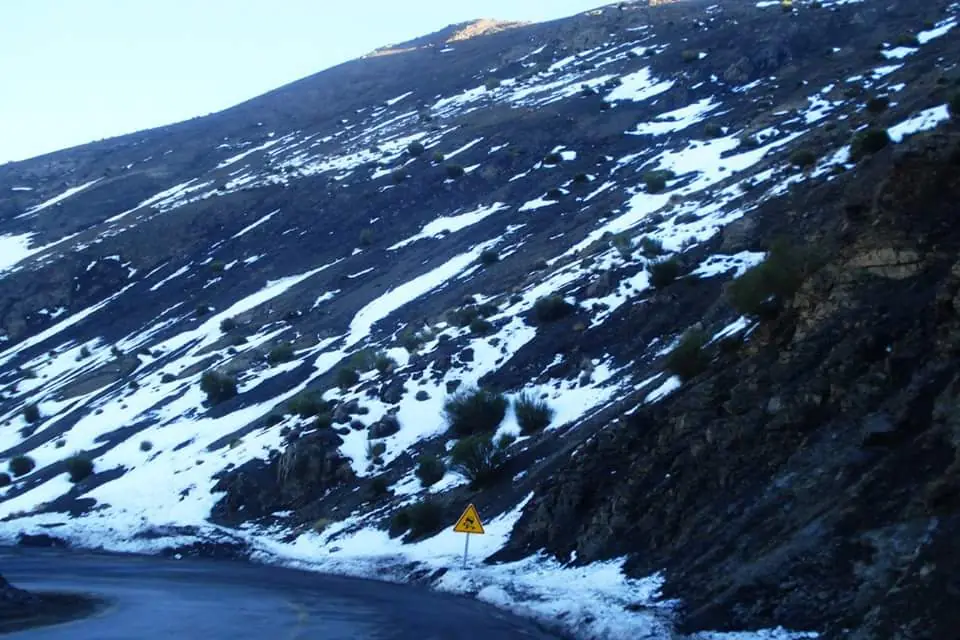
Driving is a great way to see the south, with good main roads and spectacular mountain passes. Drive on the right, respect speed limits (there are many police checks and speed cameras), avoid driving at night in rural areas, and allow more time than the map suggests.
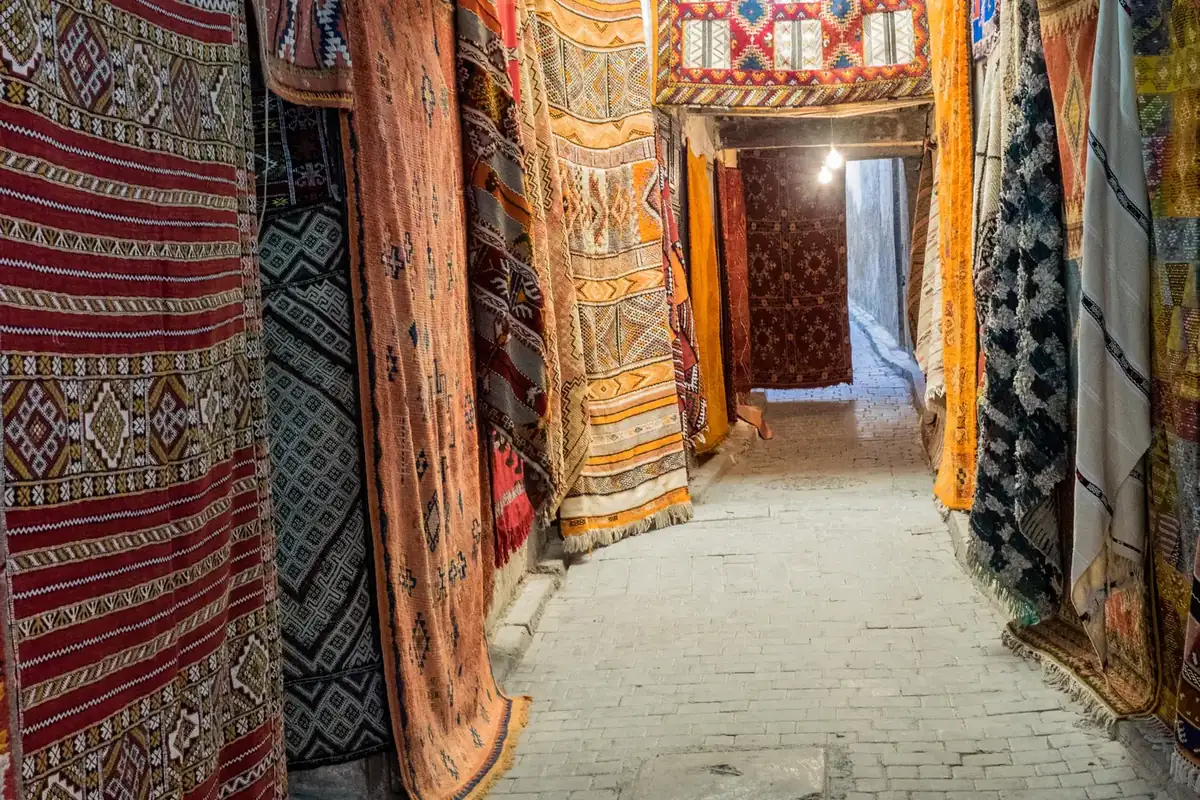
Medinas, souks and bargaining
The old medinas of Marrakech and Fes are a joy to explore, and getting a little lost is part of the experience. Download an offline map, note the name of your riad and the nearest gate, and ask shopkeepers rather than people who approach you for directions.
In the souks, prices are rarely fixed. Bargaining is expected and should stay friendly: ask the price, offer a lower figure, and meet somewhere in the middle. If you are not interested, a smile and “la, shukran” is enough. Never start bargaining for something you do not want to buy.
- Unofficial guides may offer to show you the way, then expect money or take you to a shop. A polite but firm “no, thank you” works; for a guided visit, book an official guide through your riad.
- If someone says a street, the tanneries or the square are “closed”, be sceptical and continue with your map.
- Guides and drivers sometimes earn a commission in shops. It is fine to visit, but feel free to leave without buying.
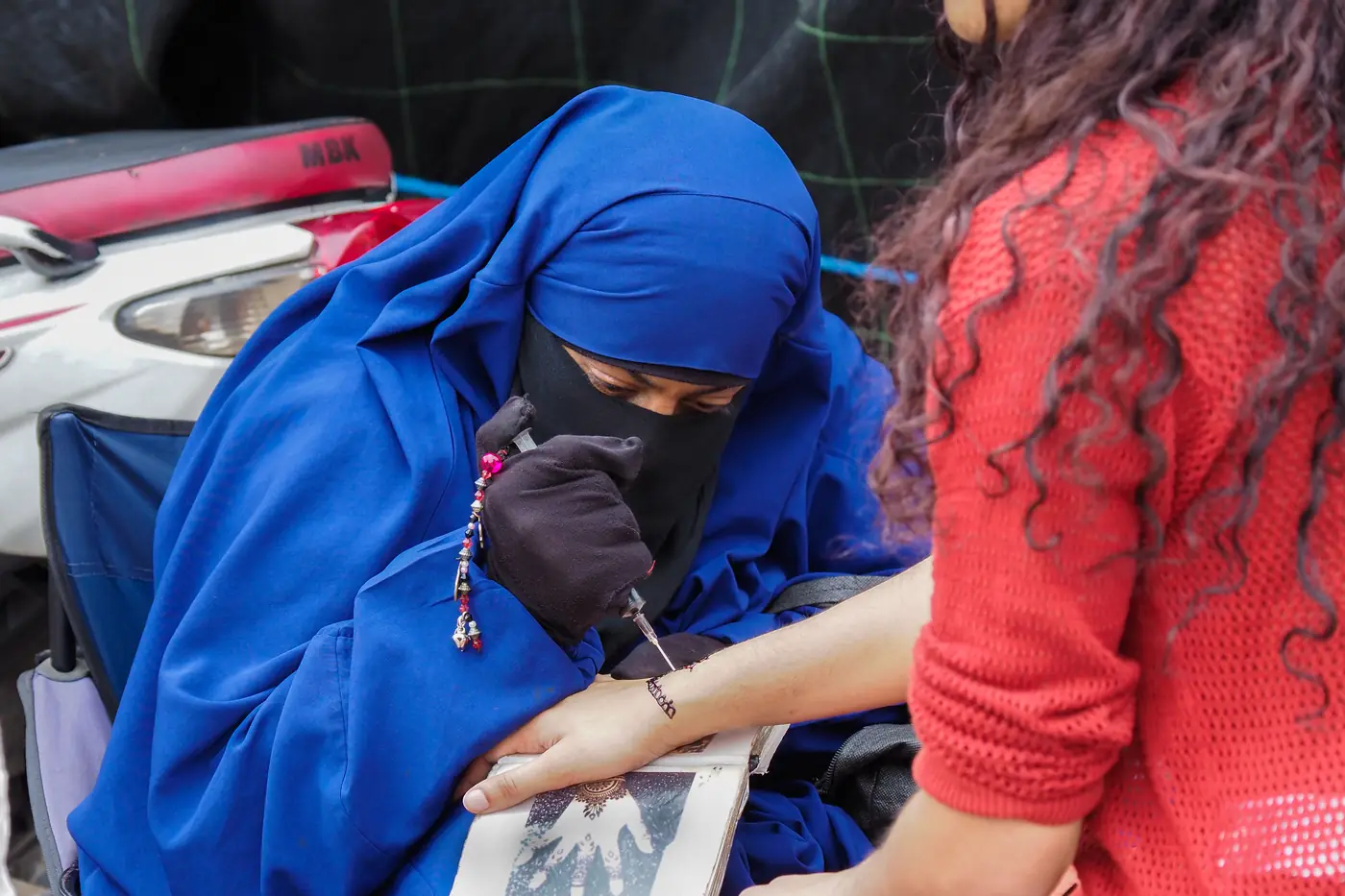
- In Jemaa el-Fnaa, henna artists and performers may start without asking and then request a high price. Agree a price first, and avoid “black henna”, which can cause skin reactions.
- Watch your phone and wallet in crowded places, as you would in any big city.
Taking photos respectfully
Always ask before photographing people, especially women and older people, and accept a no. Street performers, water sellers and animal handlers usually expect a few dirhams for a photo. Avoid photographing police, military sites and official buildings.
Drones need official permission in Morocco and are often held at customs, so leave yours at home unless you have a permit.
Food, water and mint tea
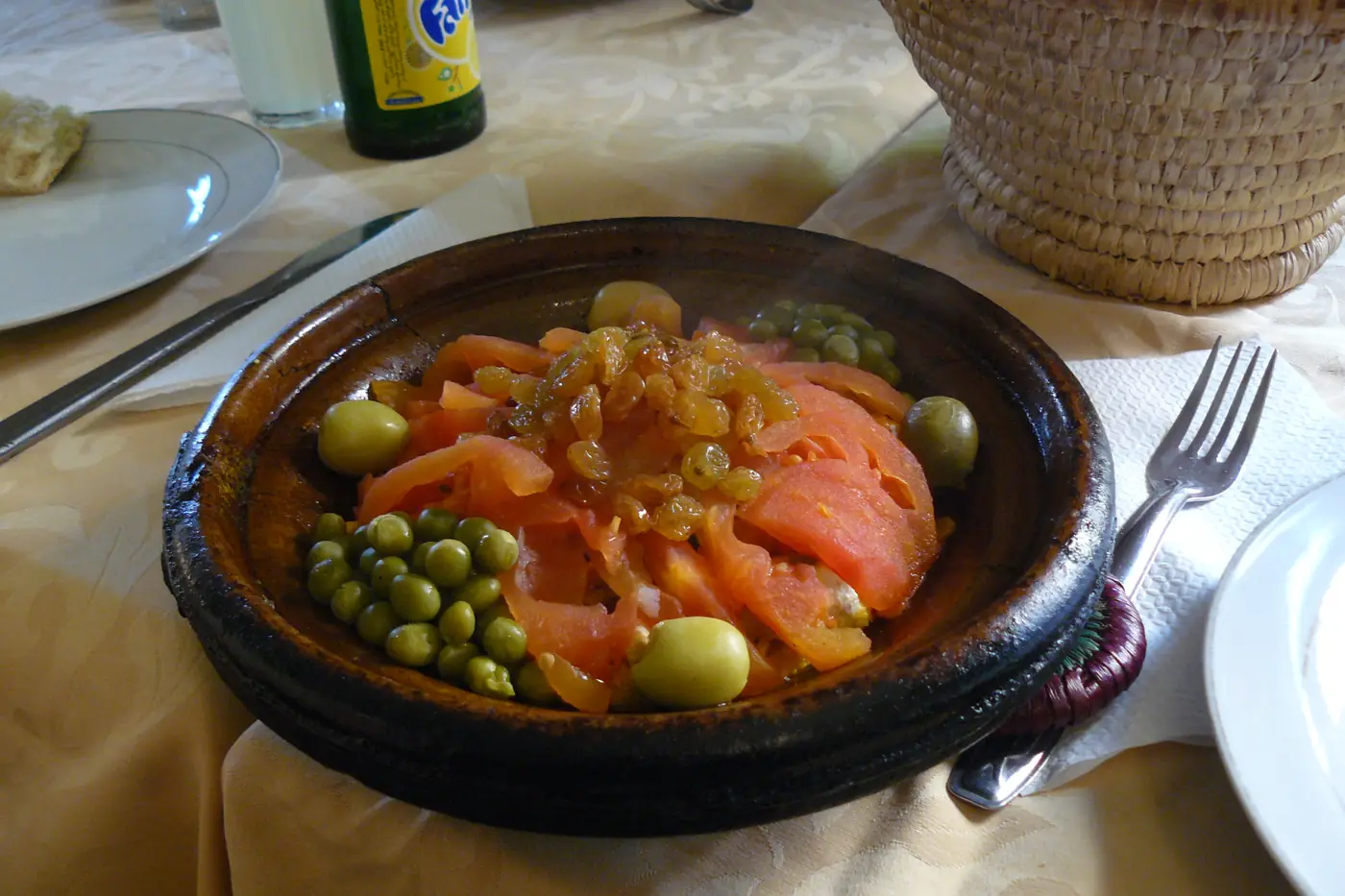
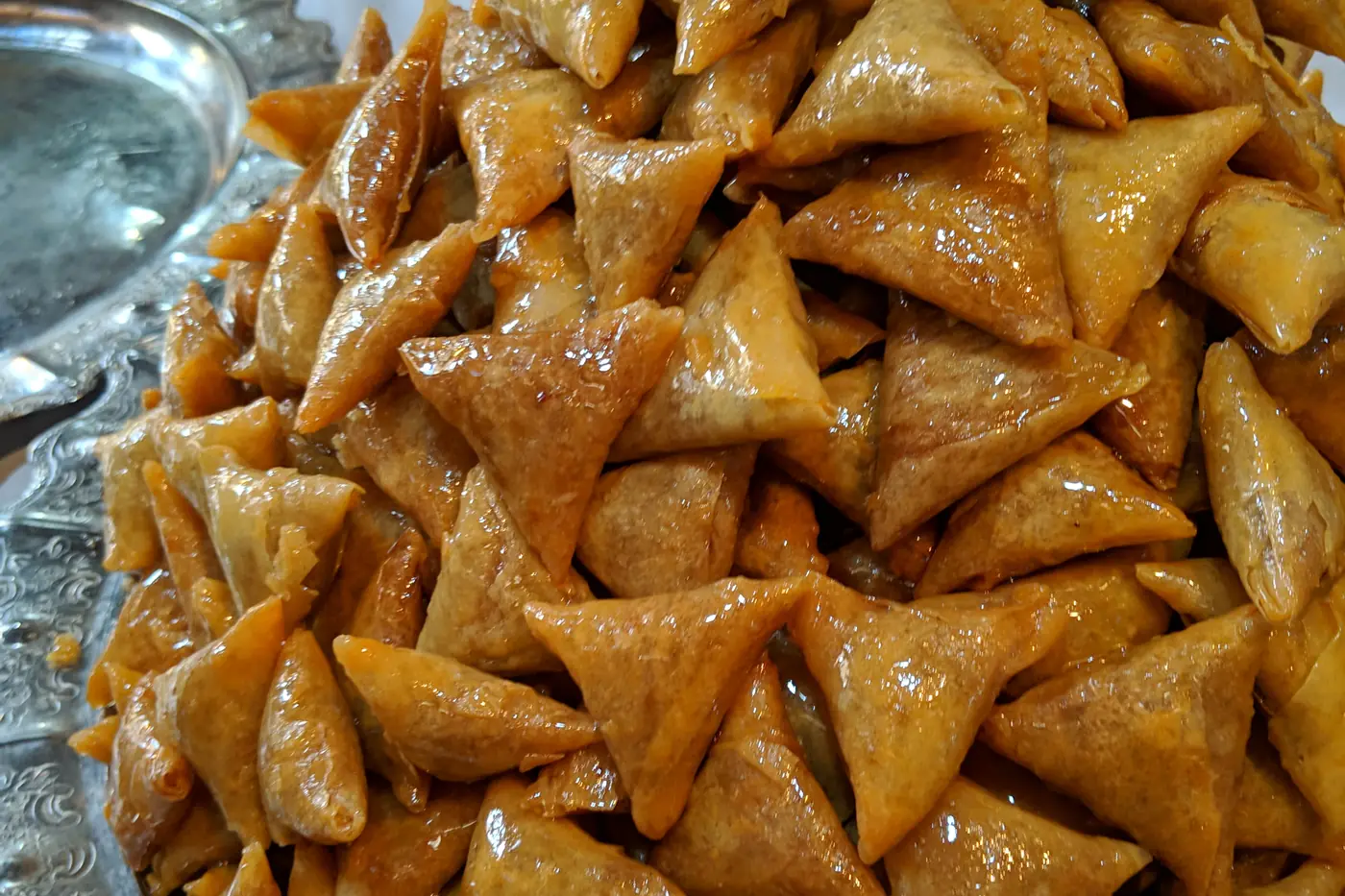
Moroccan food is one of the joys of the trip: slow-cooked tagines, couscous (traditionally eaten on Fridays), harira soup, fresh bread, grilled meat, salads and pastries. Busy street food stalls are usually safe, and freshly cooked, hot food is the best choice.
Drink bottled or filtered water, especially in the first days, and avoid ice in very simple places. Mint tea is the symbol of hospitality: accept at least one glass when it is offered. Alcohol is available in licensed hotels, restaurants and some supermarkets, but not in most traditional cafés.
Safety and health
Morocco is a popular, welcoming destination, and most visitors have no problems beyond persistent sellers. The usual big-city precautions apply: watch your belongings in crowds, use registered taxis at night and keep copies of your documents. Check your government’s travel advice before you go.
Women travelling alone may get unwanted comments in busy areas. Dressing modestly, walking with purpose and ignoring remarks usually works, and riads and camps are safe, friendly places to rest.
No special vaccinations are required for most travellers, but ask your doctor for advice. Take travel insurance, a basic medicine kit and strong sun protection, especially for the mountains and the desert.
Phones, power and other practical tips
- Buy a local SIM card from Maroc Telecom, Orange or inwi at the airport or in town; you will need your passport. Data is cheap and coverage is good, even in much of the desert. Many phones can also use an eSIM.
- Plugs are the European two-pin types (C and E) at 220 volts.
- Riads and hotels usually have Wi-Fi, but it can be slow in remote areas, so download maps and tickets in advance.
- Carry tissues and a little hand sanitiser: public toilets do not always have paper.
- Keep a photo of your passport on your phone, and the original somewhere safe.
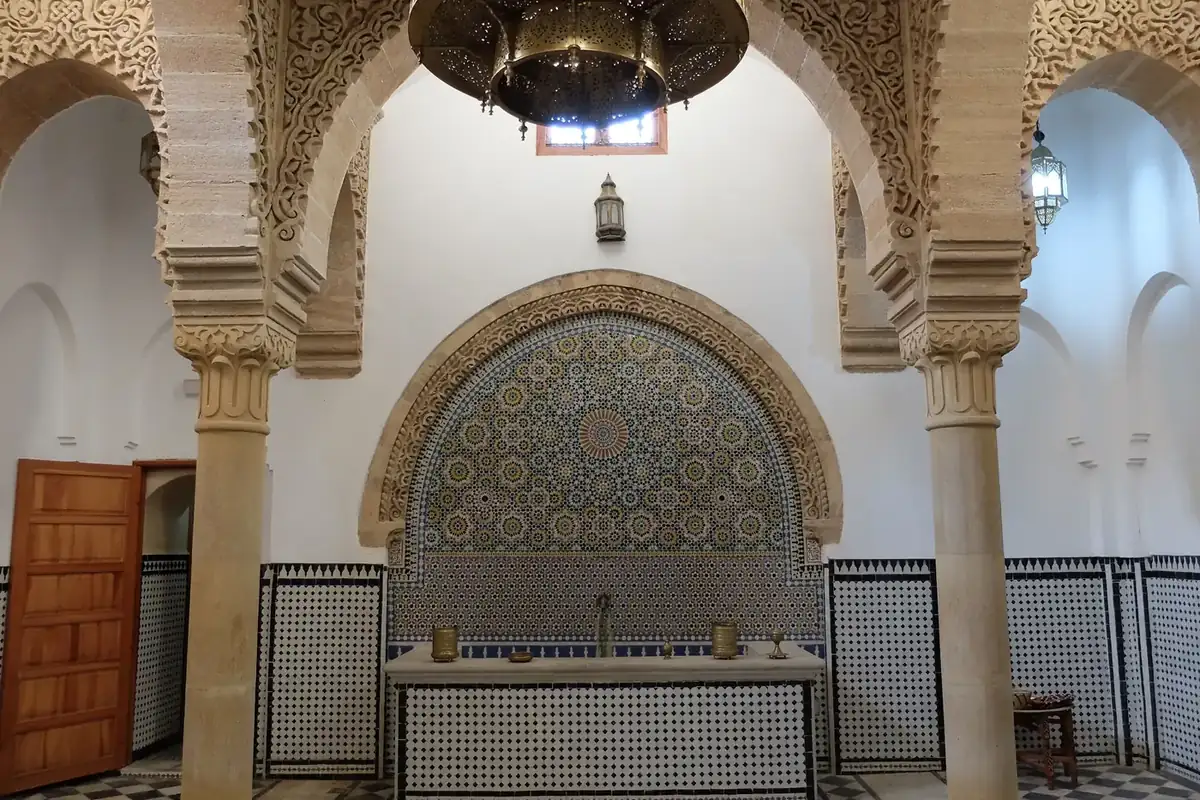
Try a hammam
A visit to a hammam, the traditional steam bath, is one of the most relaxing and authentic experiences in Morocco. Public neighbourhood hammams are very cheap, with separate times or rooms for men and women; bring your own towel, flip-flops and a change of underwear. Spa hammams in riads and hotels are more private and include a scrub with black soap and a massage.
Don’t skip the Sahara
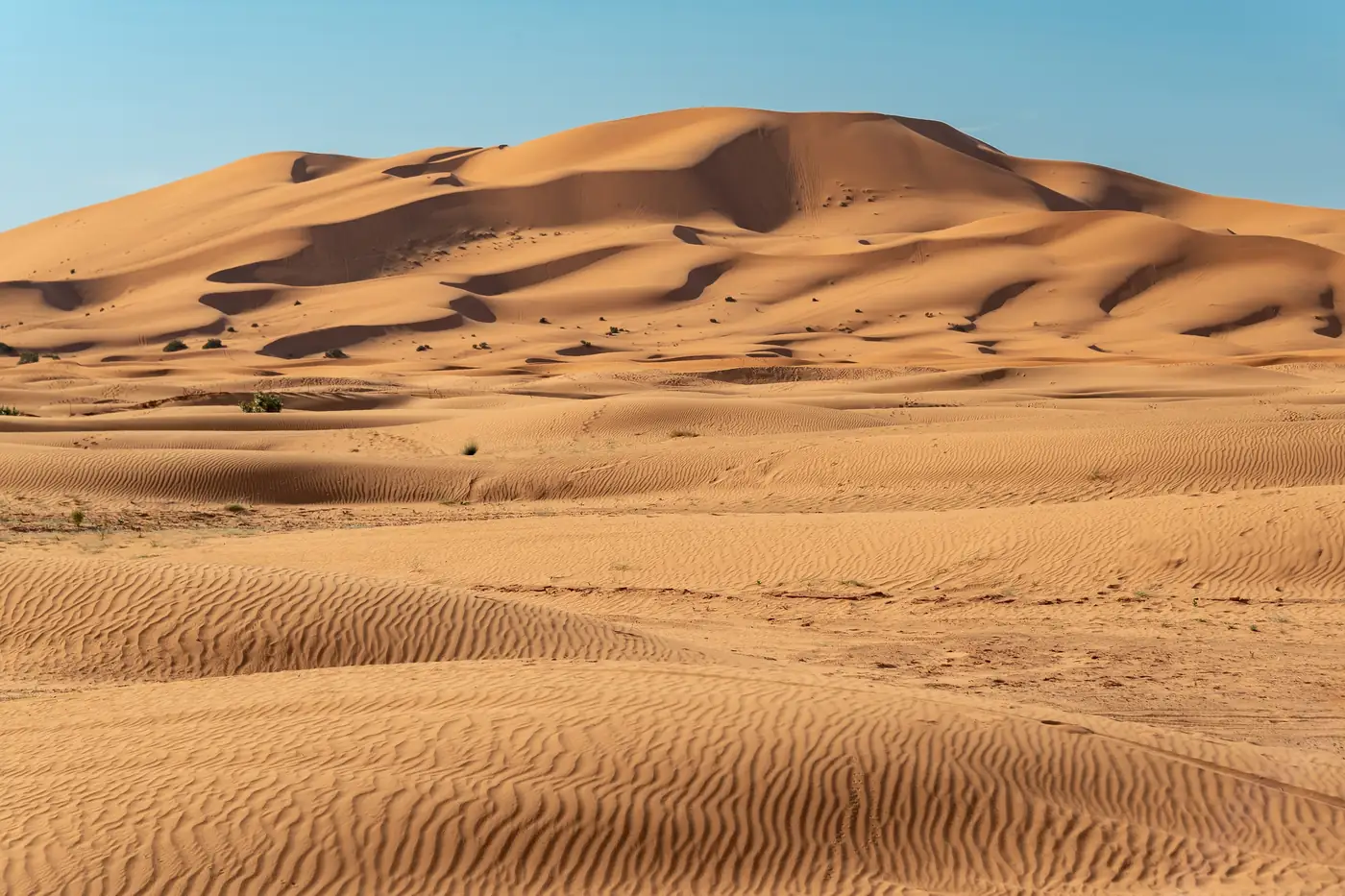
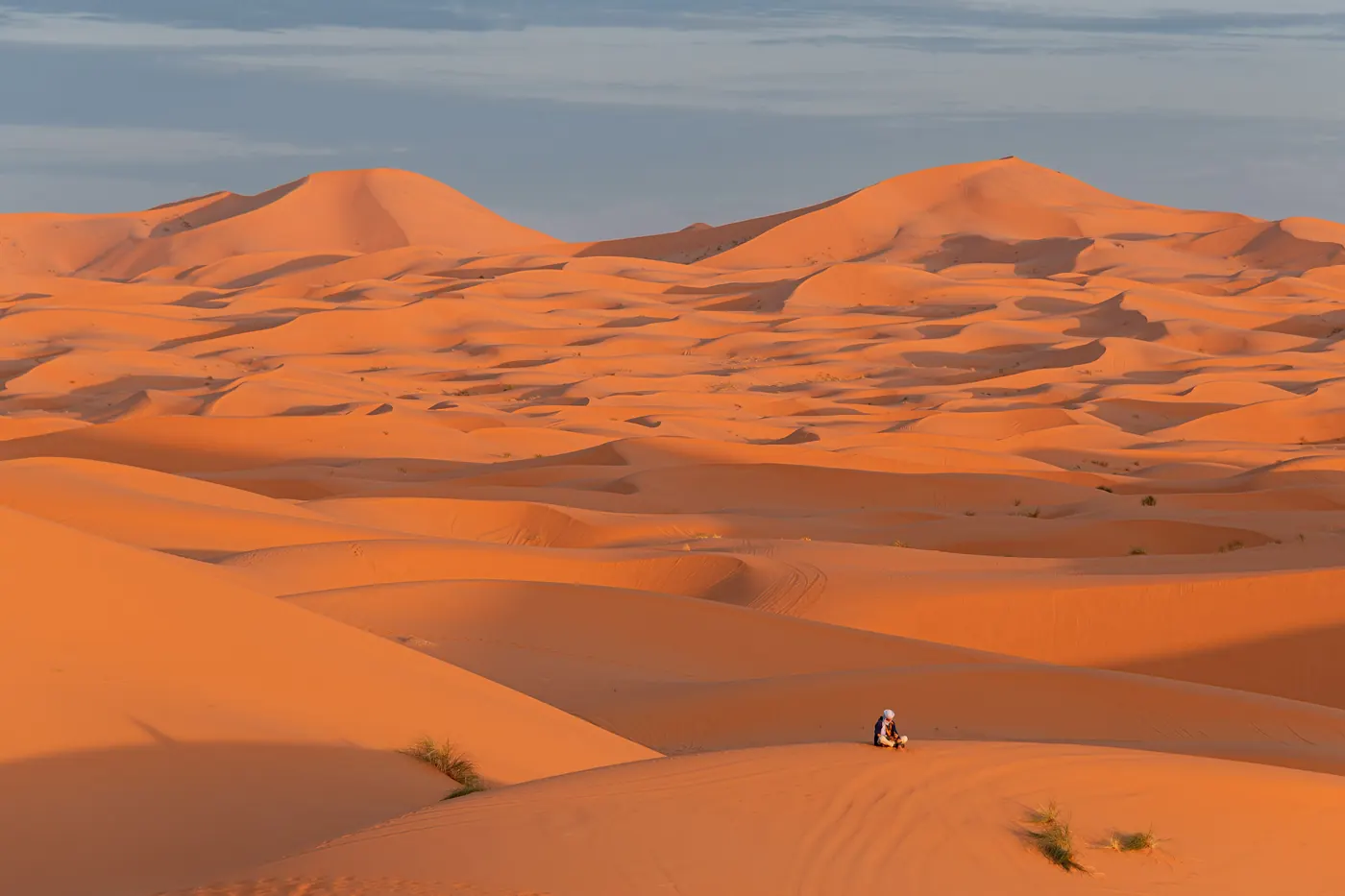
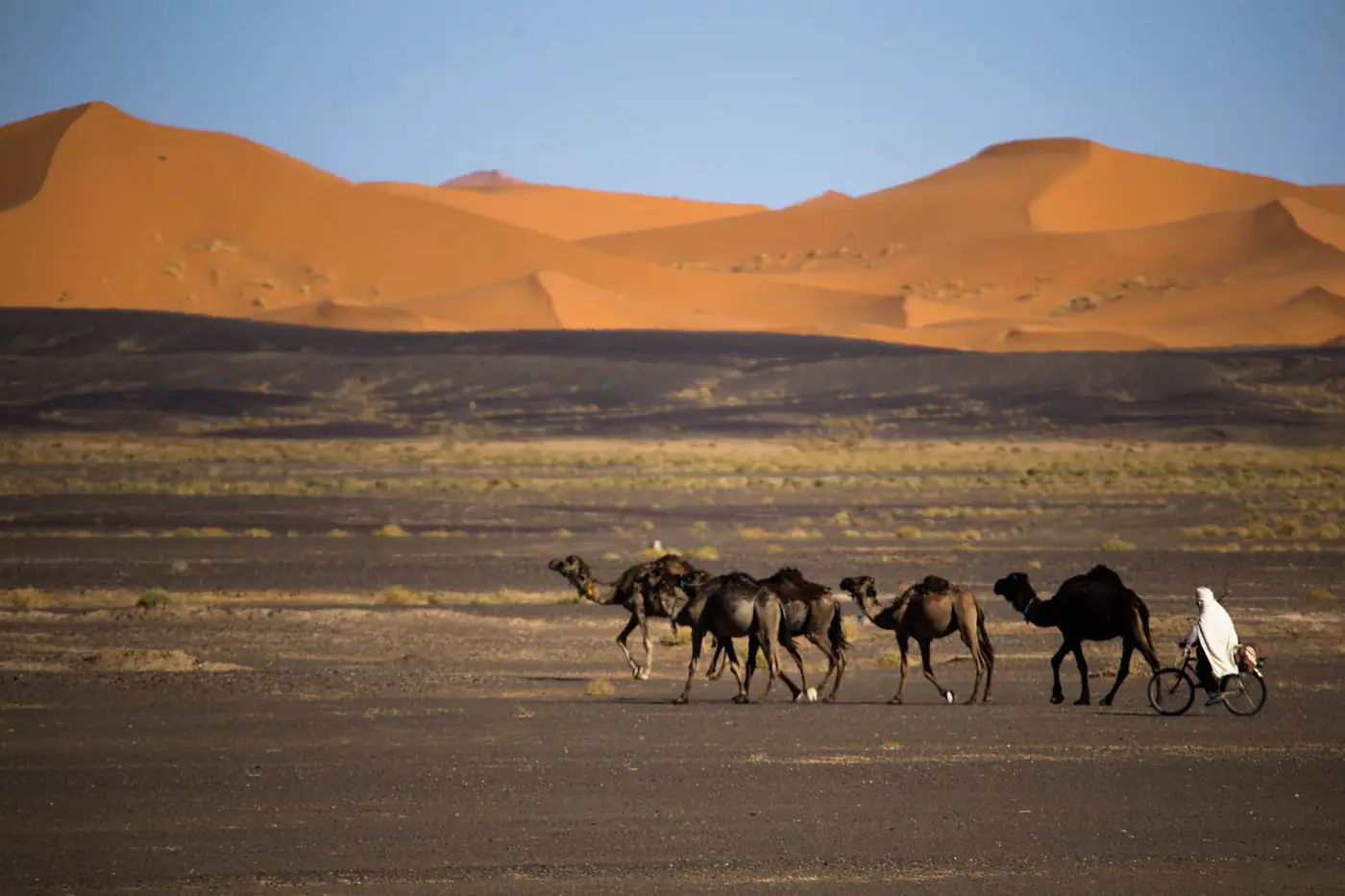
For many travellers, the night in the desert is the highlight of their whole trip: the silence, the dunes at sunset, dinner by the fire and a sky full of stars. Erg Chebbi, beside Merzouga, has the tallest and most beautiful dunes in Morocco and is reachable on a paved road.
From Marrakech, plan at least three days for a desert round trip, or include the desert on the way to Fes. From Fes, two days is possible, but three is more relaxed. Wherever you start, two nights in the desert give you a full day for a 4x4 tour, sandboarding or a camel trek without rushing.
Good first-trip tours: medinas and the Sahara
Partner links: if you book through GetYourGuide we may earn a small commission, at no extra cost to you. Tours are run by independent operators.
Spend your desert nights with us
Merzouga Glamping is a family-run desert camp at the edge of Erg Chebbi with private ensuite tents. Air conditioning in summer and heating in winter run day and night, dinner is served in our indoor restaurant, and a sunset camel ride and sandboarding are included.
Stays start from €70 per person per night, and a single tent is €85. Our camp can be reached by normal car. After we confirm availability, a 20% deposit is paid in euros by PayPal; the balance is paid at the camp by card in dirhams, or in cash in euros or dirhams.
Planning your first trip to Morocco? Tell us your dates and we will help you fit in the desert.
Ask about your datesFacts, tour and photo notes
Visa rules, exchange rates and transport timetables change, so confirm them with official sources before you travel. Tips are based on our own experience welcoming guests in Morocco. Tour listings were checked on GetYourGuide on 18 November 2026; prices and inclusions can change.
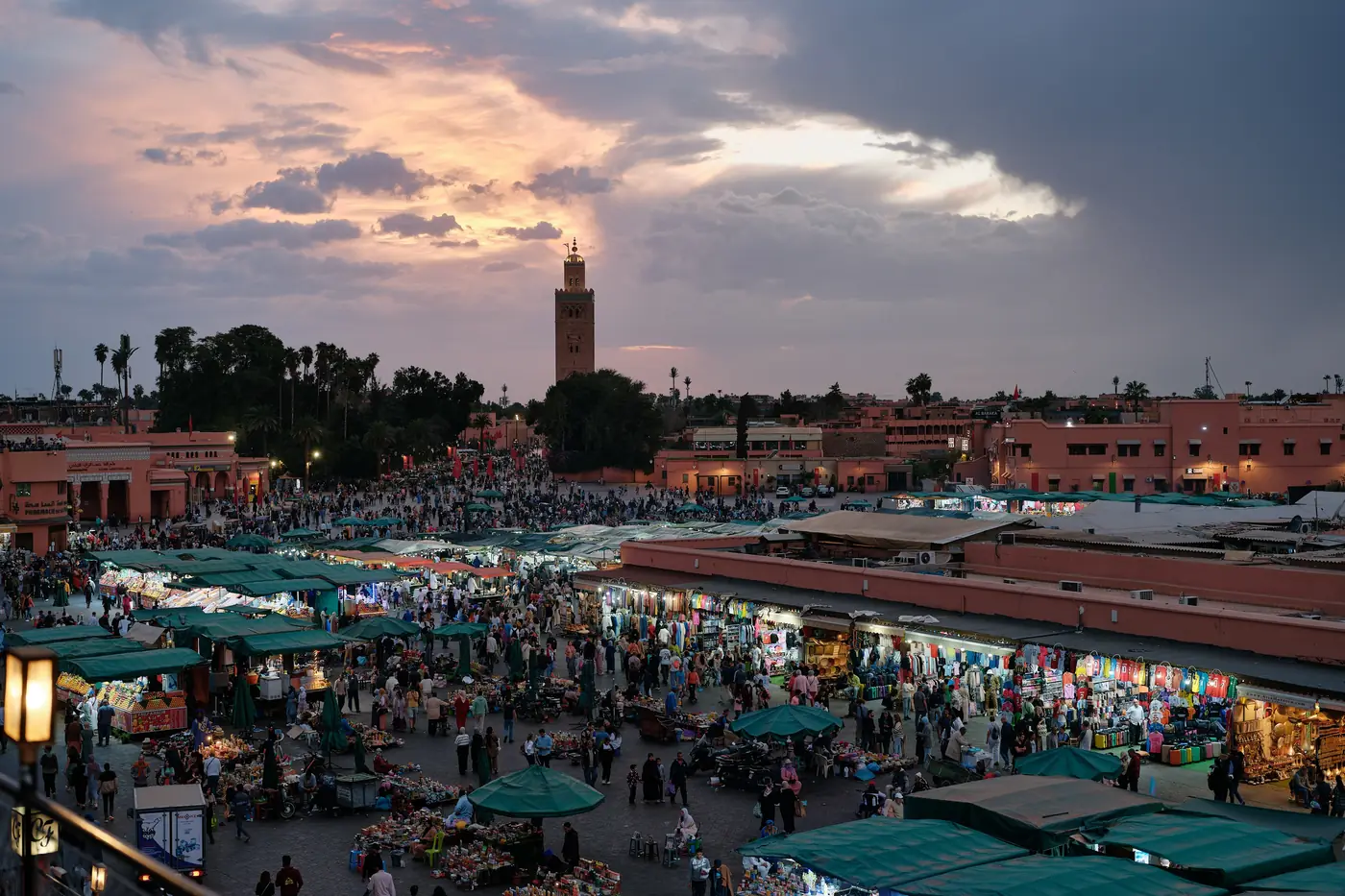
- Jemaa el-Fnaa at dusk photo · Herokk · CC BY-SA 4.0
- Dirham notes photo · Freepius · CC0
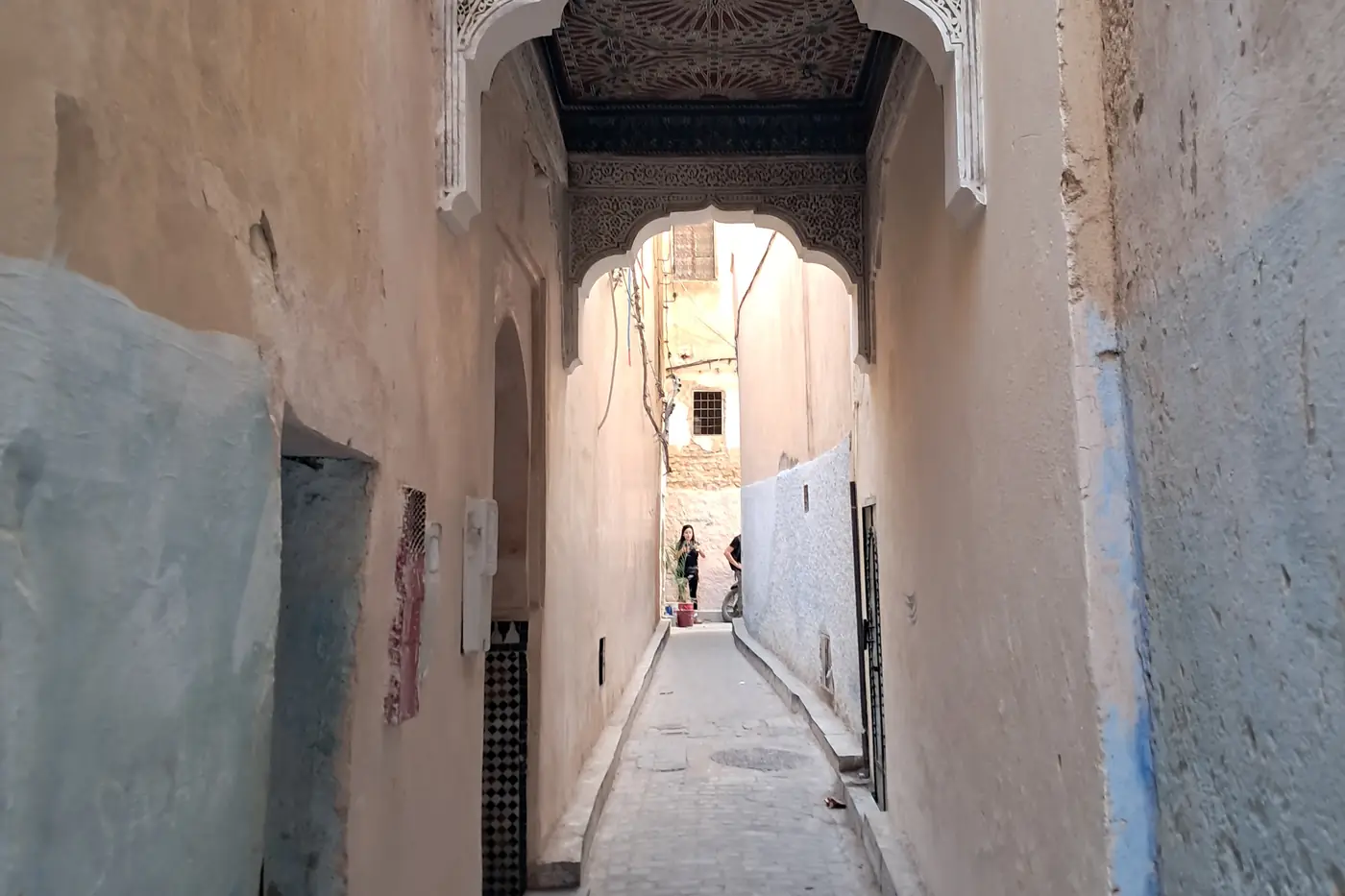
- Fes medina lane photo · Ideophagous · CC BY-SA 4.0
- Al Boraq train photo · إيان · CC BY-SA 4.0
- Grand taxi photo · Michal Osmenda · CC BY-SA 2.0
- Tizi n’Tichka road photo · GuHKS · CC BY-SA 4.0
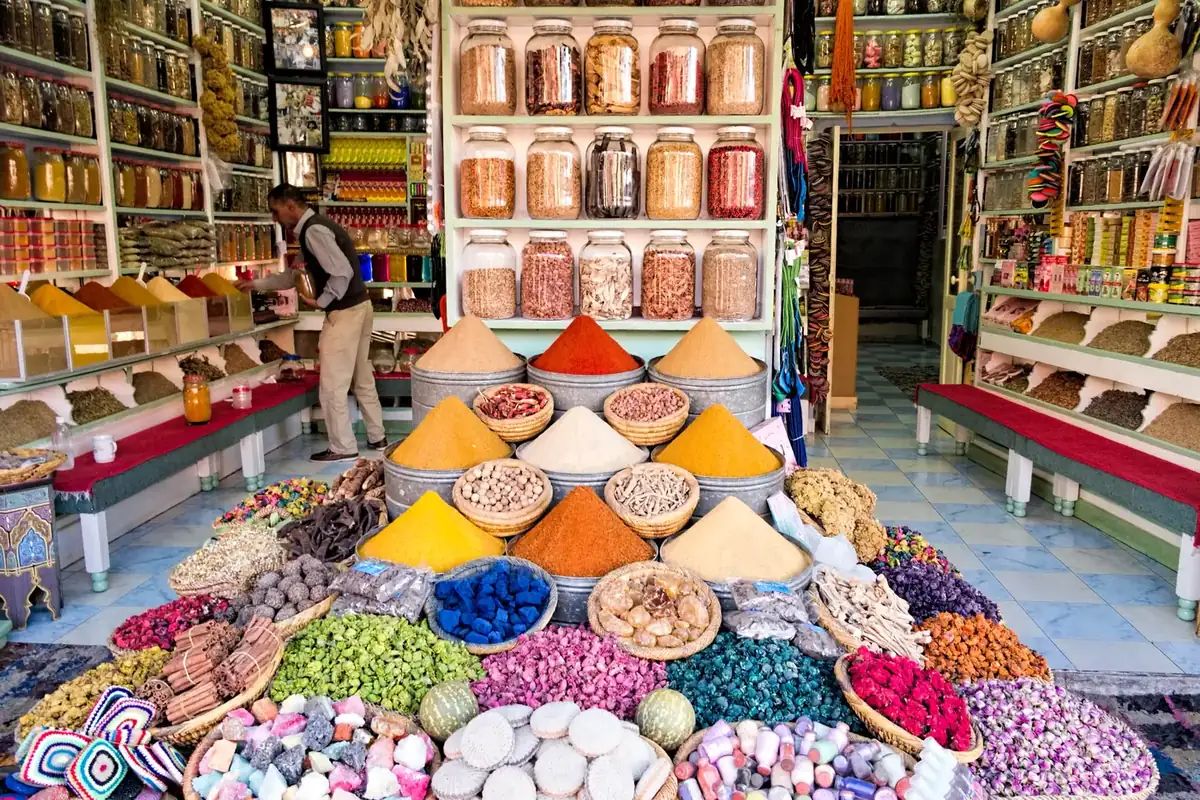
- Spice shop photo · Dan Lundberg · CC BY-SA 2.0
- Fes carpet shops photo · Esin Üstün · CC BY 2.0
- Henna artist photo · Petar Milošević · CC BY-SA 4.0
- Tagine photo · Jon Lean · CC BY-SA 2.0
- Briouats photo · FuriousYogi · CC BY-SA 4.0
- Saffarin hammam photo · R Prazeres · CC BY-SA 4.0
- Merzouga camel caravan photo · Farajiibrahim · CC BY-SA 4.0
Frequently asked questions
Do I need a visa for Morocco?+
Citizens of the EU, the UK, the US, Canada, Australia and many other countries can stay up to 90 days without a visa. Check your own government’s advice, as rules depend on your nationality.
Is Morocco safe for tourists?+
Morocco is a popular and welcoming destination. Most visitors only deal with persistent sellers and the occasional pickpocket in crowds. Use normal city precautions and check your government’s travel advice.
Should I bring cash or cards to Morocco?+
Both. Cards work in many hotels and larger restaurants, but taxis, souks, cafés and small guesthouses usually want dirhams in cash. Cash machines are common in cities and rare in the desert.
What should I wear in Morocco?+
Light, loose clothes that cover shoulders and knees are respectful and comfortable for both women and men. Bring a warm layer for evenings, and a scarf for sun, wind and dust in the desert.
How many days do I need in Morocco?+
Seven to ten days is ideal for a first trip, with one or two cities, the Atlas Mountains and at least one night in the Sahara. Five days works if you focus on one city and the desert.
Can I drink tap water in Morocco?+
Tap water is treated in cities, but most visitors prefer bottled or filtered water, especially in the first days, to avoid stomach upsets.
Is it worth going to the Sahara on a first trip?+
Yes. A night in the dunes of Erg Chebbi is the highlight of many trips. Plan at least three days for a desert round trip from Marrakech, or two to three days from Fes.
Plan the rest of your desert stay
Stay with us in Merzouga
Private ensuite tents with air conditioning and heating, dinner and breakfast, the sunset camel ride and sandboarding — all included.
Request availability