Quick answer
- Afternoon heat
- 40–45 °C
- Typical July–August peaks
- Best activity hours
- Before 10:00 & after 18:00
- Rest in the shade at midday
- Nights
- Warm, 25–30 °C
- Clear skies for stars
- Our tents
- AC on all day
- Never switched off at midday
Need a driver? We can arrange your transfer — message us on WhatsApp.
Yes, you can visit Merzouga in summer — and many travellers do, because July and August are when school holidays and long breaks fall. The Sahara is genuinely hot at this time of year, so the trip only works if you plan your day around the heat: dunes at sunrise and sunset, shade and air conditioning in the middle of the day.
Many camps and tour companies simply tell people to avoid summer, and some quietly switch off the air conditioning during the day to save power. We run Merzouga Glamping, a camp on the edge of Erg Chebbi, and our tent AC stays on all day and all night. This guide explains how to enjoy the desert in summer, honestly — including when it is not a good idea.
How hot is Merzouga in summer?
From mid-June to the end of August, afternoon temperatures in Merzouga commonly reach 40–45 °C, and the sand surface gets much hotter than the air. Mornings start pleasantly warm and the heat builds quickly after about 10:00. Evenings cool down slowly; nights usually stay warm, around 25–30 °C. The air is very dry, so 40 °C here feels different from humid heat, but dehydration happens faster than you notice.
June and early September are a little gentler at the edges of the day. Occasional sand-carrying winds can blow in summer afternoons; they usually pass, but they are another reason to keep the middle of the day free.
| Month | Typical afternoon | Typical night | Our verdict |
|---|---|---|---|
| June | 36–42 °C | 22–27 °C | Good with an early/late plan |
| July | 40–45 °C | 25–30 °C | Hottest — AC tent essential |
| August | 40–44 °C | 25–29 °C | Very hot — keep midday free |
| September | 33–38 °C | 19–24 °C | Comfortable at the edges of the day |
Typical ranges, not forecasts. Check the forecast for your dates before travelling.
Is a summer visit worth it?
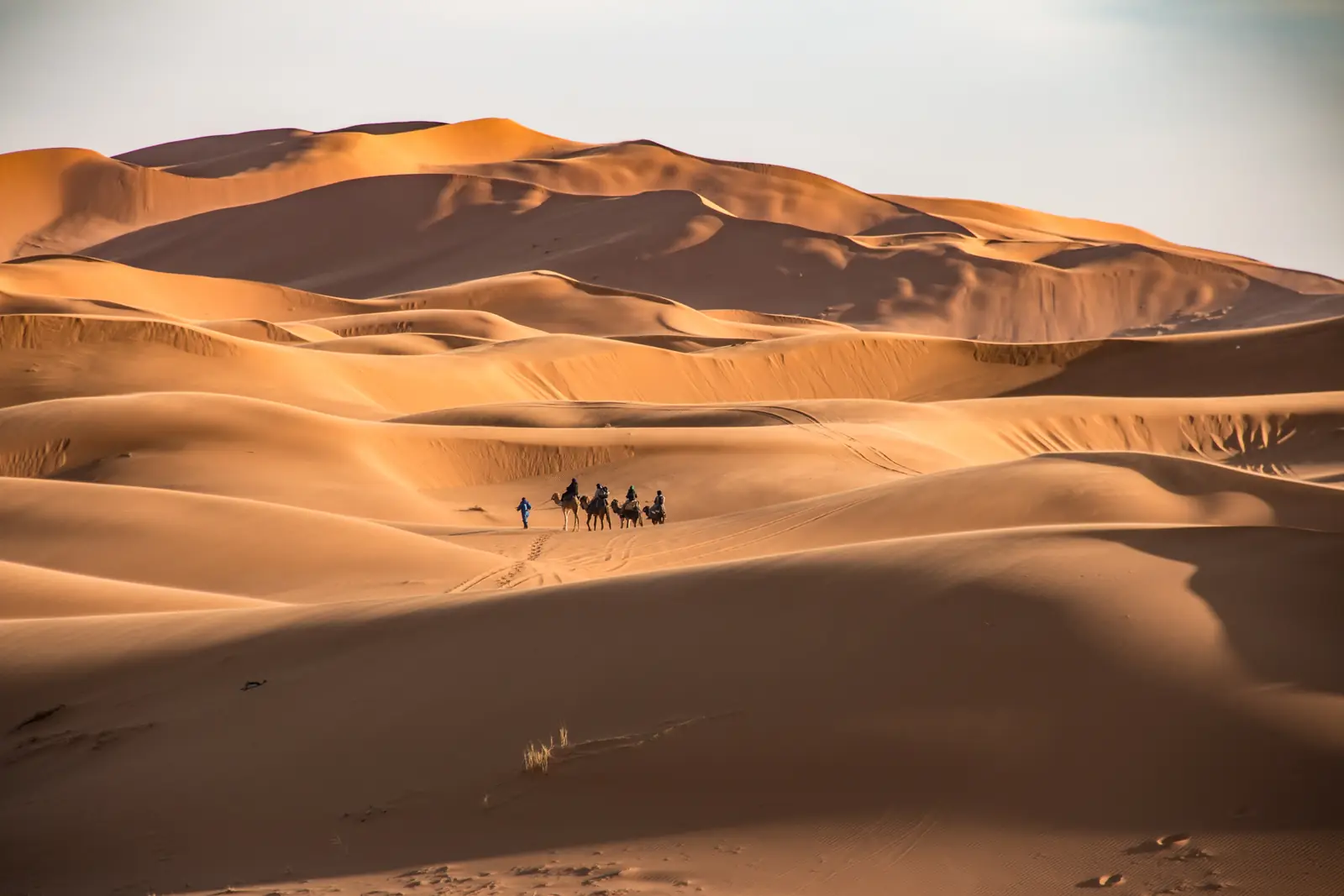
It is worth it if you accept a slower rhythm. The bonuses are real: long golden evenings, very clear night skies, quieter dunes than in spring and autumn, and the traditional sand bath season. The trade-off is that you will spend roughly 11:00 to 17:00 resting rather than exploring.
| Summer visit suits you if… | Think twice if… |
|---|---|
| You are happy to start at sunrise | You want to be active all afternoon |
| Summer holidays are your only window | You have serious heart or breathing conditions |
| You will stay in a tent with working AC | Your package has no AC, or only a fan |
| You like quiet dunes and warm starry nights | You are travelling with a baby who cannot be kept cool |
The ideal summer day in the dunes
This is the rhythm we suggest to our summer guests. Exact times shift with sunrise and sunset, so we confirm them with you on arrival.
- 1
Around 5:30–6:00 — sunrise
Climb a dune or ride a camel to watch the sun rise. The sand is cool and the light is at its softest.
- 2
7:00–10:00 — morning activities
Breakfast, then horse riding, sandboarding or a 4x4 tour while the temperature is still comfortable.
- 3
10:30–17:30 — rest in the AC
Lunch, a nap, reading, Wi-Fi and plenty of water in your air-conditioned tent. This is the hottest part of the day.
- 4
18:00–20:00 — sunset
Sunset camel ride, sandboarding and photos as the dunes turn red and the heat breaks.
- 5
After dark — dinner and stars
Dinner, Berber music by the fire, and a sky full of stars on a warm night. Then sleep in a cool tent.
Best summer activities, and when to do them
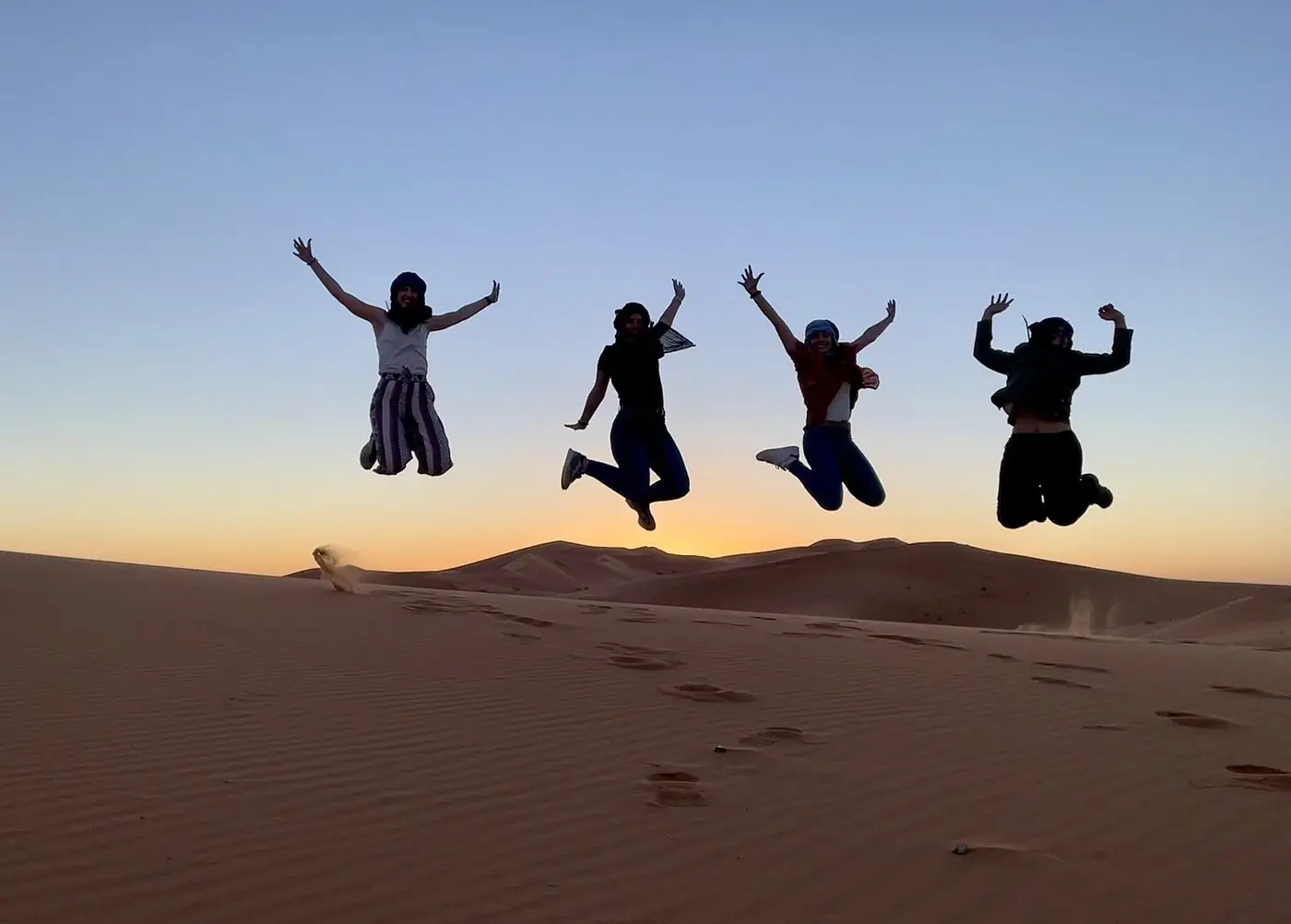
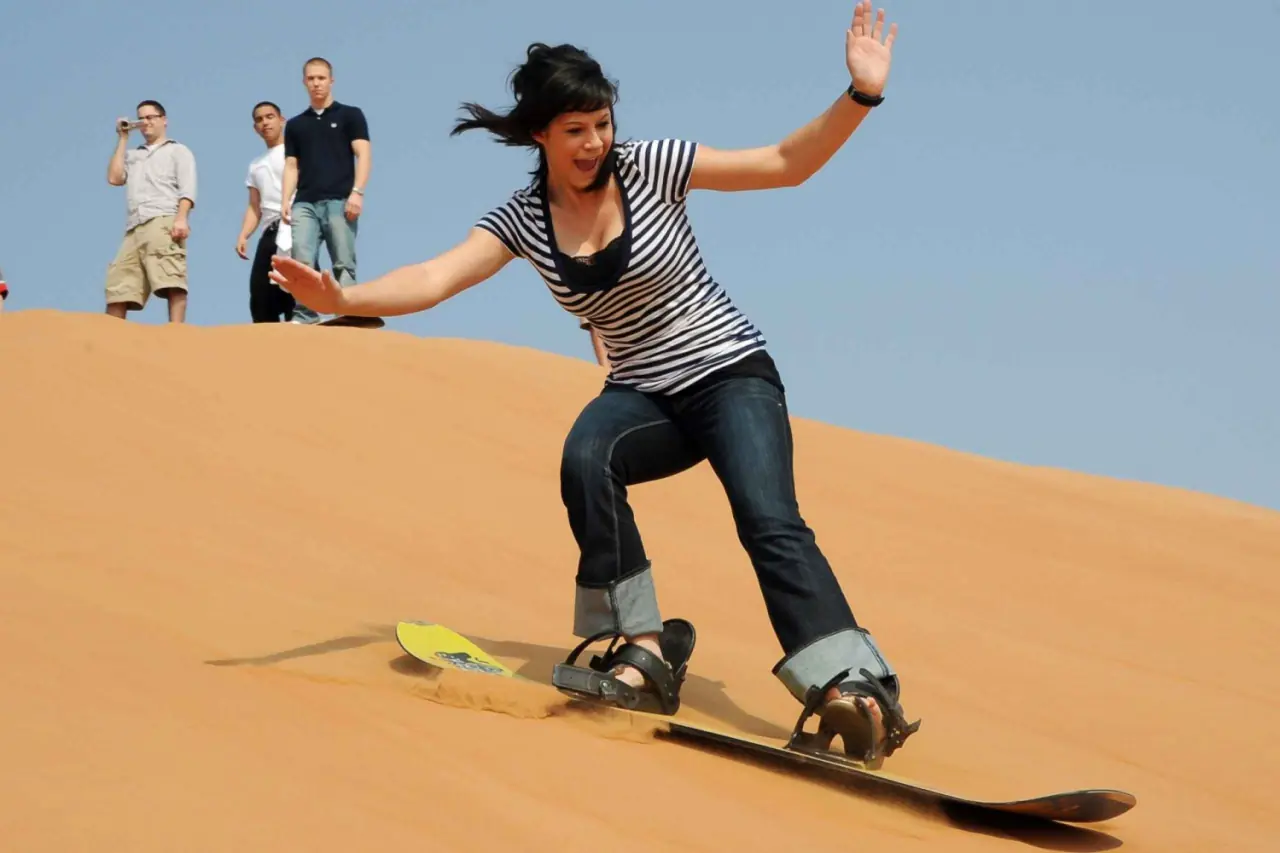
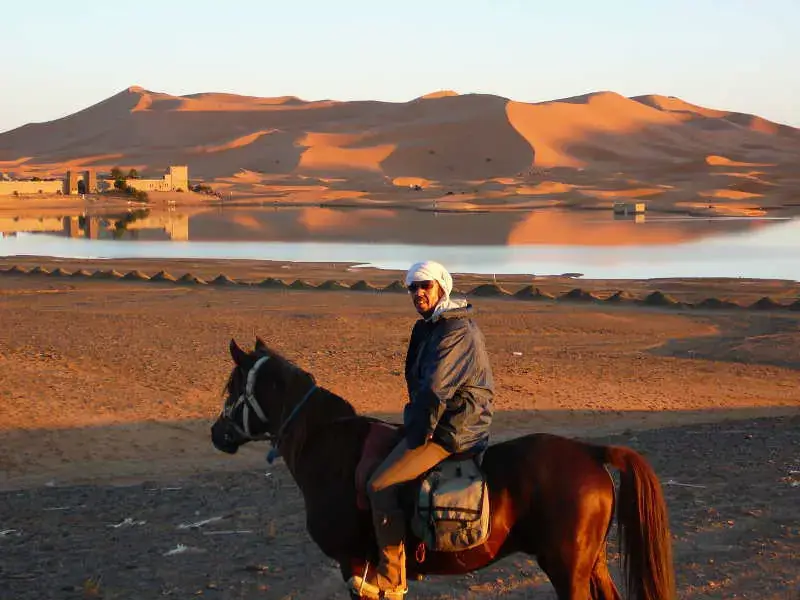
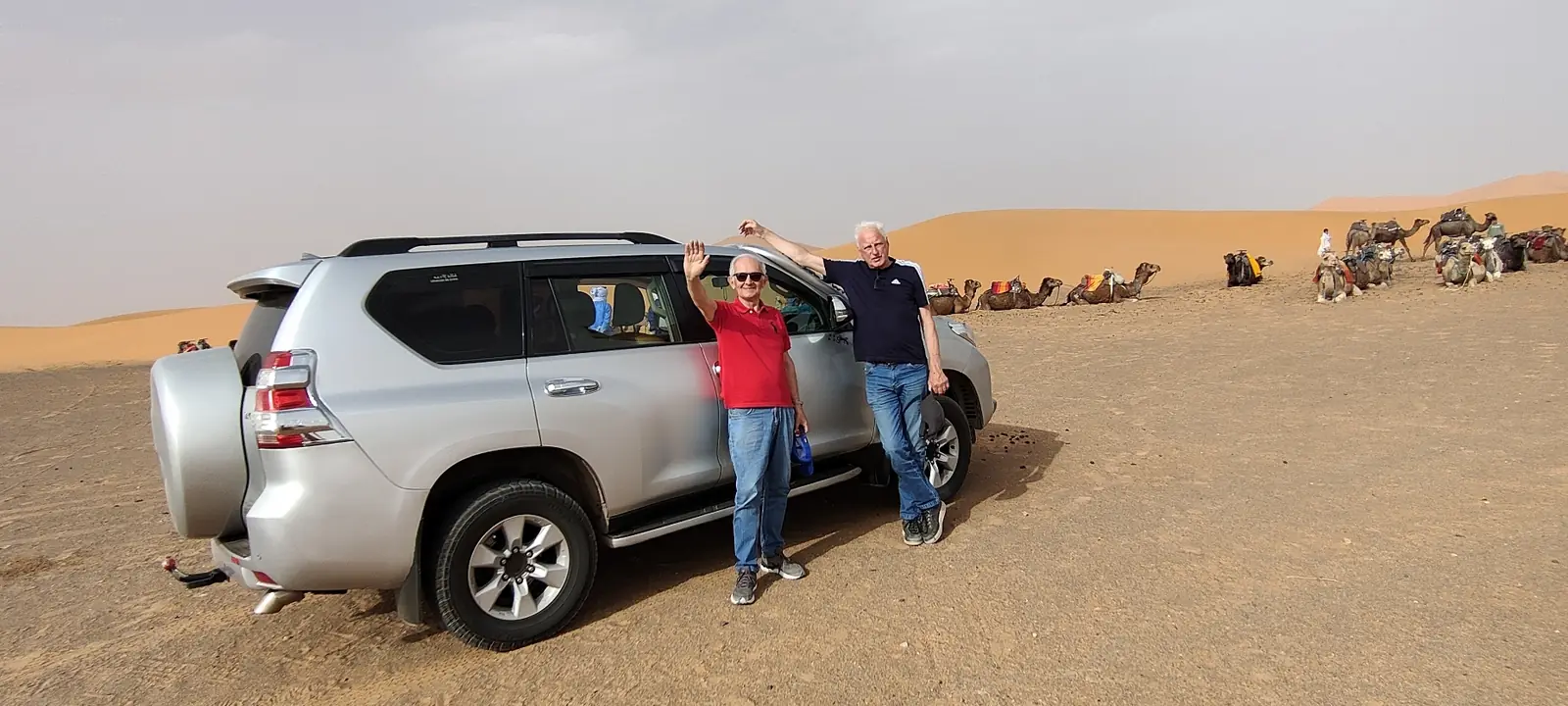
The four classic Merzouga activities all work in summer — if you do them at the right hour. The rule is simple: nothing on open sand between late morning and late afternoon.
| Activity | Best summer time | Why |
|---|---|---|
| Camel ride | Sunrise or sunset | Cooler sand, softer light, comfortable for the camels too |
| Sandboarding | Early morning or after 18:00 | The sand surface is far too hot at midday |
| Horse riding | Early morning | Horses and riders both handle the heat badly |
| 4x4 tour | Start around 7:00–8:00 | Back before the worst heat; vehicles should have AC |
Why all-day AC matters (and what to ask any camp)
In summer, the midday hours decide whether your trip is pleasant or miserable. Travellers regularly report camps where the AC is turned off during the day, or where only the restaurant tent is cooled. A tent in the sun without cooling can be hotter inside than out.
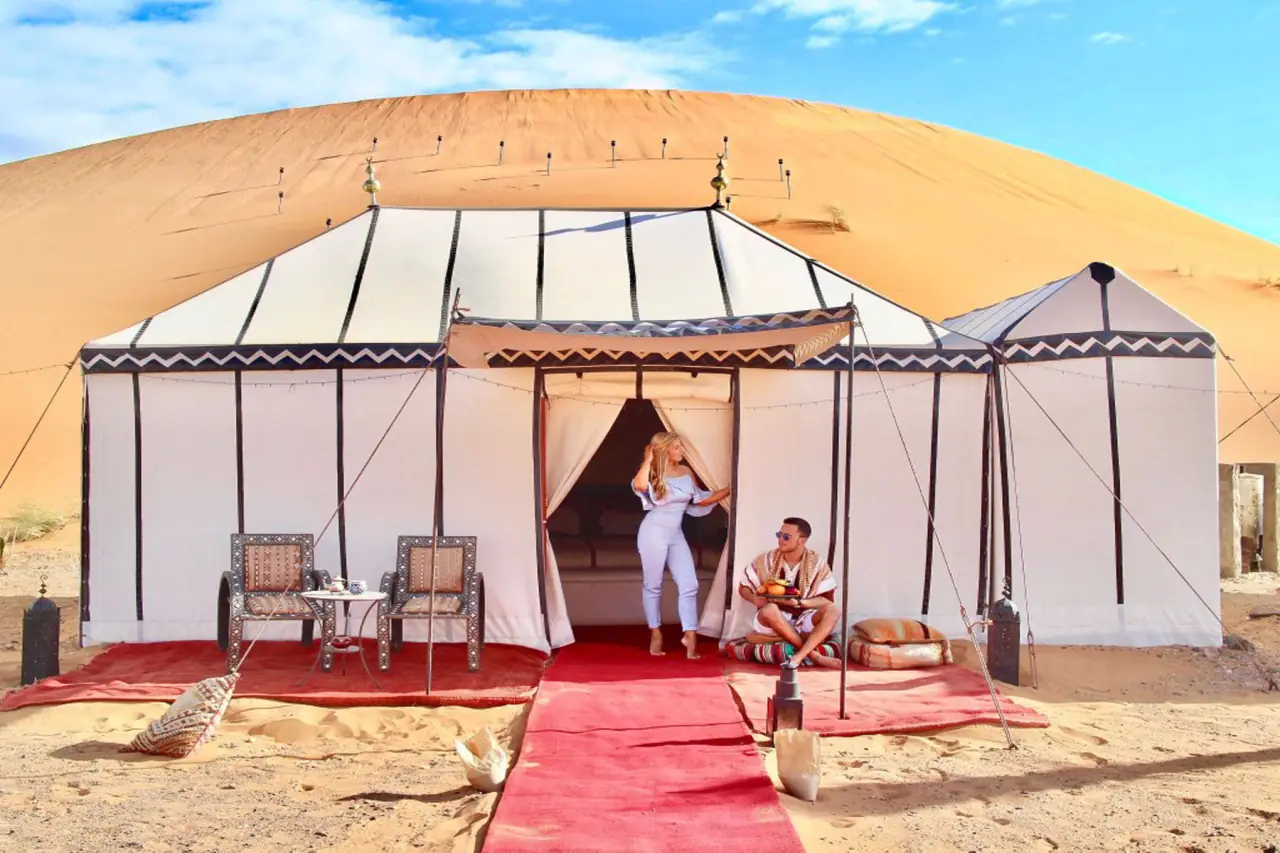
At Merzouga Glamping, every private tent has its own air conditioning unit and an ensuite bathroom, and the AC runs all day and all night — we never switch it off at midday. Whichever camp you choose, ask these questions in writing before you book:
- Is there an AC unit inside my own tent, not just in the restaurant?
- Does the AC run during the day, or only at night?
- Is power from the grid, or from a generator that is switched off at certain hours?
- Is the bathroom private and inside the tent?
- Is there shade and somewhere cool to rest between activities?
What to wear and pack for summer
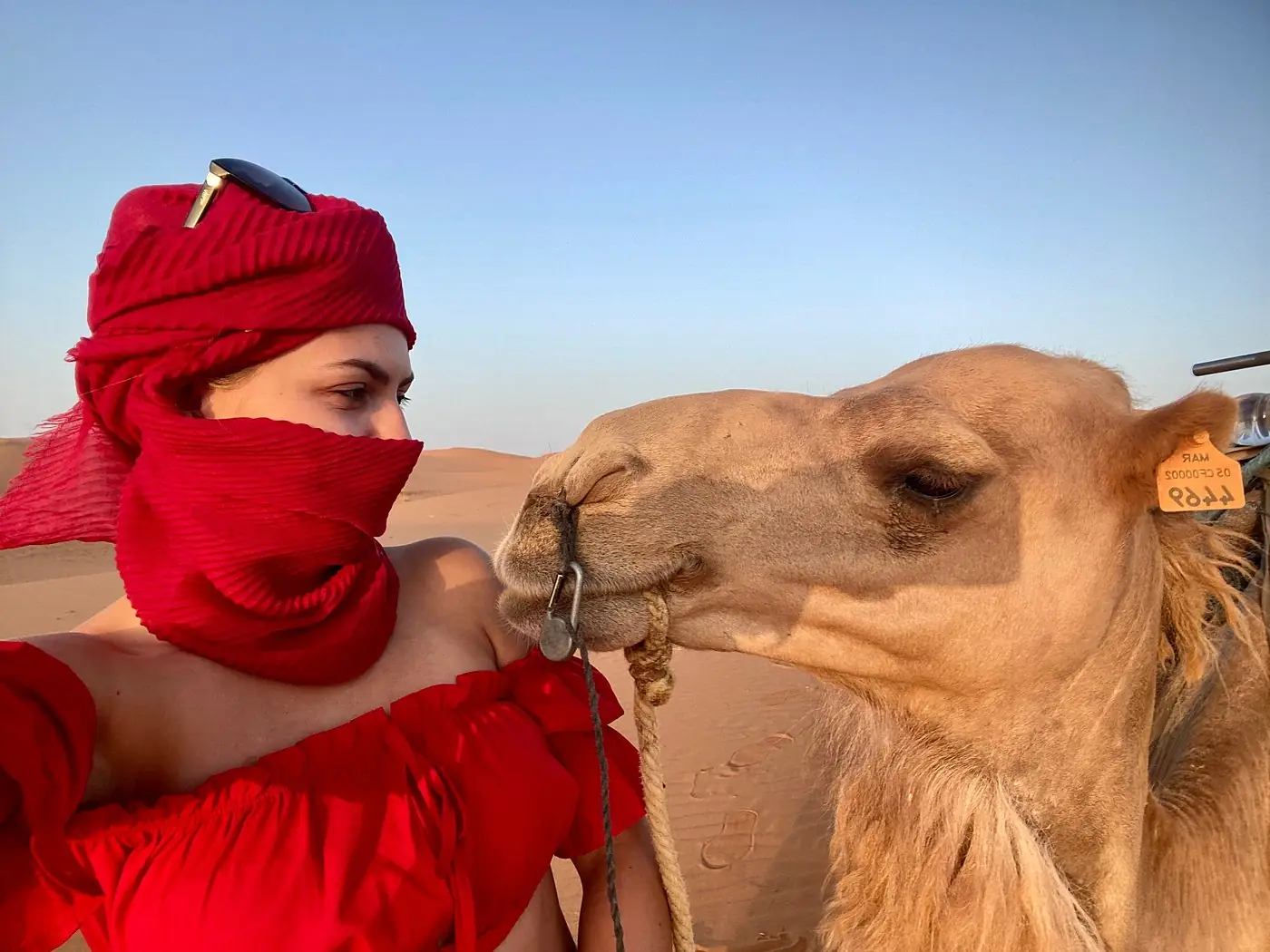
Dress like the people who live here: loose, light and covered. Long sleeves and a head scarf keep you cooler than a vest and shorts, because they block the sun.
- Loose long-sleeved shirts and light trousers in pale colours
- A wide-brimmed hat or a cheche (Berber turban) — we can show you how to tie one
- Sunglasses and high-factor sunscreen
- Closed shoes or sandals with straps: the sand burns bare feet after mid-morning
- A refillable water bottle and oral rehydration salts
- A light layer for the 4x4 or bus, where the AC can be cold
Staying safe in the heat
- Drink before you feel thirsty — aim for 3 litres or more a day.
- Stay out of direct sun between about 11:00 and 17:00.
- Watch for headache, dizziness or nausea; move to the AC and drink water straight away.
- Take children and older travellers' needs seriously: shorter activities, more breaks.
- Never walk into the dunes alone at midday or without water.
- If you drive yourself, travel early, carry extra water and keep fuel topped up.
Book summer activities in Merzouga
These hand-picked Merzouga activities — 4x4 tours, camel rides, sandboarding and horse riding — are sold by independent operators. In summer, choose a sunrise or sunset time slot when you book.
Things to do in Merzouga
Partner links: if you book through GetYourGuide we may earn a small commission, at no extra cost to you. Tours are run by independent operators.
Spend your summer night somewhere cool
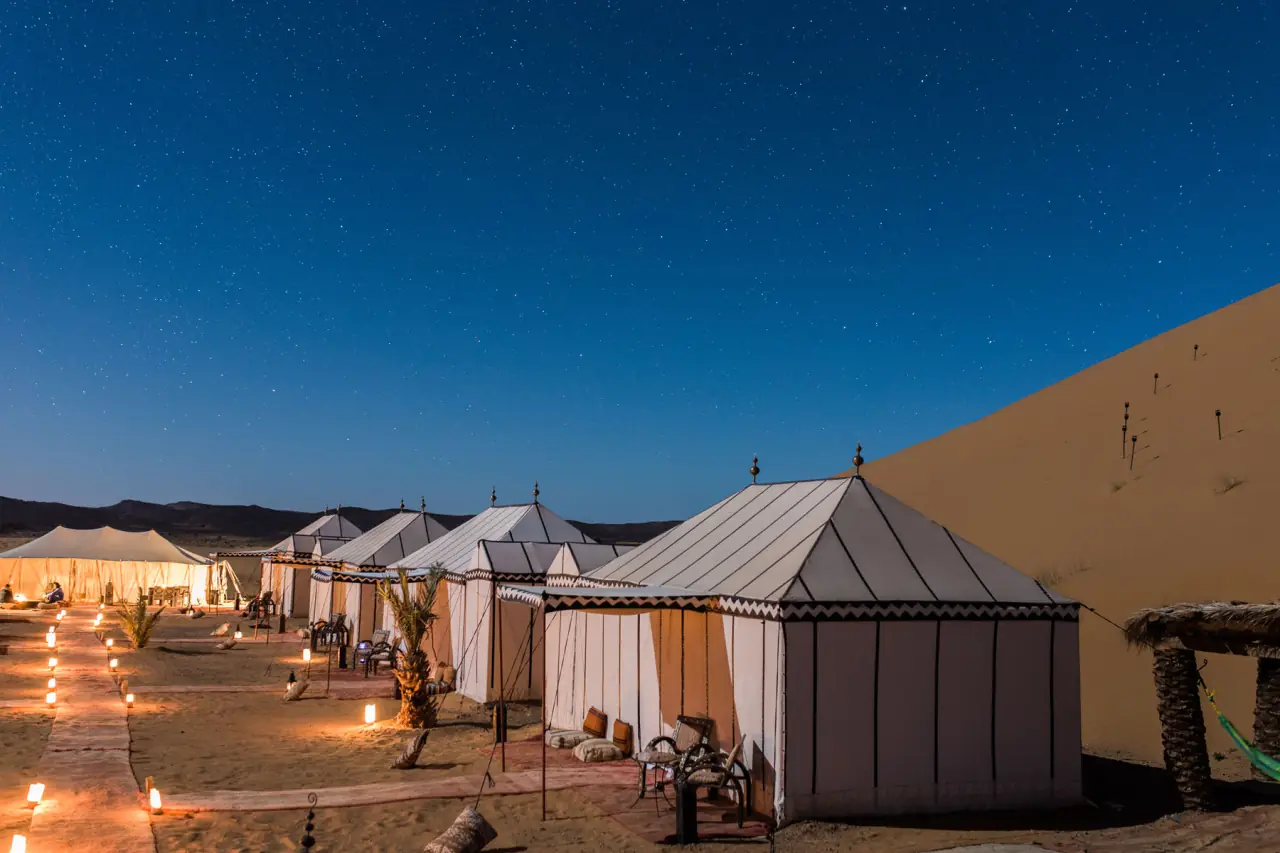
Merzouga Glamping is a family-run camp at the edge of Erg Chebbi. Every private tent has AC and heating that run all day, an ensuite bathroom and Wi-Fi. The all-inclusive rate of €70 per person per night includes dinner, breakfast, a camel ride, sandboarding and live Berber music, and we time the activities around the summer heat for you.
Planning a summer trip? Send us your dates and we will suggest the best timing for your activities.
Ask about summer datesFrequently asked questions
Is Merzouga too hot to visit in July and August?+
It is very hot — often 40–45 °C in the afternoon — but very doable if you do activities at sunrise and sunset and rest in an air-conditioned tent at midday. It is not recommended for people with serious heart or breathing conditions.
Does the AC in your tents run during the day?+
Yes. Every tent at Merzouga Glamping has its own AC unit, and it runs all day and all night. We never switch it off at midday, even in July and August.
What is the best time of day for a camel ride in summer?+
Sunset or sunrise. The sand is cooler, the light is better, and it is more comfortable for both you and the camels.
How cold are summer nights in the Sahara?+
They are not cold. Summer nights in Merzouga usually stay around 25–30 °C, so you will be glad of the AC in your tent.
Can children visit Merzouga in summer?+
Yes, with care: keep activities short and early, make sure they drink plenty, and keep them in the shade or AC at midday. Babies who cannot easily be kept cool are better brought in spring or autumn.
What should I wear in the desert in summer?+
Loose, light-coloured long sleeves and trousers, a hat or scarf, sunglasses and closed shoes or strapped sandals. Covering up keeps you cooler than shorts and a vest.
Are there sandstorms in summer?+
Windy afternoons with blowing sand can happen. They usually pass within hours; keep a scarf handy and plan activities for the calmer early morning and evening.
Is June or September better than July?+
Yes, slightly. June and September are a few degrees cooler, which gives you a bit more time for activities at the start and end of the day.
Plan the rest of your desert stay
Stay with us in Merzouga
Private ensuite tents with air conditioning and heating, dinner and breakfast, the sunset camel ride and sandboarding — all included.
Request availability