Quick answer
- Best overall
- Mar–Apr · Oct–Nov
- Warm days, cool nights
- Hottest
- July · ≈ 43 °C
- Tents with air conditioning
- Coldest nights
- Dec–Jan · ≈ 3 °C
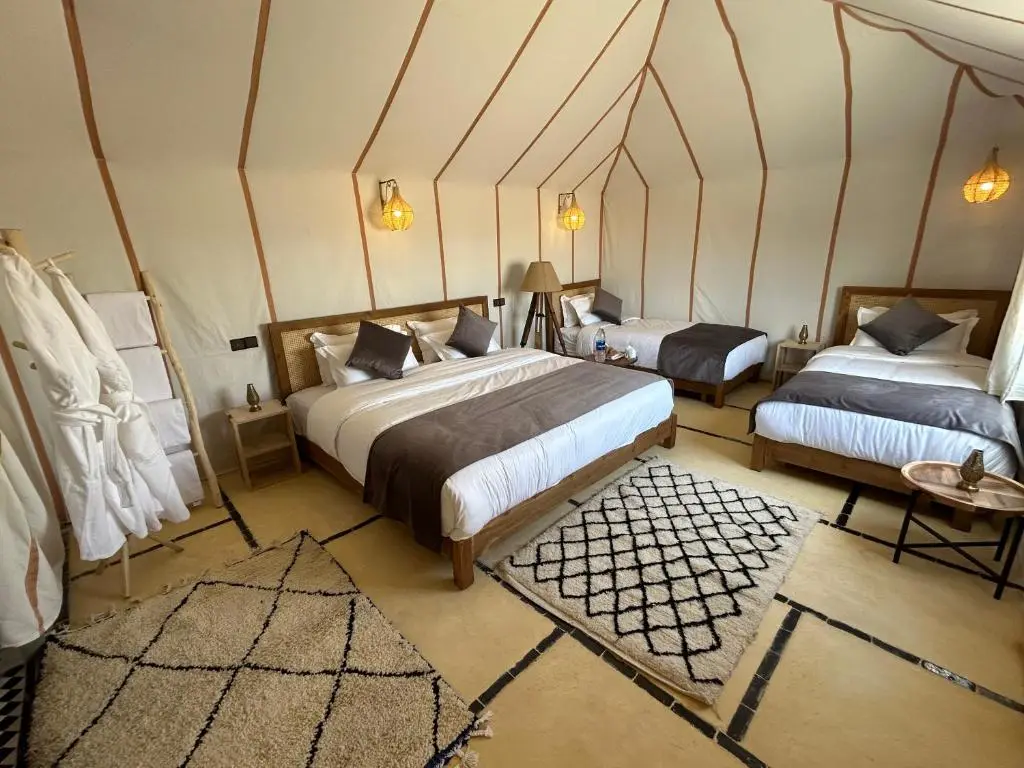
- Every tent is heated
- Clearest skies
- Nov–Feb
- Milky Way core: Jun–Sep
Need a driver? We can arrange your transfer — message us on WhatsApp.
We live at the foot of Erg Chebbi all year, and “when should we come?” is the question we hear most. The honest answer: Merzouga is worth the journey in every month, but January and July are two very different deserts. This guide tells you what each month actually feels like, so you can choose deliberately.
Merzouga weather month by month
Average afternoon highs and pre-dawn lows at the camp. Real days can be several degrees warmer or colder, so treat these as typical ranges, not promises.
| Month | Day | Night | Conditions | Crowds |
|---|---|---|---|---|
| January | 18 °C | 3 °C | Clear and calm | Medium |
| February | 21 °C | 5 °C | Clear, cold nights | Medium |
| March | 25 °C | 9 °C | Windy spells possible | High |
| April | 29 °C | 13 °C | Sandstorm risk highest | Very high |
| May | 34 °C | 17 °C | Warm, some wind | Medium |
| June | 39 °C | 22 °C | Hot, dry | Low |
| July | 43 °C | 26 °C | Very hot | Low |
| August | 41 °C | 25 °C | Very hot, quiet | Low |
| September | 36 °C | 21 °C | Hot days, warm nights | Medium |
| October | 29 °C | 15 °C | Stable and golden | Very high |
| November | 23 °C | 8 °C | Mild and clear | High |
| December | 18 °C | 4 °C | Clear, cold nights | Very high |
Typical values for Merzouga and Erg Chebbi; holiday weeks (Christmas, New Year, Easter) are busier in any month.
Spring: March to May
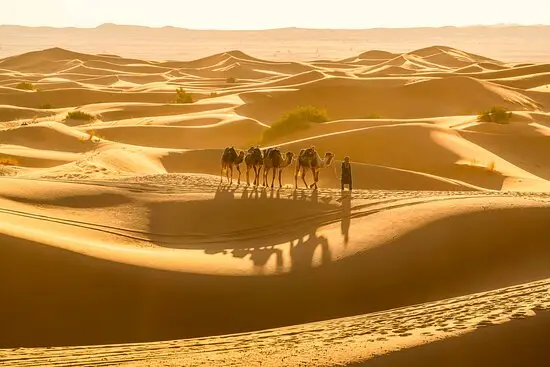
The season we would pick if given the choice. Days are warm rather than hot, evenings are mild enough to sit by the fire without a coat, and the light in the two hours before sunset is extraordinary.
Spring also brings the occasional sandstorm, mostly in late March and April, when the wind rises for a few hours and the horizon disappears. It passes, and it is one of the most memorable things you can see out here.
Summer: June to August
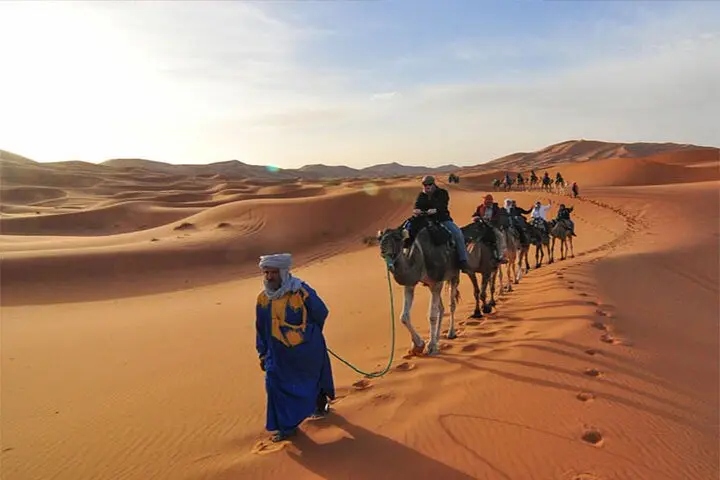
Summer is genuinely hot, often above 40 °C in the afternoon. That does not put Merzouga off-limits; it changes the rhythm. Get up for sunrise, rest through the middle of the day in an air-conditioned tent, and come back out around five when the sand cools.
Two strong reasons to come anyway: the Milky Way core rides high in warm, comfortable nights, and July and August are the quietest months, with lower prices across Morocco. It is also the season of the traditional hot-sand bath, said to ease joint and back pain.
Autumn: September to November
By late September the heat breaks and the desert becomes close to perfect again. October and November are our busiest months for good reason: comfortable days, cool nights, stable weather and dunes that photograph beautifully.
October is also date-harvest season in the Tafilalet oases around Erfoud, which usually celebrates with a date festival. If you want the best conditions with the fewest compromises, choose October and book early.
Winter: December to February
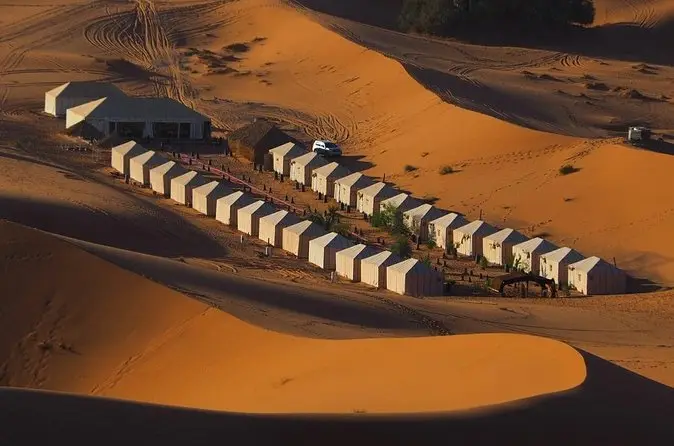
Winter surprises people. Days are bright and pleasantly warm in the sun, often 18 to 22 °C, while nights fall close to freezing. Every tent is heated, so this is far less of a problem than it sounds, and a cold, dry January night gives the clearest sky of the year.
Christmas and New Year are among the busiest weeks of the year, so book well ahead. Bring a proper jacket, a hat and warm socks: guests who pack for winter love it; guests who pack for a Moroccan beach do not.
Best activities by season
- Spring and autumn: camel treks, quad and buggy rides, sandboarding and 4x4 tours to Khamlia and the Gnaoua musicians.
- Summer: sunrise camel rides, evening quads, hot-sand baths and long stargazing nights.
- Winter: midday 4x4 tours, sunset from the high dunes and fireside dinners under the clearest skies.
Things to do in Merzouga
Partner links: if you book through GetYourGuide we may earn a small commission, at no extra cost to you. Tours are run by independent operators.
Ramadan and public holidays
Ramadan moves about eleven days earlier each year; in 2027 it is expected from around 8 February to 9 March. Life in Merzouga carries on, restaurants for visitors stay open and the camp serves meals as usual, though some village shops keep shorter hours.
What to pack for each season
- All year: sunglasses, sun cream, a scarf for wind and sand, and closed shoes or sandals for the dunes.
- Spring and autumn: light layers for the day and a fleece for the evening.
- Summer: loose, light-coloured cotton, a wide hat and a refillable water bottle.
- Winter: a warm jacket, hat, gloves and warm socks for sunrise and evenings.
Tell us your dates and we will tell you honestly what to expect, including the moon phase if the stars are your reason for coming.
Ask about your datesQuick summary
- Most comfortable: March, April, October and November.
- Best stargazing: June to September for the Milky Way core, November to February for clarity.
- Fewest visitors: July, August and January (outside the New Year week).
- Sandstorm risk: highest in late March and April.
Frequently asked questions
What is the best month to visit Merzouga?+
October is the best all-round month: warm days around 29 °C, cool nights and stable weather. March, April and November are close behind.
Is it too hot to visit Merzouga in summer?+
Afternoons often pass 40 °C, but mornings and evenings are pleasant. With an air-conditioned tent and activities at sunrise and sunset, summer is comfortable and quiet.
How cold does the Sahara get at night in winter?+
In December and January nights usually drop to around 0–5 °C before dawn. Our tents are heated, with thick bedding, so you sleep warm.
When is sandstorm season in Merzouga?+
Wind and sandstorms are most likely in late March and April. They usually last a few hours, and activities are simply moved.
When is the best time for stargazing in the desert?+
Any clear night near the new moon. June to September shows the bright Milky Way core; November to February gives the sharpest, driest skies.
Is Merzouga busy at Christmas and New Year?+
Yes, these are among the busiest weeks of the year. Book several weeks or months ahead.
Can I visit Merzouga during Ramadan?+
Yes. Camps and restaurants for visitors serve food as usual; just be discreet about eating in public in the village during the day.
How many nights should I spend in Merzouga?+
Two nights is ideal: one full day lets you enjoy sunrise, a 4x4 tour or quad ride, and sunset without rushing after the long drive.
Plan the rest of your desert stay
Stay with us in Merzouga
Private ensuite tents with air conditioning and heating, dinner and breakfast, the sunset camel ride and sandboarding — all included.
Request availability