Quick answer
- From Marrakech
- About 190 km
- Around 4 hours over the Tizi n’Tichka pass
- Time to allow
- 2–3 hours
- A night nearby for sunset and sunrise
- Entry to the ksar
- Free
- Some houses ask a small fee
- To Merzouga
- About 400 km
- Best split with a night in the Dades Valley
Need a driver? We can arrange your transfer — message us on WhatsApp.
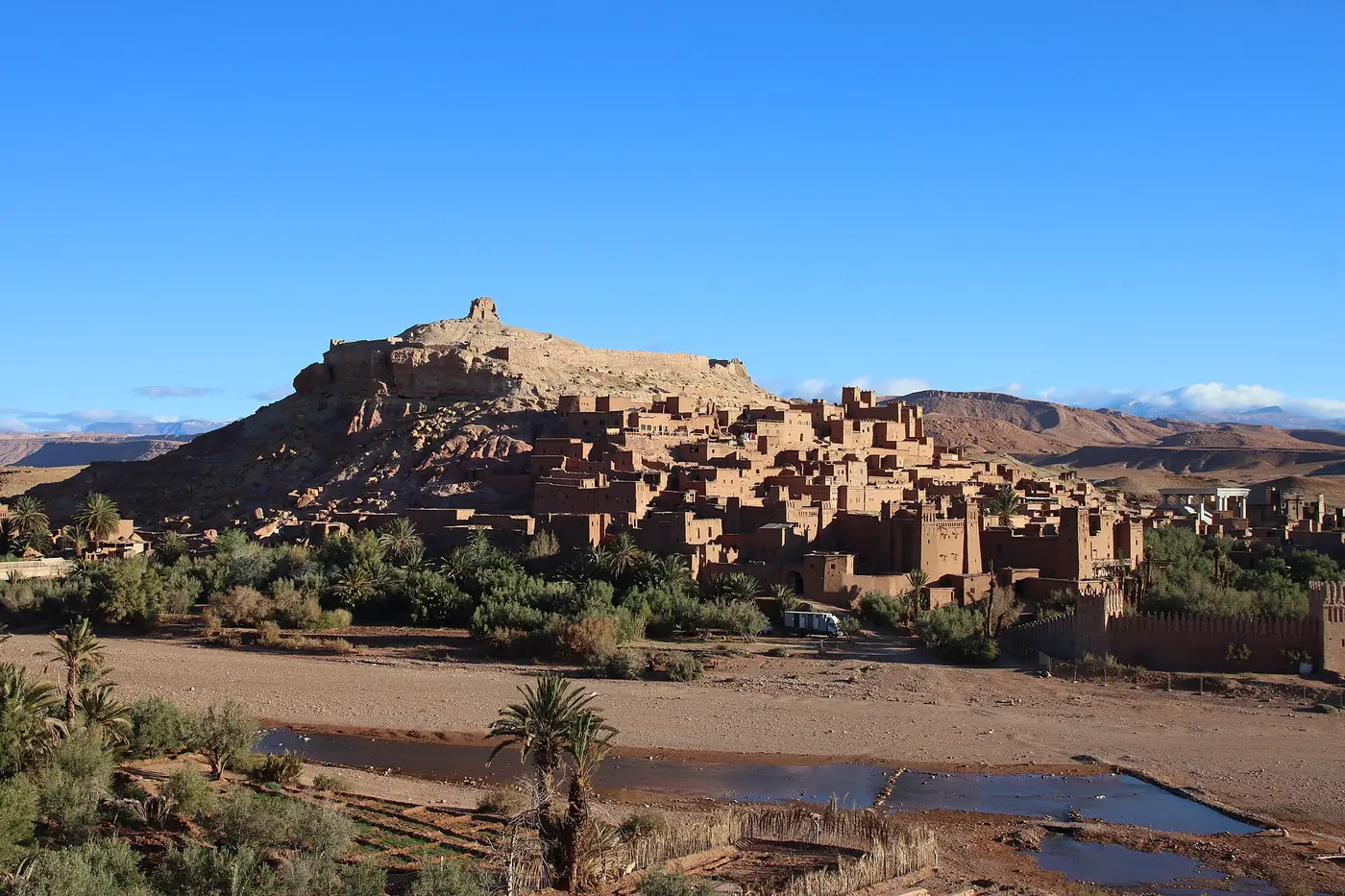
Aït Ben Haddou (also written Ait Benhaddou) is a fortified village of earthen houses and towers rising up a hill above the Ounila River, on the old caravan route between the Sahara and Marrakech. It is a UNESCO World Heritage Site and one of the most photographed places in Morocco.
It is also the first big stop on almost every trip from Marrakech to Merzouga. Many travellers only get a rushed hour there. This guide explains how to plan the visit properly: how to get there, how long to stay, what to see, where to sleep, what it costs and which tours really stop there.
The short answer: how to visit Aït Ben Haddou
- It is about 190 km from Marrakech, around four hours by road over the High Atlas.
- Allow two to three hours: cross the river, walk up through the lanes and climb to the granary at the top.
- Walking through the ksar is free. Some families charge a small fee to visit their house or terrace.
- Going to Merzouga? Visit on the first day, then sleep in the Dades Valley and reach the dunes on day two.
- For the best light and fewer people, come early in the morning or late in the afternoon, or sleep in the village.
What is Aït Ben Haddou?
Aït Ben Haddou is a ksar: a group of earthen houses, towers and walls built close together for defence, with a collective granary at the top of the hill. It stood on the trade route that carried salt, gold and other goods between the Sahara and Marrakech across the Tizi n’Tichka pass.
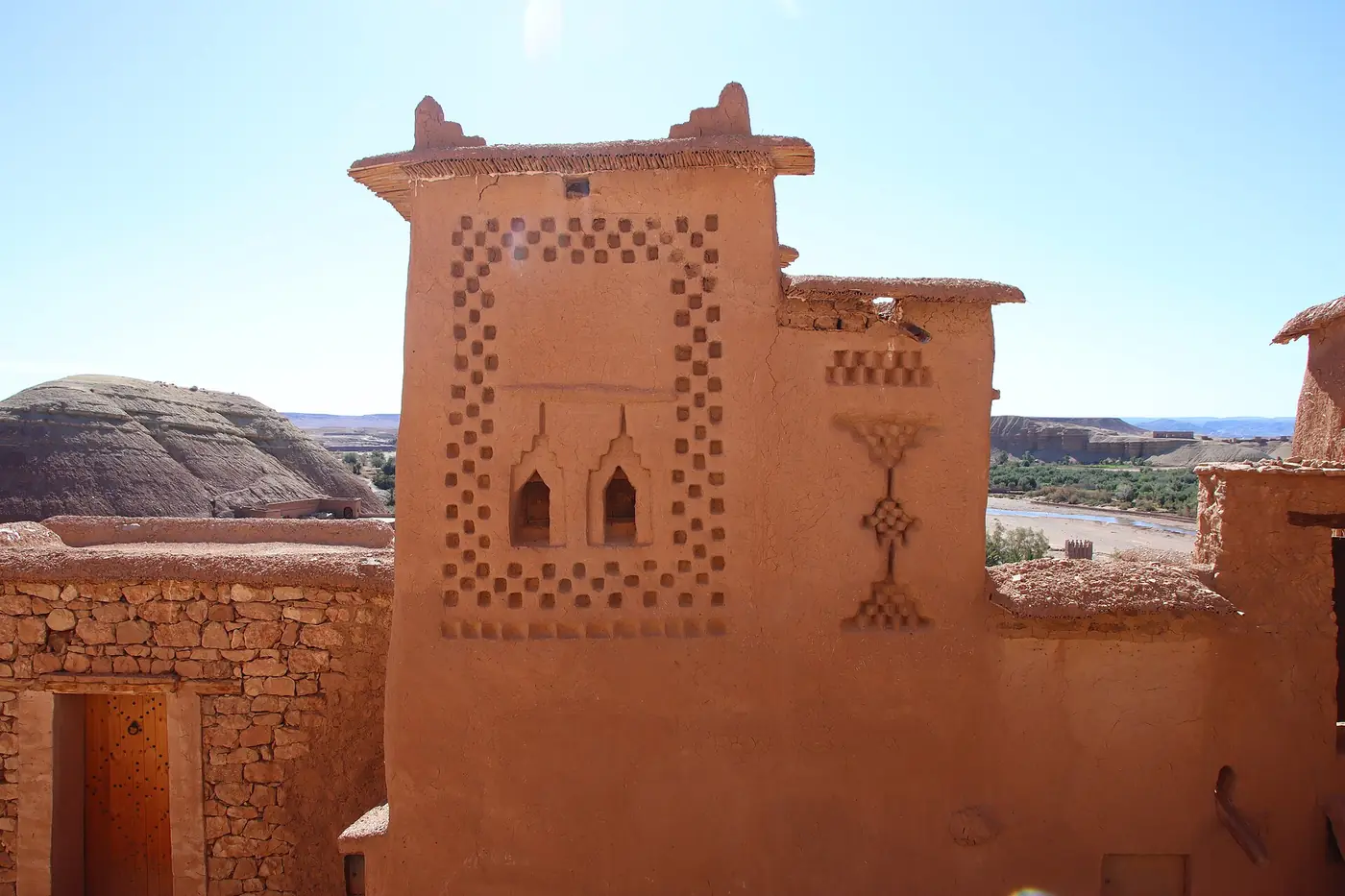
The site may have been fortified for many centuries, but most of the buildings you see today are believed to date from the 17th century or later. They are made of rammed earth and mud brick, which must be repaired after heavy rain. UNESCO listed the ksar as a World Heritage Site in 1987.
Most families moved to the new village across the river in the second half of the 20th century, but a few still live inside the walls. Please respect closed doors and ask before you photograph people.
Where is it and how do you get there?
Aït Ben Haddou lies on the southern side of the High Atlas, about 30 km north-west of Ouarzazate. From Marrakech, the N9 road crosses the mountains by the Tizi n’Tichka pass at 2,260 m, then a side road leads to the village shortly before Ouarzazate.
There is no direct public bus to the ksar. Most visitors come on a tour, with a private driver or in a rental car. Grands taxis run from Ouarzazate, but a day trip from Marrakech by public transport is not realistic.
| Starting point | Destination | Distance | Driving time |
|---|---|---|---|
| Marrakech | Aït Ben Haddou | About 190 km | 3.5–4 h |
| Marrakech via Telouet | Aït Ben Haddou | About 200 km | 4.5–5 h |
| Aït Ben Haddou | Ouarzazate | About 30 km | About 30 min |
| Aït Ben Haddou | Boumalne Dades | About 145 km | About 2.5 h |
| Aït Ben Haddou | Merzouga | About 400 km | 6.5–7 h |
Distances and times are estimates without photo or lunch stops. The mountain road is slower after snow or heavy rain.
Aït Ben Haddou on the road to Merzouga
If you are travelling from Marrakech to the Sahara, Aït Ben Haddou is right on your way. Here is how most tours and self-drivers plan the first two days.
- 1
Day 1 · Marrakech to the Tizi n’Tichka pass
Leave early and cross the High Atlas, with coffee and photo stops above Berber villages.
- 2
Day 1 · Aït Ben Haddou
Arrive around midday, visit the ksar with a local guide and have lunch facing the old village.
- 3
Day 1 · Ouarzazate
Drive past the film studios and the Taourirt kasbah, then continue east along the Road of a Thousand Kasbahs.
- 4
Day 1 evening · Dades Valley
Pass Skoura and Kelaat M’Gouna and sleep in the Dades Valley or the Dades Gorge.
- 5
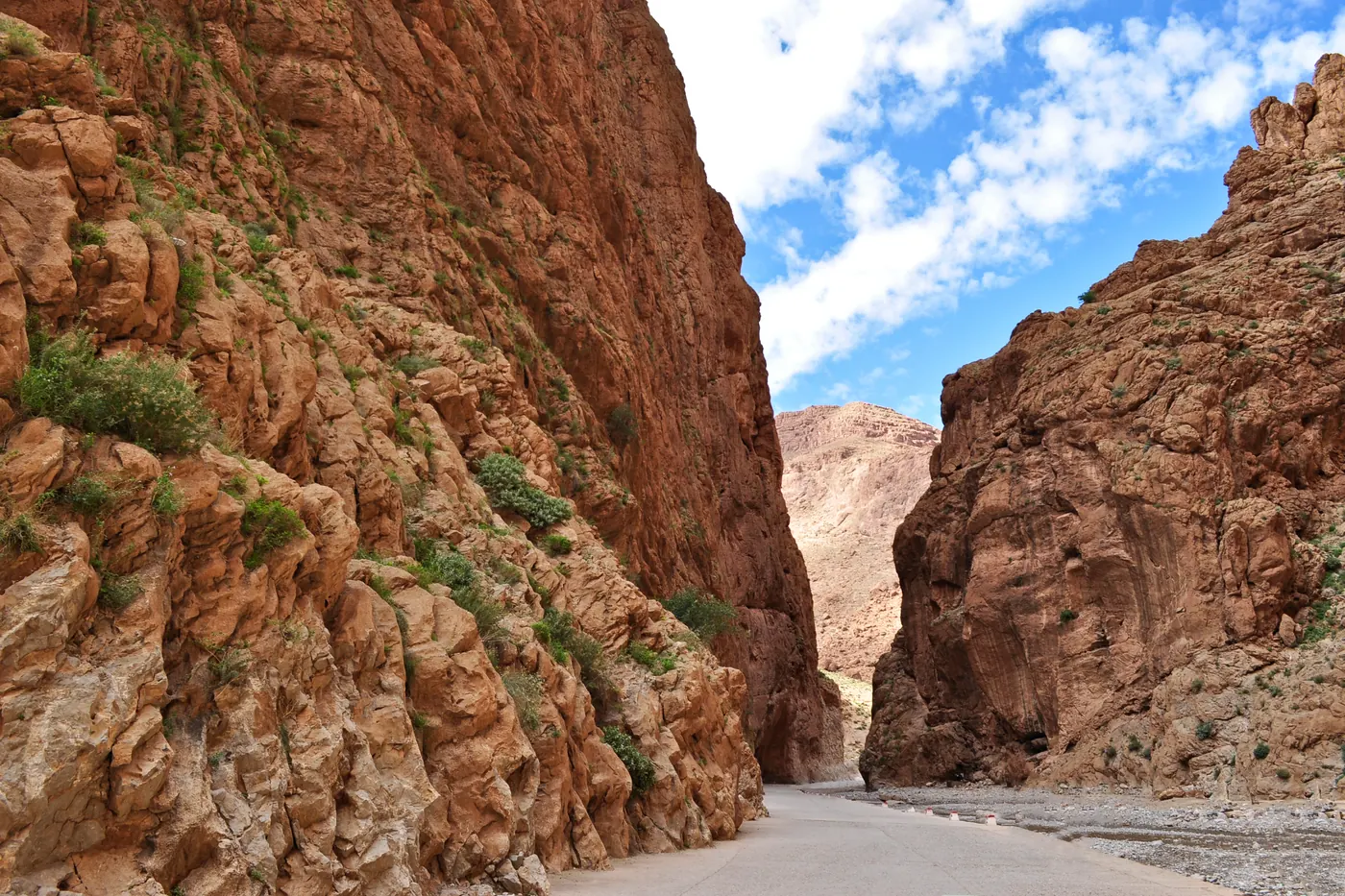
Day 2 · Todra Gorge to Merzouga
Walk the Todra Gorge in the morning, then reach the dunes of Erg Chebbi in time for a sunset camel ride.
Arriving: crossing the river
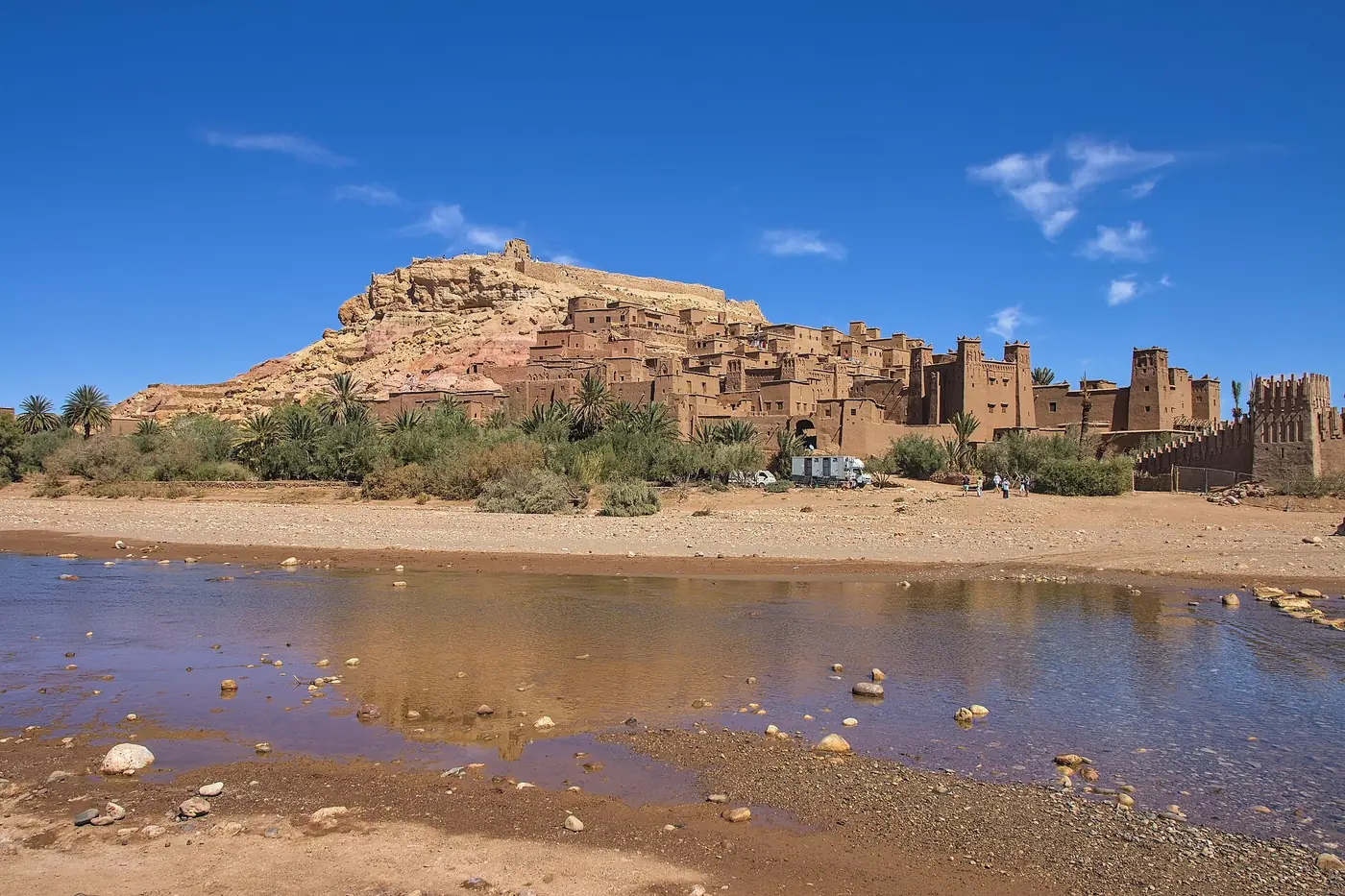
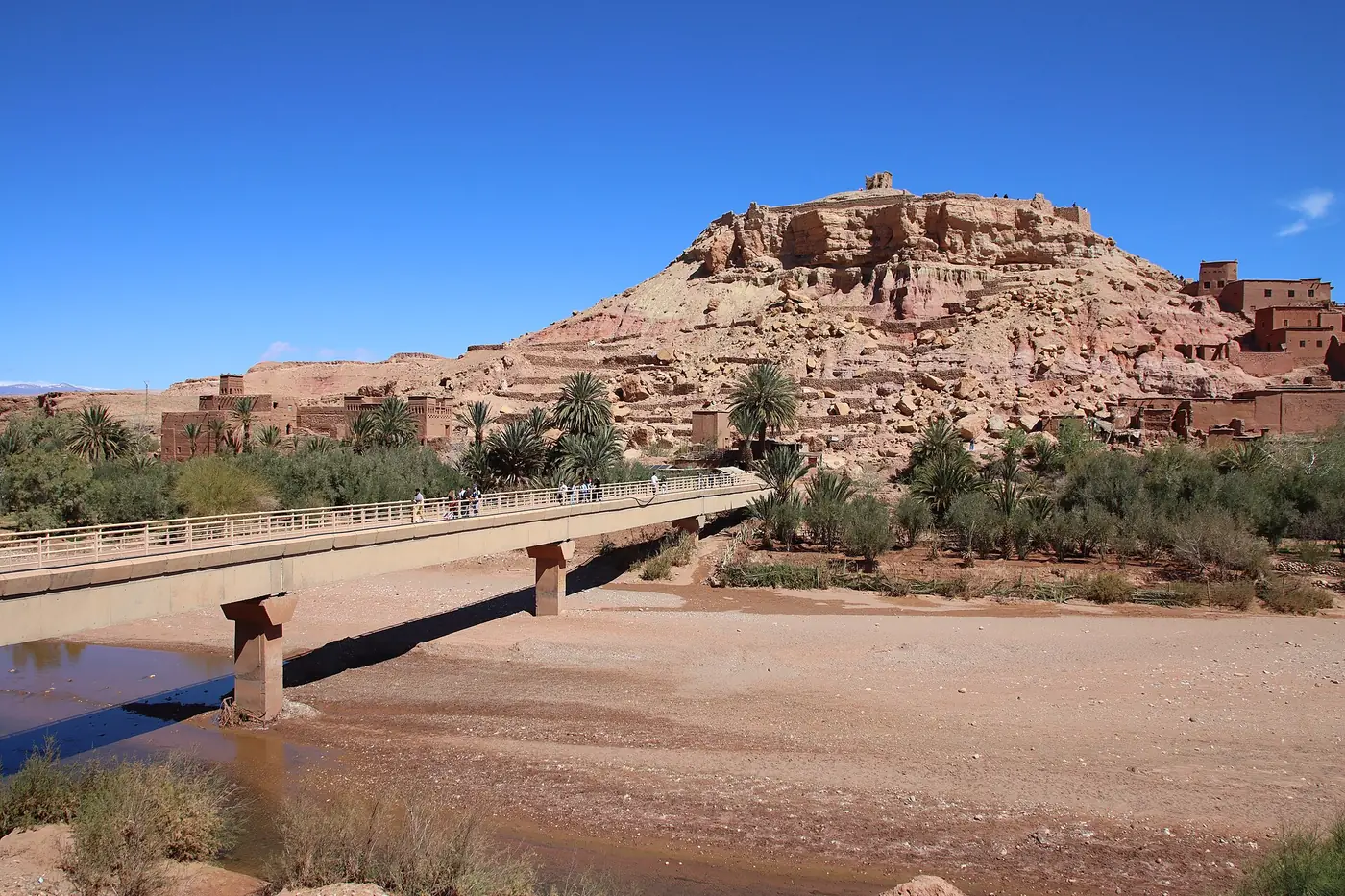
The car parks and restaurants are in the new village, on the other side of the Ounila River. To reach the ksar, walk down to the riverbed. Most of the year it is dry or shallow, and you can cross on sandbags and stepping stones. After rain, use the pedestrian footbridge a little further along.
On the way, you may be offered a donkey ride or the services of a guide. A guide is not required, but a good one explains the history of the families, the granary and the building techniques. Agree the price before you start.
Inside the ksar: lanes, houses and painters
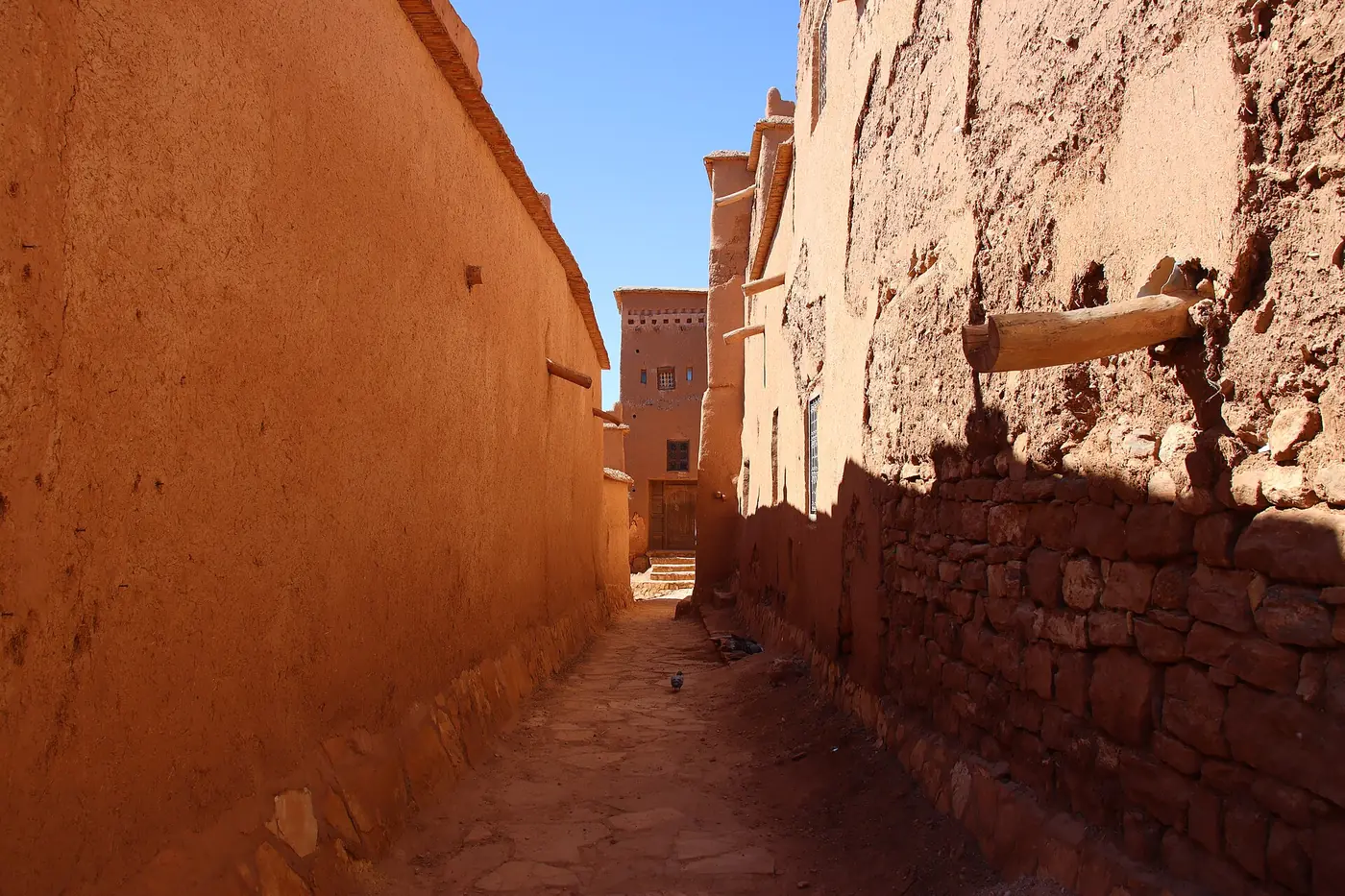
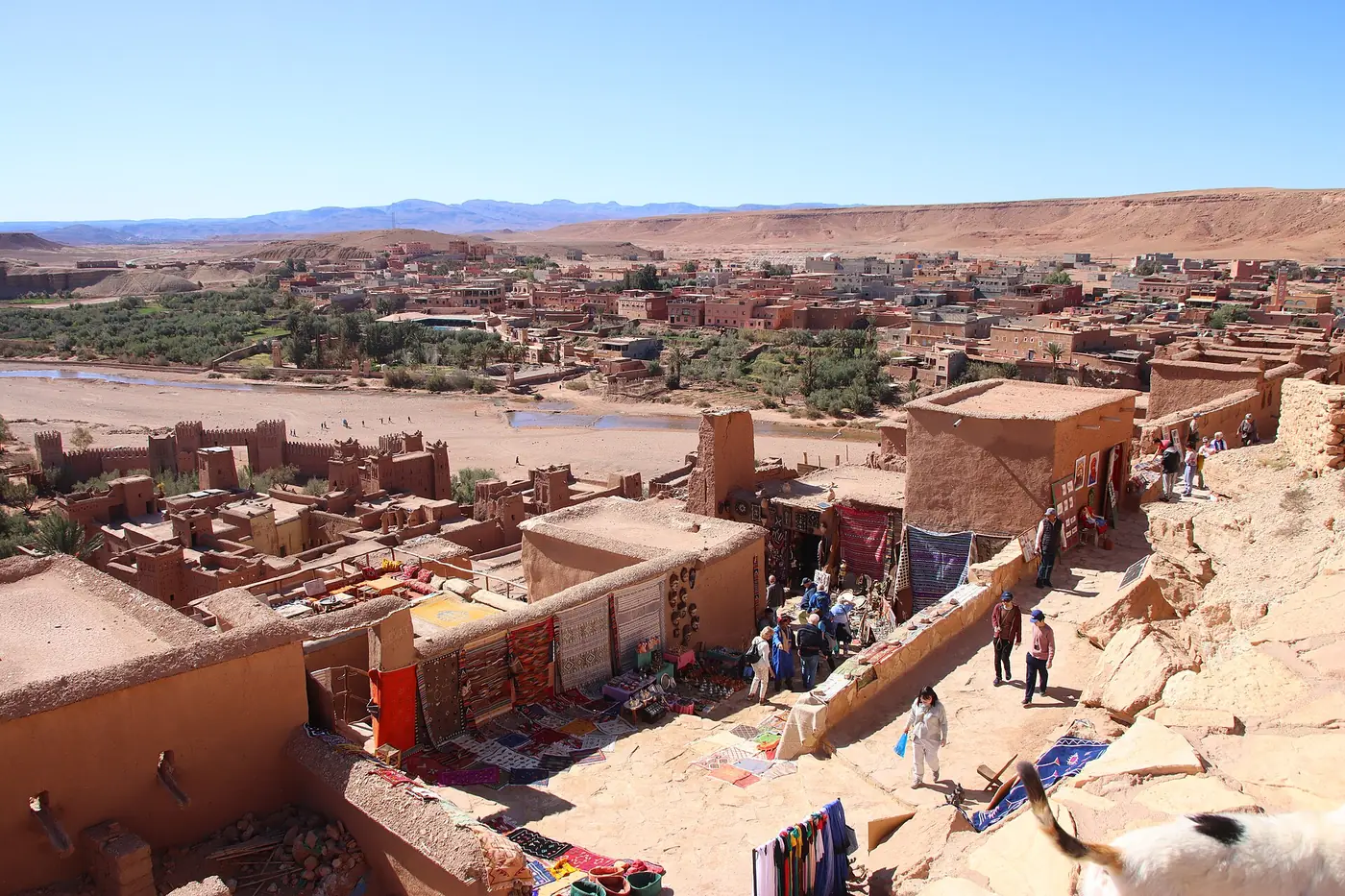
From the main gate, narrow lanes climb between high earthen walls, covered passages and small squares. Many ground floors are now craft shops selling carpets, jewellery, fossils and paintings. Some local artists paint with tea, saffron and indigo, then reveal the colours by heating the paper over a flame.
Some families open their houses so you can see the rooms, the kitchen and the view from the roof. They usually ask for a small fee or a tip. Wear good shoes: the paths are uneven, with steps and loose stones.
The climb to the granary and the view
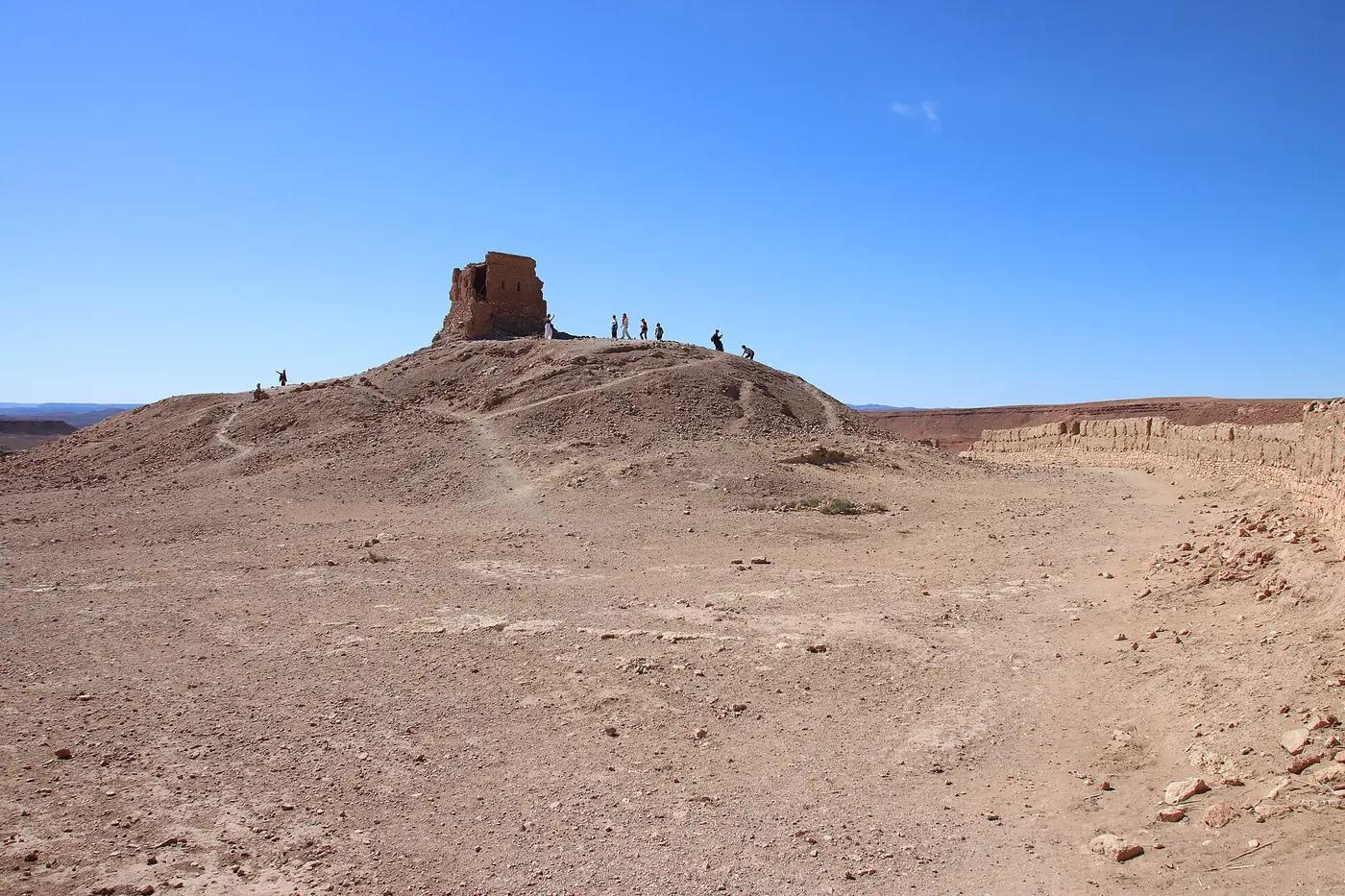
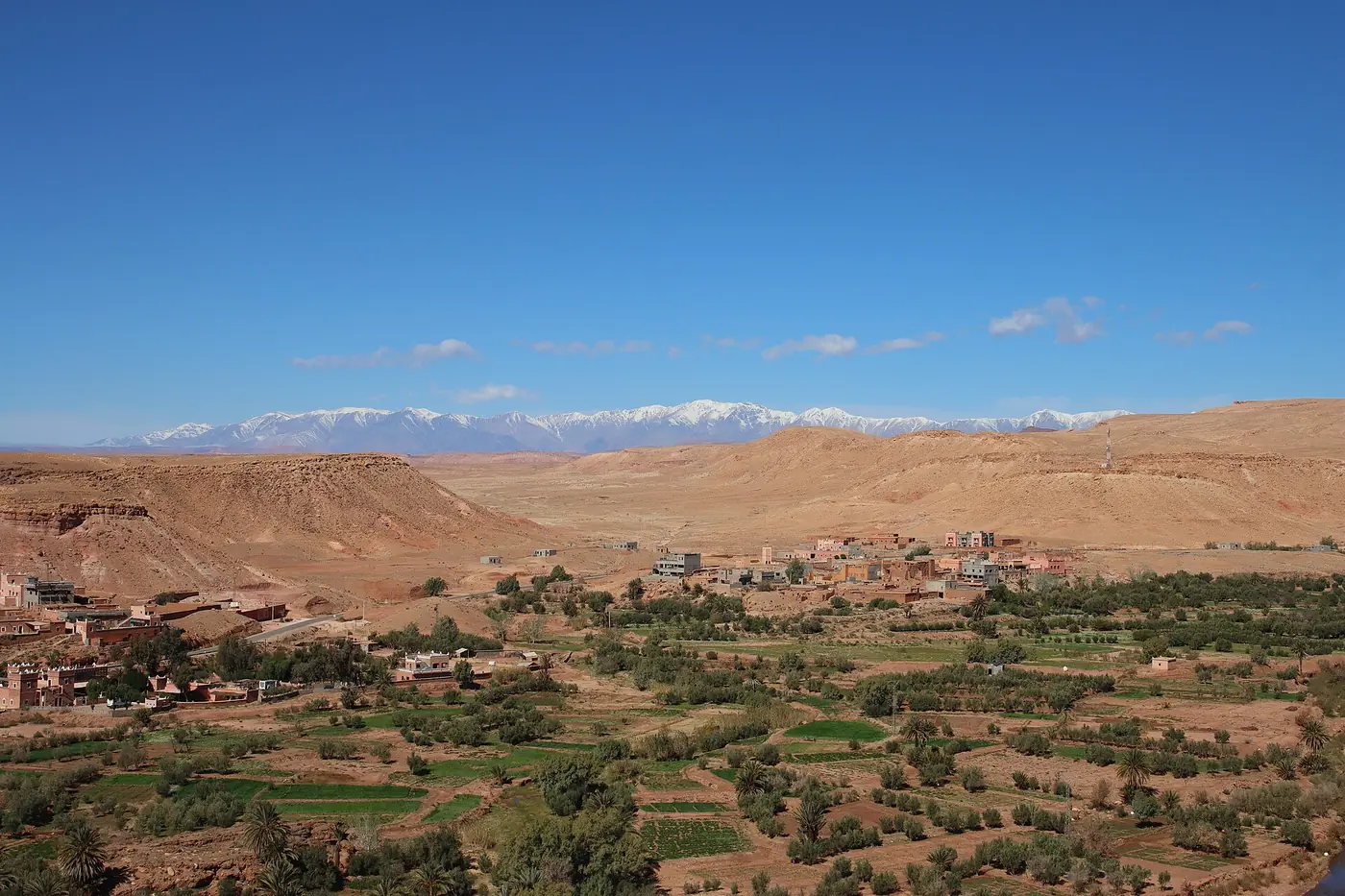
At the top of the hill stand the ruins of the agadir, the collective granary where families once stored their grain in times of danger. The climb from the river takes about 15–20 minutes on steps and rough paths.
From the top, you see the whole ksar below you, the green valley of the Ounila, the new village and, on clear days, the snow-capped High Atlas on the horizon. It is the best place in the village for sunset photos.
Films and series shot at Aït Ben Haddou
With its earthen towers and desert setting, Aït Ben Haddou has played ancient cities, Biblical towns and fantasy kingdoms. Local guides love pointing out the spots used in each film.
- Lawrence of Arabia (1962)
- Jesus of Nazareth (1977)
- The Jewel of the Nile (1985)
- The Mummy (1999)
- Gladiator (2000)
- Kingdom of Heaven (2005)
- Game of Thrones, as the city of Yunkai (2013)
How long should you stay?
| Time on site | What you can do |
|---|---|
| 1 hour | Cross the river, walk up the main lane and take photos from below |
| 2–3 hours | A guided visit, a house, the climb to the granary and lunch |
| One night in the village | Sunset from the top, a quiet evening and sunrise before the tours arrive |
Most day trips and desert tours give you about two hours, including lunch.
When is the best time to visit?
Spring (March to May) and autumn (late September to November) are the most pleasant seasons, with warm days and cool nights. In summer, it is very hot by midday, so visit early or late. In winter, days are often sunny and clear, but snow can close the Tizi n’Tichka pass for a few hours.
Tour groups from Marrakech usually arrive between 11:00 and 14:00. Early morning and late afternoon are quieter, with soft golden light on the earthen walls.
The scenic alternative: Telouet and the Ounila Valley
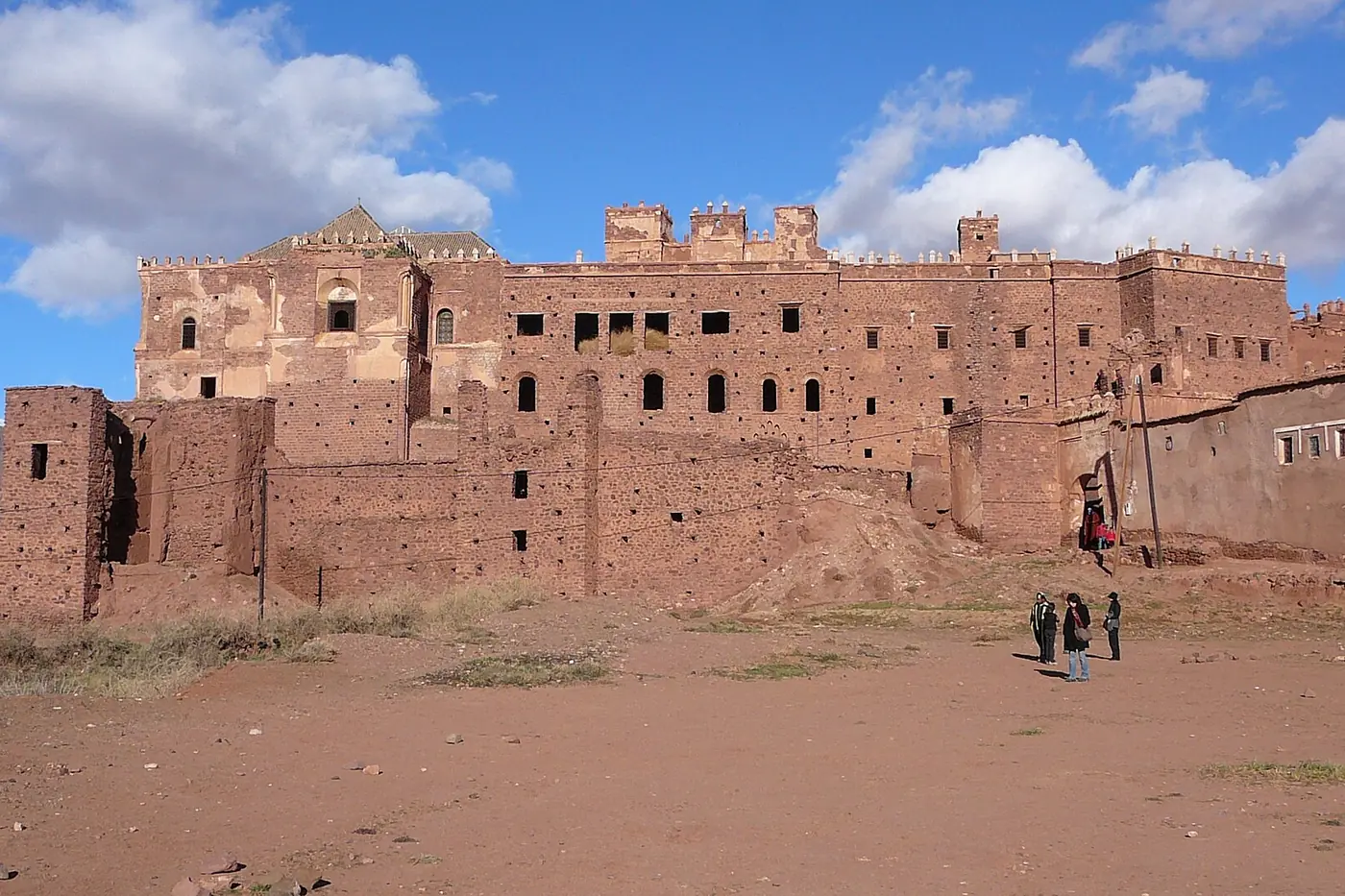
Shortly after the Tizi n’Tichka pass, a paved side road leads east to Telouet, home of the huge kasbah of the Glaoui family, who controlled this region in the early 20th century. Part of it is in ruins, but some rooms keep beautiful carved cedar ceilings and zellige tiles.
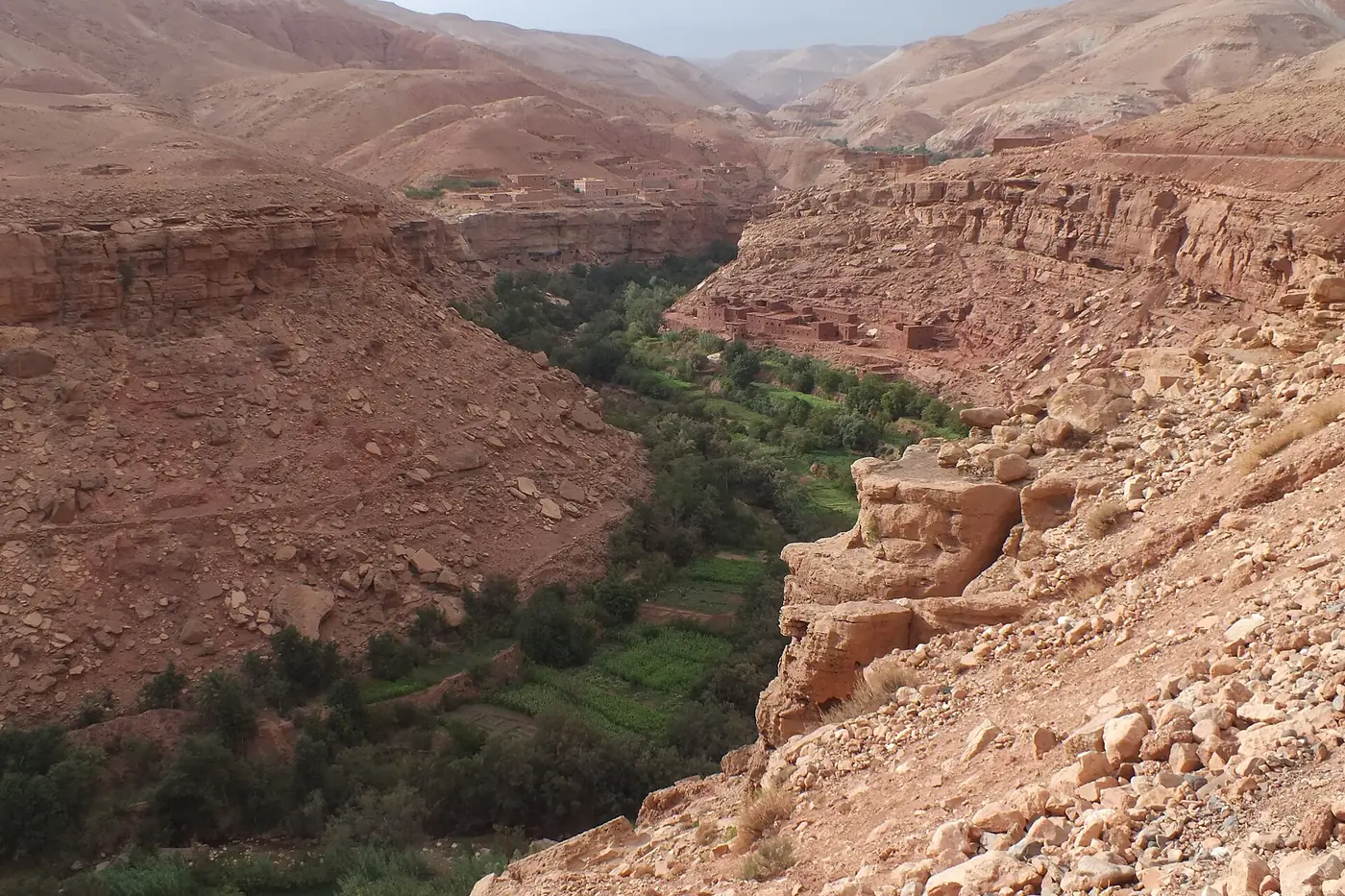
From Telouet, the road follows the Ounila Valley down to Aït Ben Haddou, past villages, red canyons and green terraces. It adds about an hour of driving, but it is one of the most beautiful roads in the High Atlas.
Ouarzazate and the Atlas Studios
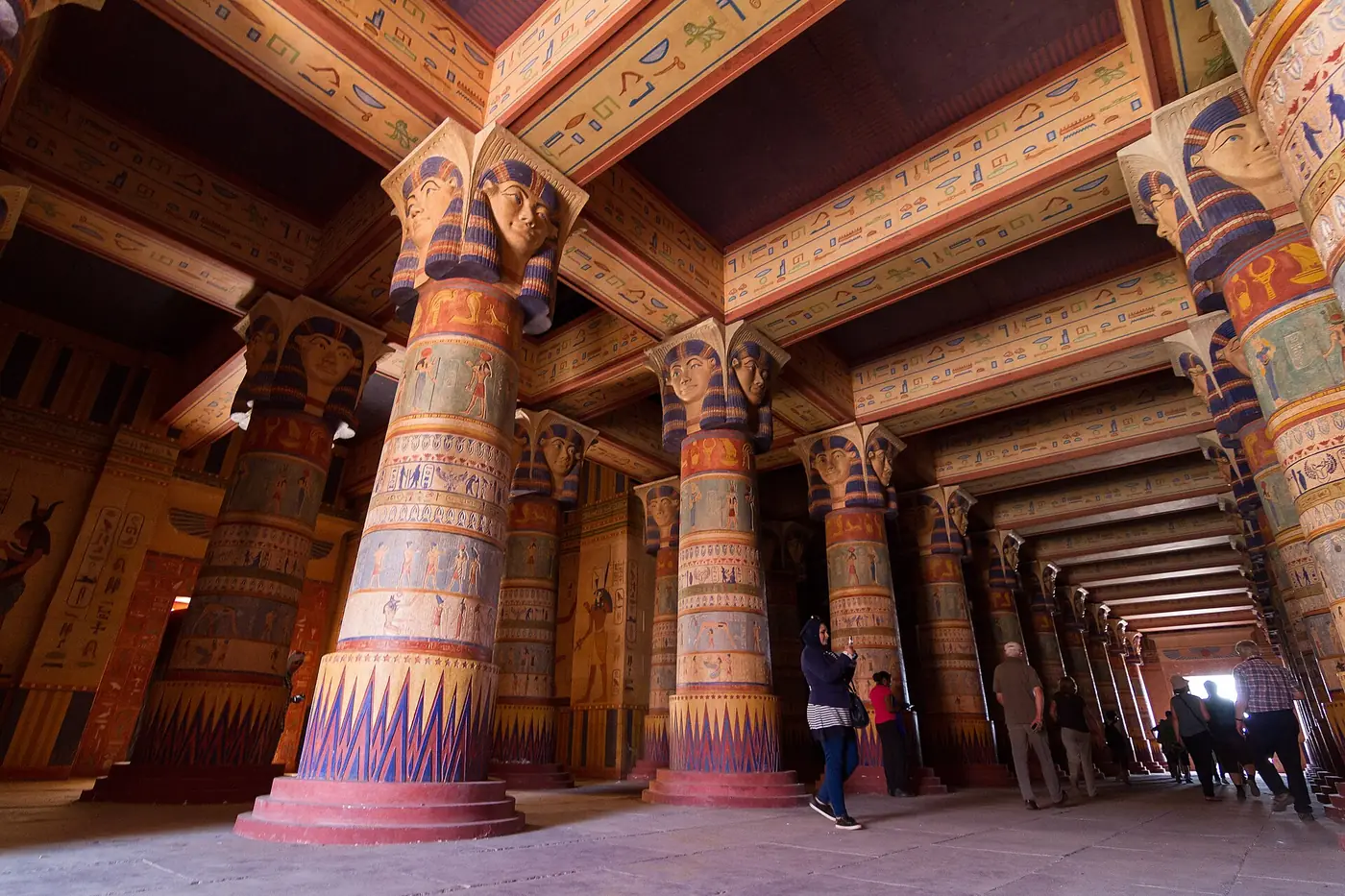
Ouarzazate, about 30 minutes away, is the largest town in the region and often called the door of the desert. Many tours stop at the Atlas Studios on the way into town, where you can walk through Egyptian temples, palaces and streets built as film sets. The entry fee is not usually included in tour prices.
In the town centre, the Taourirt kasbah is another former Glaoui residence and is worth an hour if you have time. Ouarzazate is also a practical place to sleep, with more hotels, banks and petrol stations.
Where to sleep near Aït Ben Haddou
Sleeping near the ksar is the best way to see it without the crowds. Here is how the main options compare.
| Base | Why stay there | Good to know |
|---|---|---|
| Aït Ben Haddou village | Sunset and sunrise over the ksar, quiet evenings | Small guesthouses; few shops or ATMs |
| Ouarzazate | More hotels, restaurants and services | 30 minutes from the ksar |
| Dades Valley | Shortens the next day's drive to Merzouga | About 2.5 hours further east |
Most guesthouses include dinner and breakfast. Book ahead in spring, autumn and during holidays.
Day trip from Marrakech or a stop on a desert tour?
| Day trip from Marrakech | Stop on the way to Merzouga | |
|---|---|---|
| Time on the road | About 8 hours return | No extra driving |
| Time at Aït Ben Haddou | About 2 hours | About 2 hours, more on private tours |
| Also see | Tizi n’Tichka, often Ouarzazate | Dades, Todra and the Sahara |
| Best for | Short stays in Marrakech | Anyone going to the desert |
If you have only one free day in Marrakech, the day trip is worth it. If you are planning the desert, do not book both.
Day trips from Marrakech to Aït Ben Haddou
We picked these four day trips from Marrakech. Two are large shared tours with thousands of reviews, one is a private trip via Telouet and the Ounila Valley, and one is a simpler tour focused on the Atlas and the ksar.
When we checked on 13 November 2026, shared day trips started at about US$21–24 per person. Read what is included: lunch, the local guide in the ksar and the film studio entry are often extra.
Aït Ben Haddou day trips from Marrakech
Partner links: if you book through GetYourGuide we may earn a small commission, at no extra cost to you. Tours are run by independent operators.
Desert tours from Marrakech that stop at Aït Ben Haddou
These multi-day tours from Marrakech visit Aït Ben Haddou on the first day before continuing to Merzouga: two three-day tours and two four-day tours. The four-day tours give you more time on the road and in the gorges.
Before you book, check where you sleep each night, whether the camp has private bathrooms and whether the tour returns to Marrakech or ends in Fes.
Marrakech–Merzouga desert tours via Aït Ben Haddou
Partner links: if you book through GetYourGuide we may earn a small commission, at no extra cost to you. Tours are run by independent operators.
Driving yourself: tips for the route
- The N9 over the Tizi n’Tichka is paved and in good condition, but it is winding, with trucks and slow sections.
- Leave Marrakech early to cross the pass in daylight and avoid driving in the mountains after dark.
- Park in the new village and expect to pay a small fee to the parking attendant.
- Carry cash: card machines are rare in Aït Ben Haddou, and the nearest banks are in Ouarzazate.
- In winter, check the weather before crossing the pass: snow can close the road for a few hours.
- The road to Merzouga is paved all the way, and our camp can be reached by normal car.
How much does it cost?
Here is a realistic budget for your visit. Prices in the village are in dirhams; carry small notes.
| Item | Typical cost | Notes |
|---|---|---|
| Walking through the ksar | Free | Some houses and terraces ask about 10–20 MAD |
| Local guide in the ksar | About 100–200 MAD | Per group; agree the price first; estimate |
| Shared day trip from Marrakech | From about US$21–24 per person | GetYourGuide listings checked on 13 November 2026 |
| Lunch facing the ksar | About 80–150 MAD | Tagine or set menu with a drink; estimate |
| Guesthouse in the village | About €30–90 per double room | Often with dinner and breakfast; estimate |
| Atlas Studios | Separate entry fee | Usually not included in tours; check on site |
Local costs are estimates and change with the season. Check current tour listings for exact prices and inclusions.
After Aït Ben Haddou: a night in the Sahara
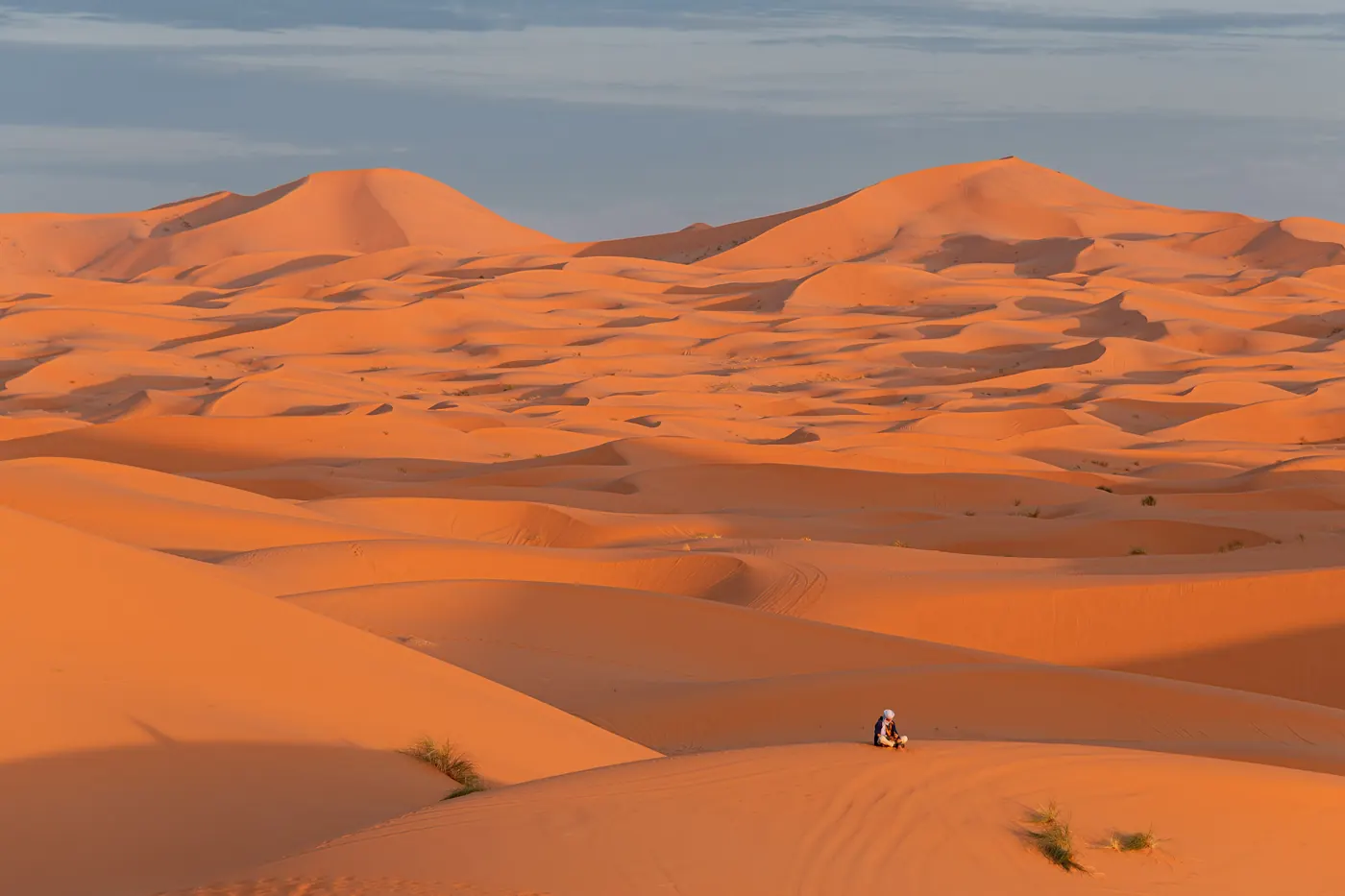
From Aït Ben Haddou, the dunes of Erg Chebbi are about a day and a half away by road, through the Dades Valley and Todra Gorge. Arrive in Merzouga in the afternoon, ride a camel to the dunes at sunset and spend the night in the desert.
Merzouga Glamping has private ensuite tents with AC and heating running day and night, dinner in an air-conditioned restaurant, and a sunset camel ride and sandboarding included. Stays start from €70 per person per night; a single tent is €85. Our camp can be reached by normal car, and we can help with a driver.
- 3-day vs 4-day desert tour from Marrakech
- 2-day vs 3-day desert tour from Marrakech
- Best day trips from Marrakech
- How to get to Merzouga from Marrakech and Fes
Stopping at Aït Ben Haddou on your way to Merzouga? Ask us about a night at our camp.
Ask about your stayTour listings and photo notes
Tour itineraries and day-trip prices were checked against the selected GetYourGuide listings on 13 November 2026. Prices and inclusions can change; review the current listing for your date. Distances, driving times and local costs are estimates.
- Aït Ben Haddou from the riverbed photo · Draceane · CC BY-SA 4.0
- Decorated tower photo · Draceane · CC BY-SA 4.0
- River reflection photo · Draceane · CC BY-SA 4.0
- Footbridge photo · Draceane · CC BY-SA 4.0
- Lane inside the ksar photo · Draceane · CC BY-SA 4.0
- Craft shops photo · Draceane · CC BY-SA 4.0
- Granary photo · Draceane · CC BY-SA 4.0
- View towards the High Atlas photo · Draceane · CC BY-SA 4.0
- Telouet kasbah photo · Bzgru · CC BY-SA 3.0
- Ounila Valley photo · Aegithalia · CC BY-SA 4.0
- Atlas Studios photo · Benh LIEU SONG · CC BY-SA 2.0
Frequently asked questions
Is Aït Ben Haddou worth visiting?+
Yes. It is one of the best-preserved earthen villages in Morocco and a UNESCO World Heritage Site. The climb to the granary gives one of the finest views in the south. If you are going to the Sahara from Marrakech, it is right on your way.
How far is Aït Ben Haddou from Marrakech?+
About 190 km, or around four hours by road over the Tizi n’Tichka pass. A day trip from Marrakech means about eight hours of driving in total.
Do you have to pay to enter Aït Ben Haddou?+
No. Walking through the ksar is free. Some families charge a small fee to visit their house or terrace, and local guides charge for their time.
How long do you need at Aït Ben Haddou?+
Two to three hours is enough to cross the river, walk through the lanes, climb to the granary and have lunch. Stay the night if you want sunset and sunrise without the crowds.
Which films were shot at Aït Ben Haddou?+
Among others: Lawrence of Arabia, Jesus of Nazareth, The Jewel of the Nile, The Mummy, Gladiator, Kingdom of Heaven and Game of Thrones, where it appeared as the city of Yunkai.
Can I visit Aït Ben Haddou on the way to Merzouga?+
Yes, and it is the easiest way to see it. Almost every tour from Marrakech to Merzouga stops there on the first day, before a night in the Dades Valley and the drive to the dunes on day two.
Plan the rest of your desert stay
Stay with us in Merzouga
Private ensuite tents with air conditioning and heating, dinner and breakfast, the sunset camel ride and sandboarding — all included.
Request availability