Quick answer
- Dress code
- No law for visitors
- Modest clothes are appreciated
- Simple rule
- Cover shoulders and knees
- In medinas, villages and religious sites
- Best fabrics
- Loose cotton and linen
- Cooler than shorts in the sun
- Desert nights
- Bring a warm layer
- Even in summer, a light jumper helps
Need a driver? We can arrange your transfer — message us on WhatsApp.
“What should I wear in Morocco?” is one of the first questions our guests ask before they travel. The good news: there is no strict dress code for visitors, and you do not need to buy a new wardrobe.
Morocco is a Muslim country, though, and most Moroccans dress modestly. Clothes that cover a little more will make your trip easier, more comfortable in the sun and more respectful. This guide explains what to wear as a woman or a man, in cities, mosques, the Sahara, the mountains and on the beach, season by season.
The short answer: what to wear in Morocco
- Choose loose, light clothes that cover your shoulders and knees, especially in medinas, villages and the countryside.
- Long, flowing trousers, maxi skirts, midi dresses, linen shirts and T-shirts with sleeves all work well.
- Pack a light scarf. It covers your shoulders, protects you from sun and sand, and works as a headscarf in a mosque.
- Bring comfortable closed shoes or good sandals for uneven medina lanes, and a warm layer for desert and mountain evenings.
- Swimwear is fine at the beach, the pool and the hammam, but cover up when you walk into town.
Is there a dress code in Morocco?
There is no law telling tourists what to wear, and nobody will stop you for wearing shorts. Morocco is one of the more relaxed Muslim countries, and in the new towns of Marrakech, Casablanca, Rabat and Agadir you will see young Moroccans in jeans, dresses and short sleeves.
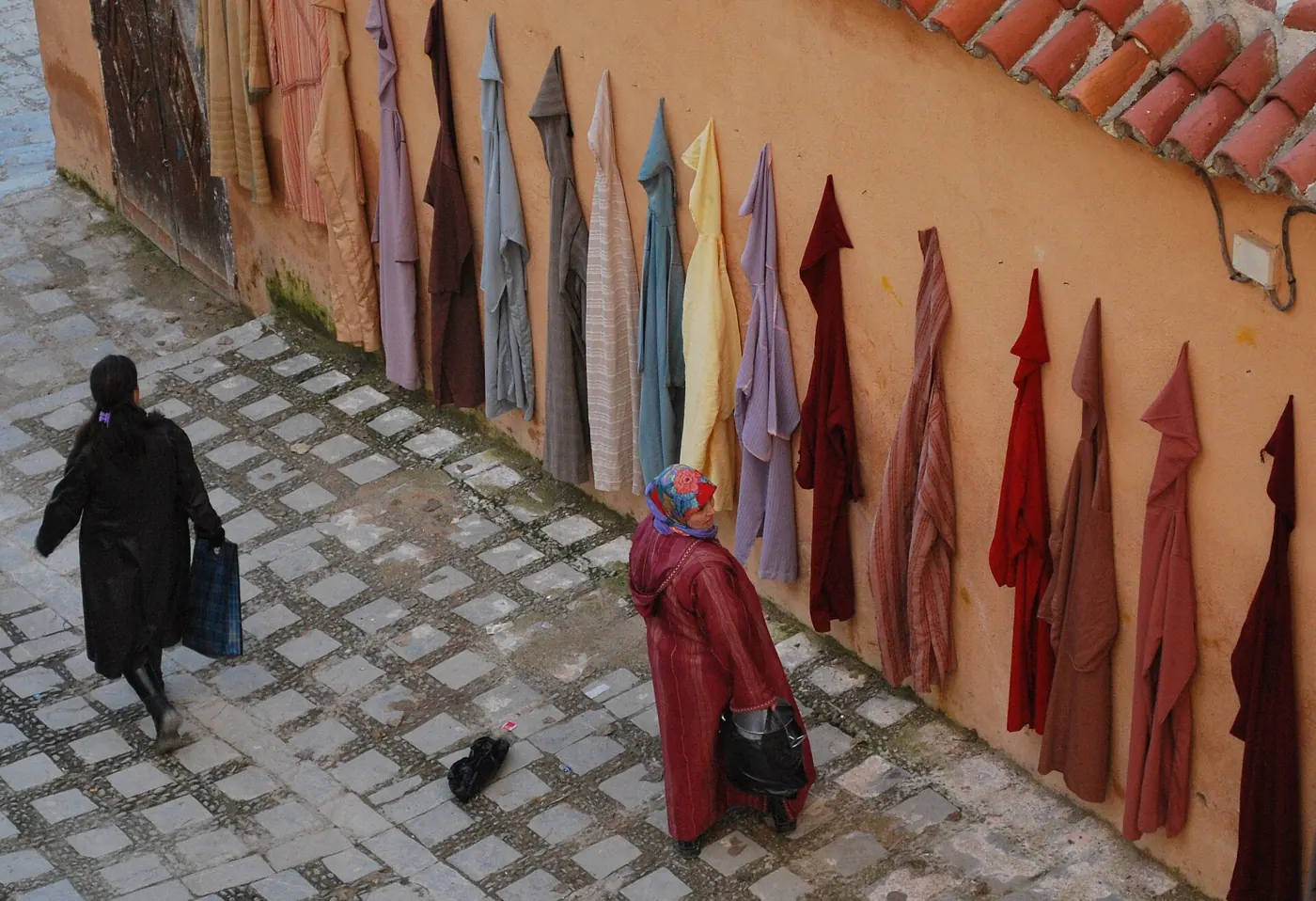
The old medinas, small towns and villages are more traditional. Here, most people cover their shoulders and knees, many women wear a headscarf, and clothes that are very short, tight or see-through attract stares and unwanted attention. Dressing modestly is a sign of respect, and it makes your days easier.
| Where you are | What works well | What to avoid |
|---|---|---|
| Medinas and souks | Loose trousers or long skirt, sleeved top, closed shoes | Shorts, crop tops, very low necklines |
| New towns, rooftop bars, restaurants | City clothes: jeans, dresses to the knee, shirts | Beachwear |
| Villages and the countryside | Long and loose; shoulders and knees covered | Tight or see-through clothes |
| Hassan II Mosque and religious sites | Arms and legs covered; women may bring a scarf | Shorts, sleeveless tops |
| Beach, pool and resort | Swimwear, with a cover-up for the walk back | Topless sunbathing |
| Sahara desert and camps | Loose long sleeves, scarf, warm layer at night | Tight synthetic clothes in the heat |
| Atlas Mountains | Hiking clothes, layers, waterproof jacket | Fashion shoes on rocky paths |
A simple guide, not a rule. Use common sense and follow what local people wear.
What to wear in Morocco as a woman
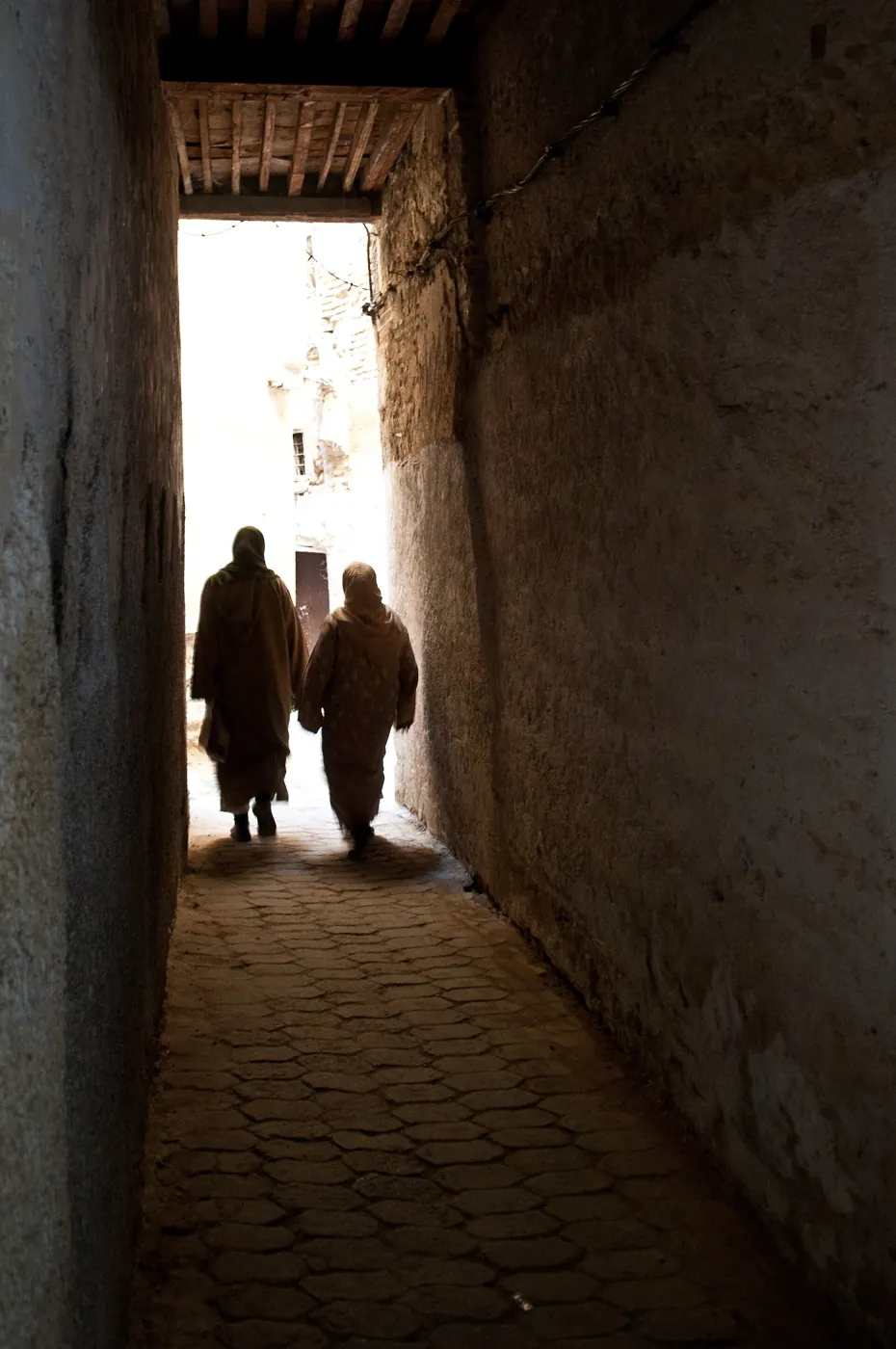
Women are often most worried about what to wear, and the answer is simpler than many blogs suggest. You do not need to cover your hair, except in a mosque, and you can wear colours and patterns you love. Think “relaxed and covered” rather than “hidden”.
Loose, long clothes also help you blend in. They reduce staring and comments in busy souks, though they do not stop them completely. A calm “no, thank you” and walking on is the best answer to persistent sellers.
- Wide-leg trousers, harem pants or loose linen trousers.
- Maxi or midi skirts and dresses; add leggings or a cardigan if they are short or sleeveless.
- T-shirts and blouses with short or long sleeves, not too low at the neck.
- A light scarf or shawl in your bag, for shoulders, sun, dust and mosque visits.
- Jeans are fine in cities, but they are hot in summer and heavy in the desert.
- A long cardigan or kimono is an easy way to cover a summer dress in the medina.
What to wear in Morocco as a man
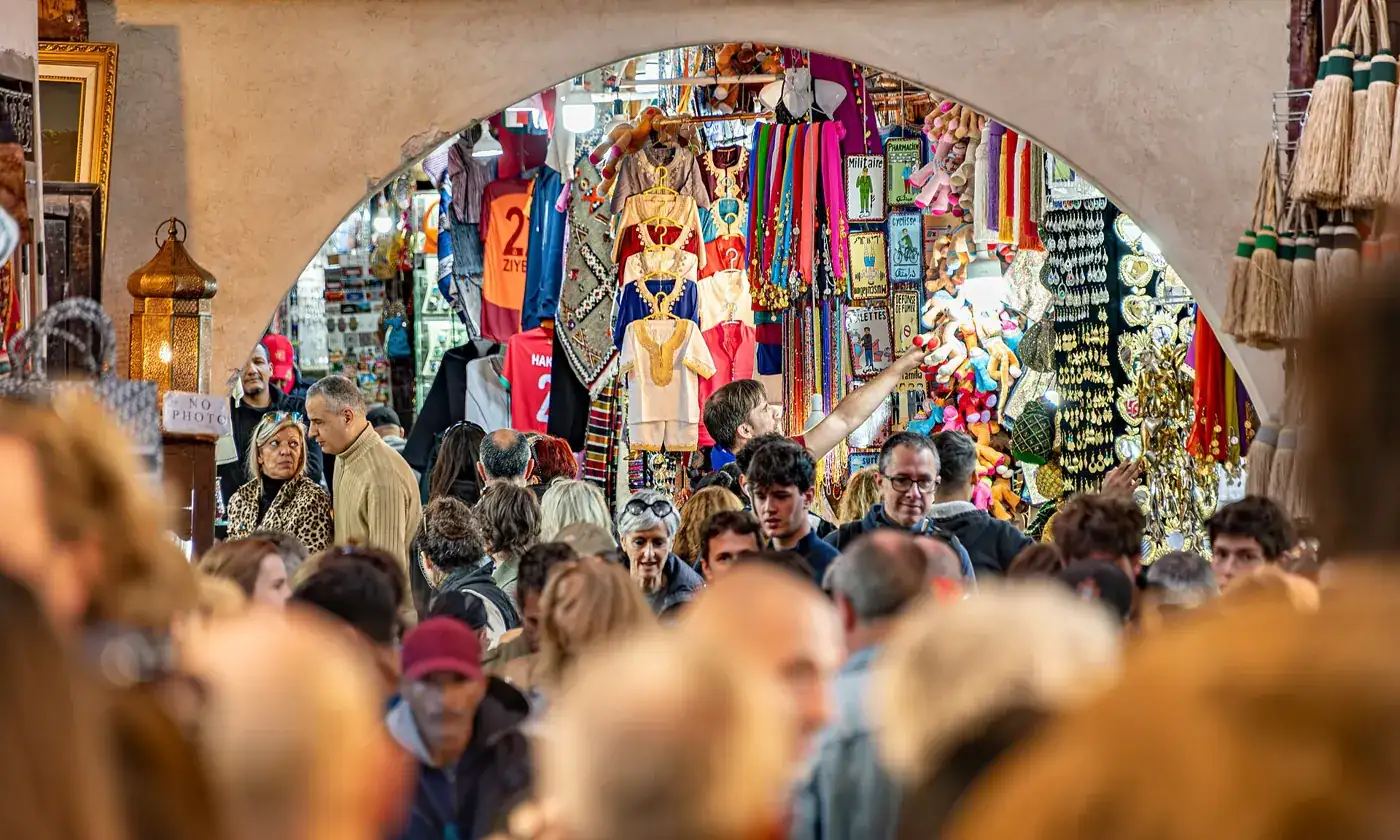
Men have an easier time, but the same idea applies. Moroccan men rarely wear shorts in town, and almost never without a shirt. Light trousers or chinos and a T-shirt or short-sleeved shirt are perfect for cities and medinas.
Knee-length shorts are fine at the beach, in resorts, on a 4x4 tour and at the camp. Leave sleeveless vests for the pool, and keep your shirt on away from the beach.
- Light trousers, chinos or linen trousers.
- T-shirts, polo shirts and short-sleeved or linen shirts.
- Knee-length shorts for the beach, activities and hot desert days.
- A cotton scarf or cheche (desert turban) for sun and sand.
- Trainers or walking shoes, and sandals with straps.
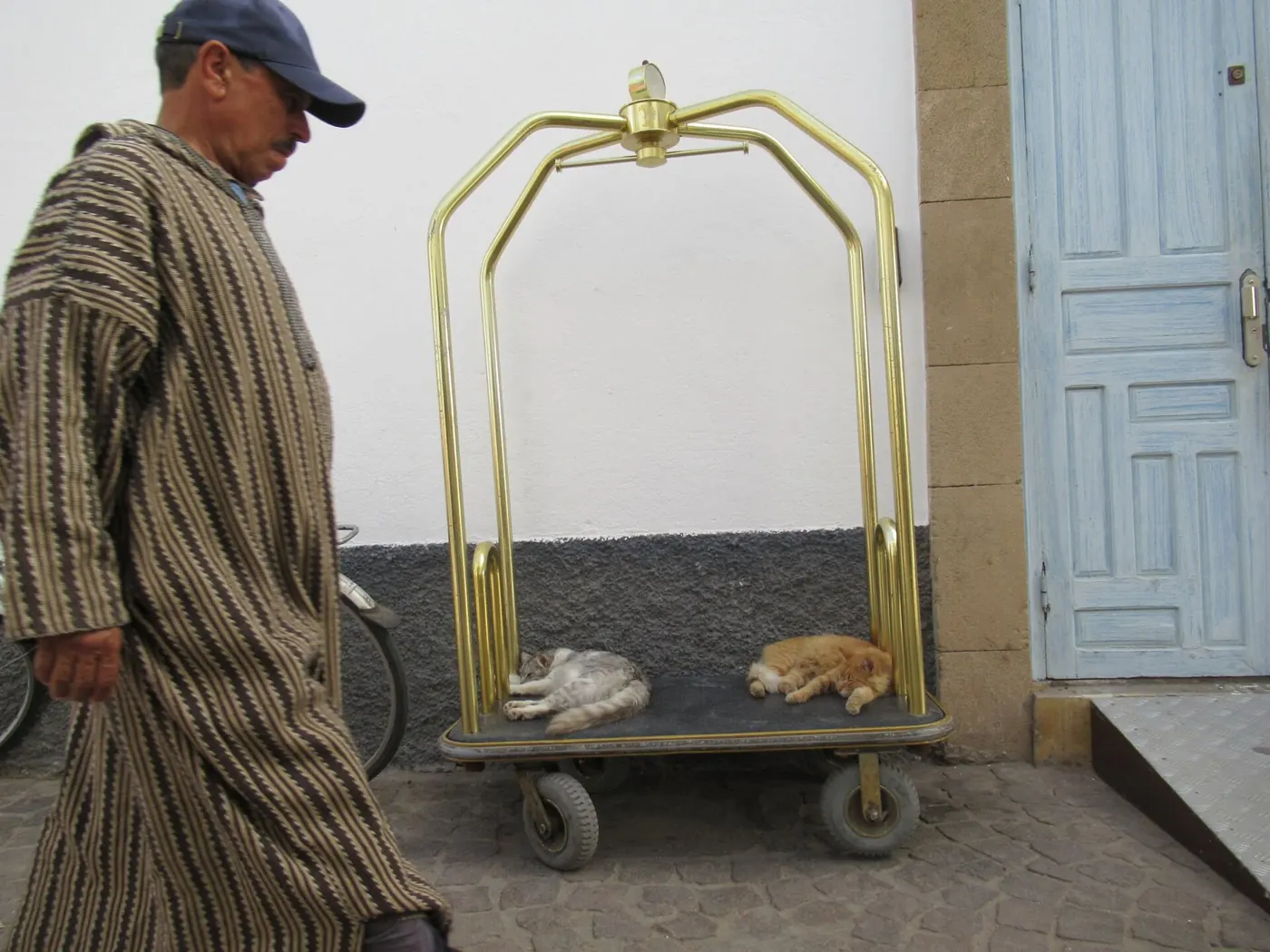
Visiting mosques and religious sites
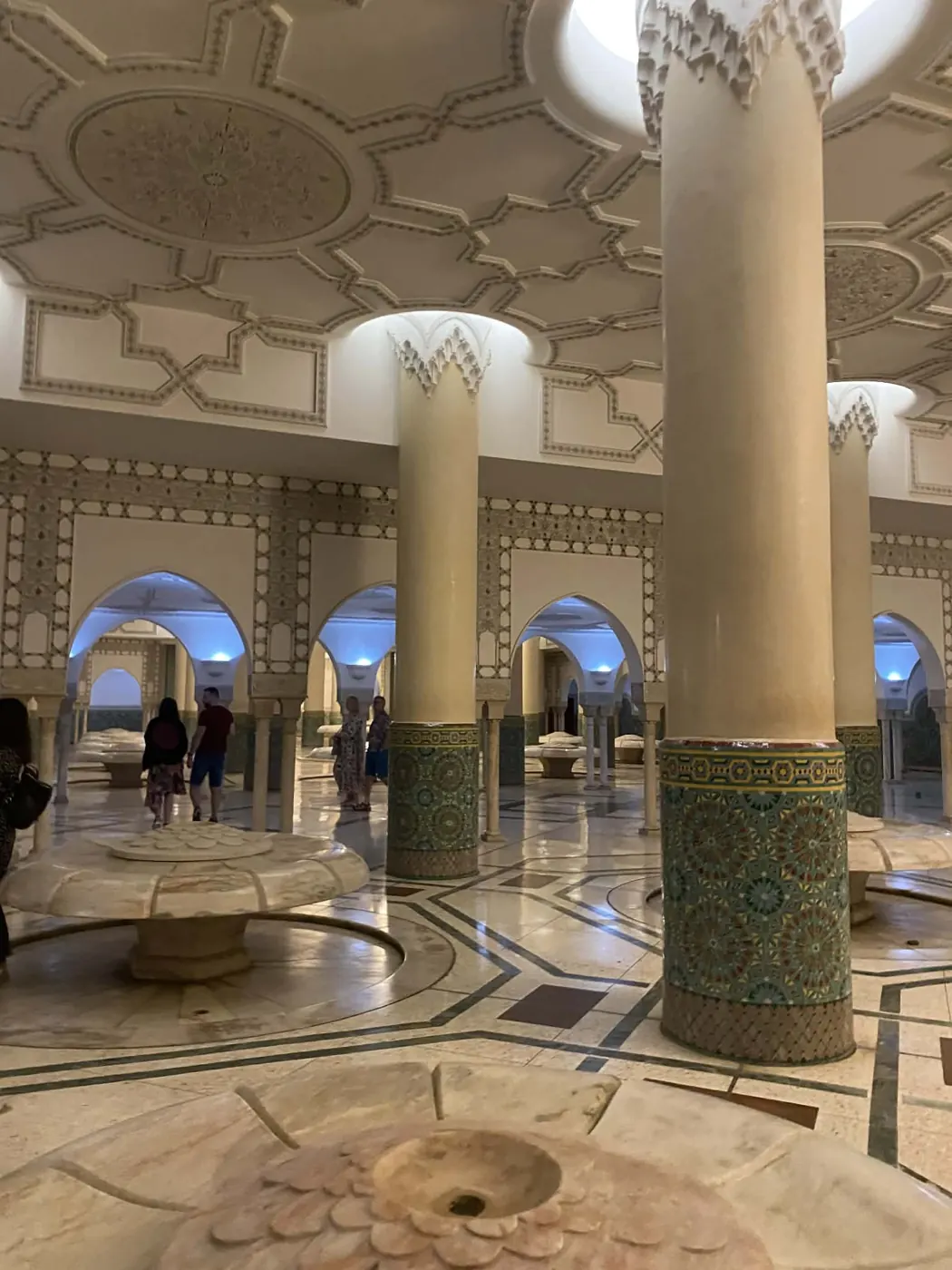
Most mosques in Morocco are open only to Muslims. The big exception is the Hassan II Mosque in Casablanca, which non-Muslim visitors can enter on a guided tour. Cover your arms and legs: long trousers or a long skirt, and sleeves past the shoulders. Women may wish to bring a scarf for their hair. You take your shoes off inside, so wear shoes that are easy to slip on.
The same modest clothes are good for madrasas, such as Ben Youssef in Marrakech and Bou Inania in Fes, for shrines and for visits to Moulay Idriss near Volubilis.
Medina tours in Marrakech and Fes
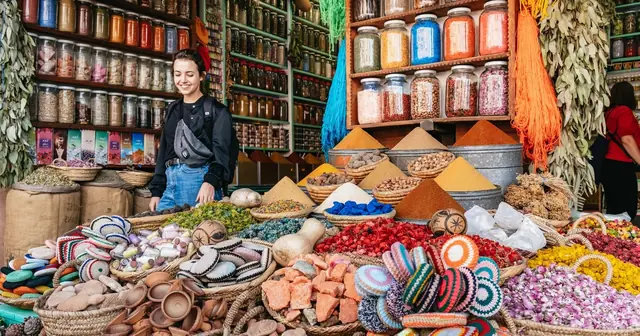
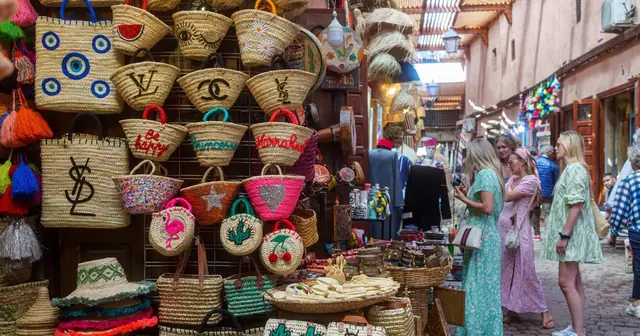
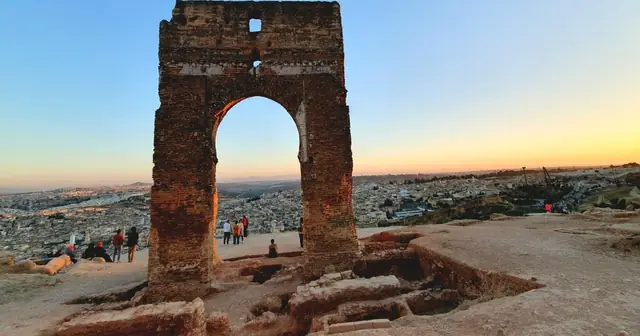
Partner links: if you book through GetYourGuide we may earn a small commission, at no extra cost to you. Tours are run by independent operators.
What to wear in the Sahara desert
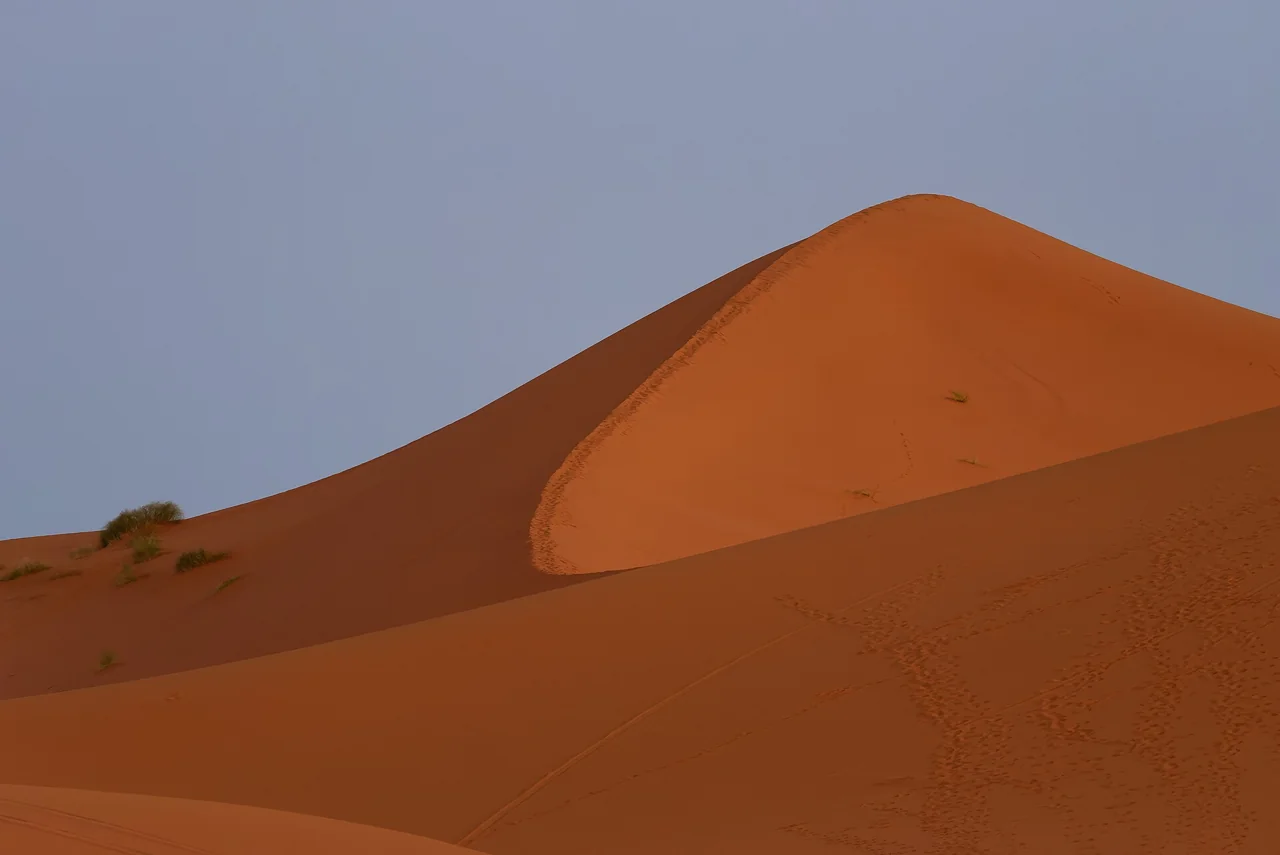
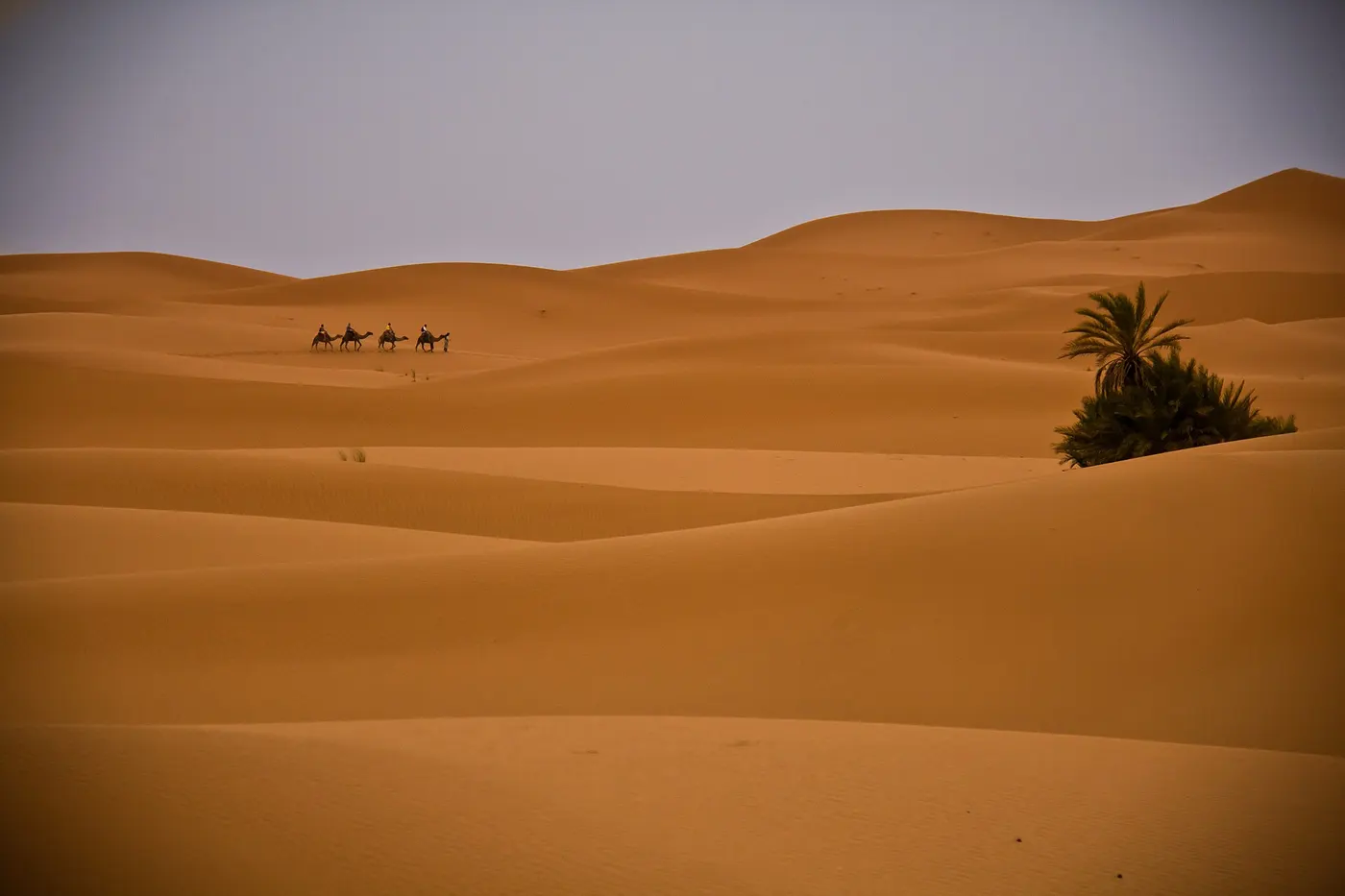
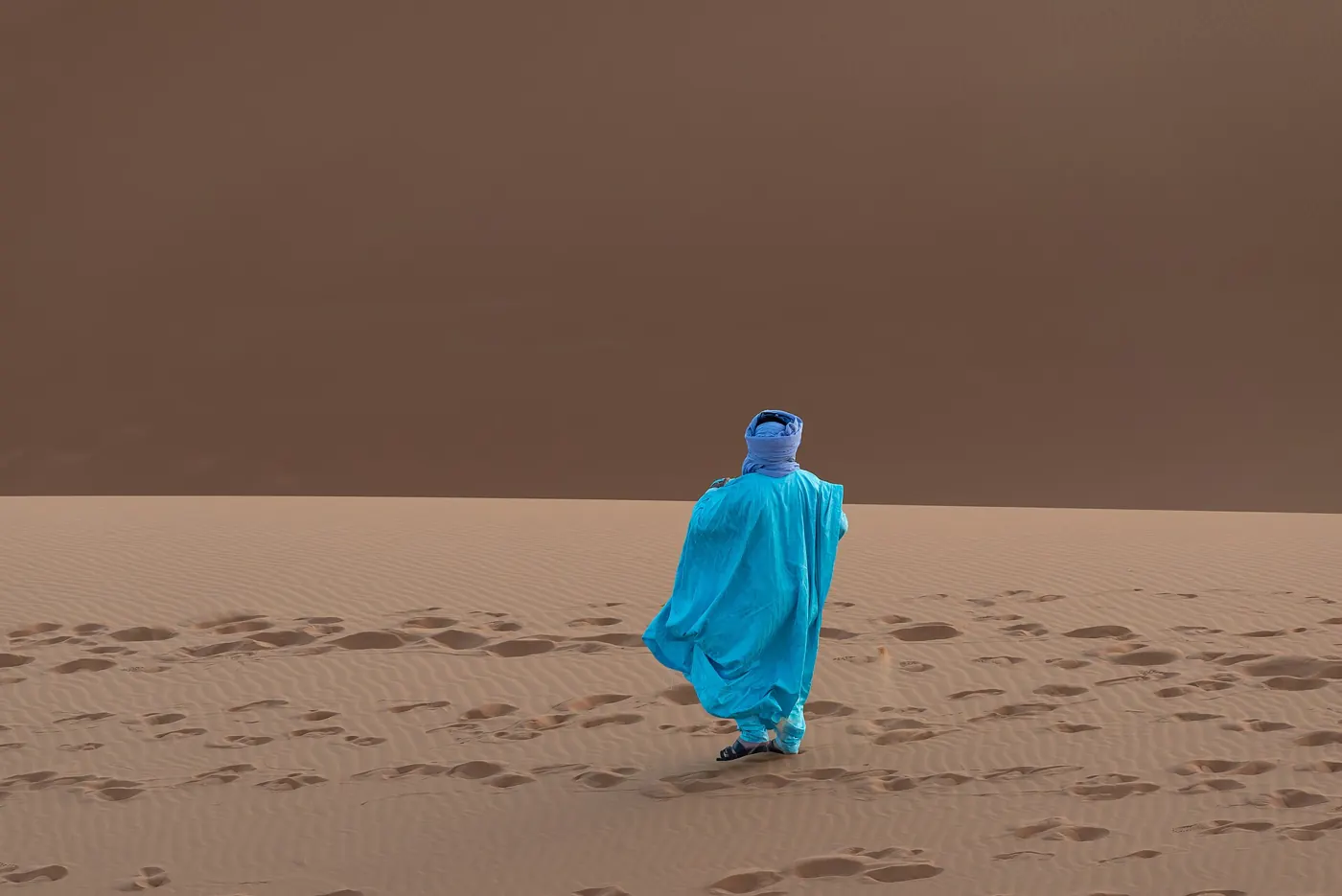
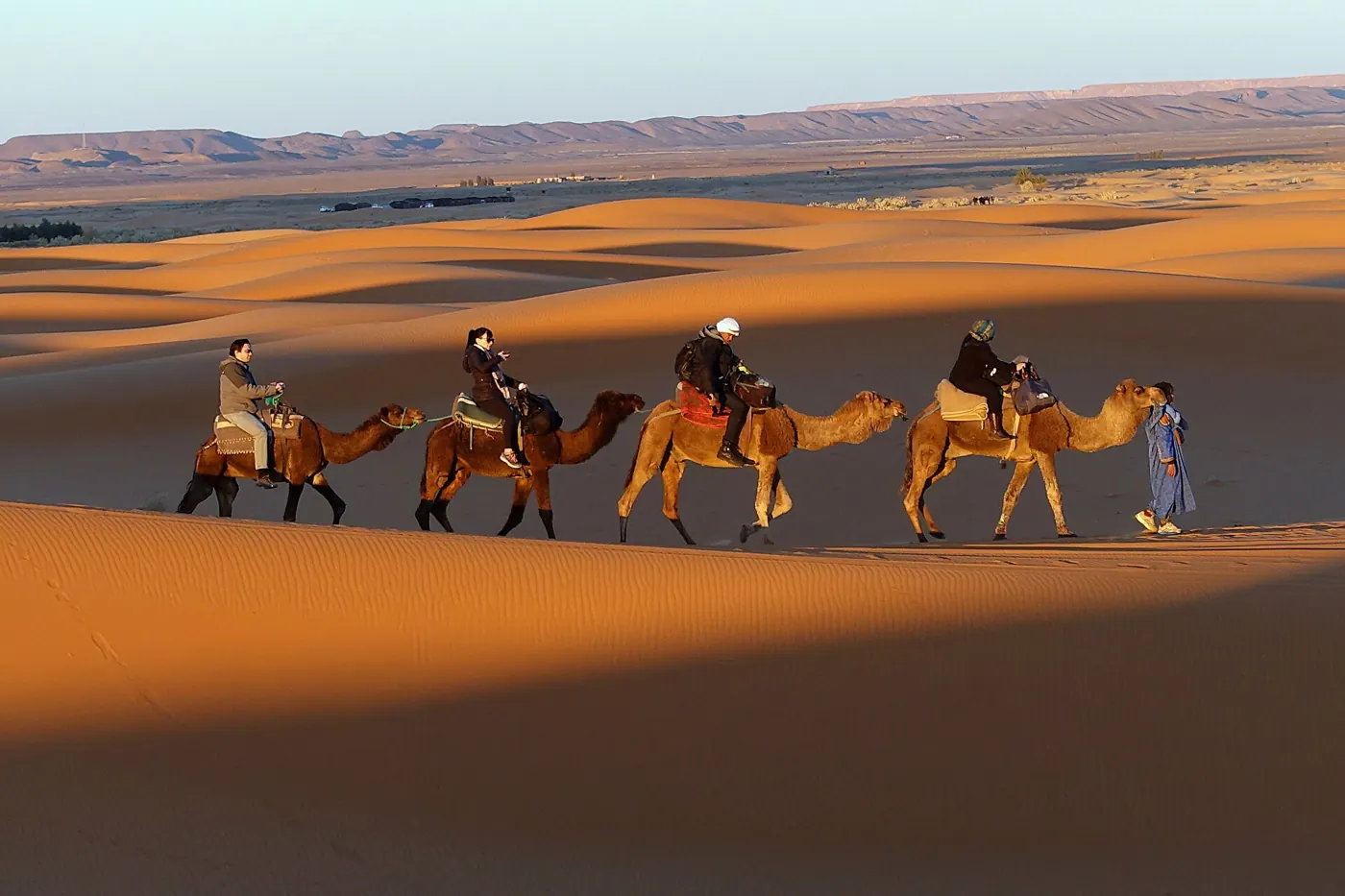
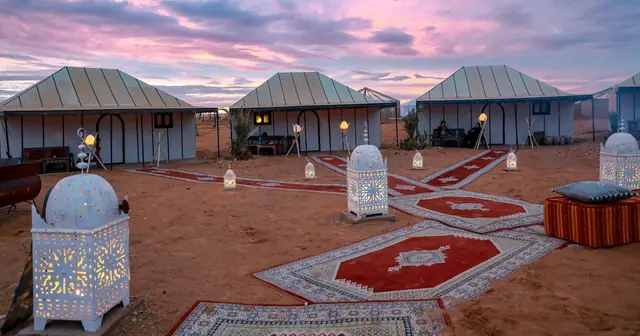
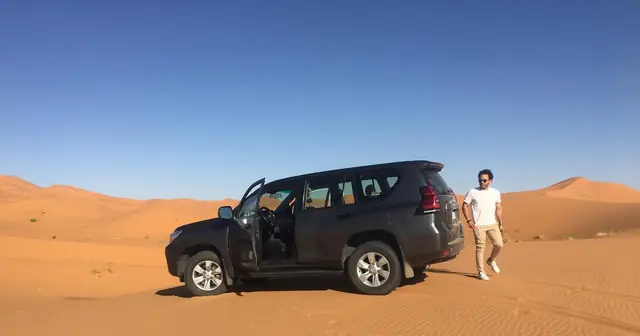
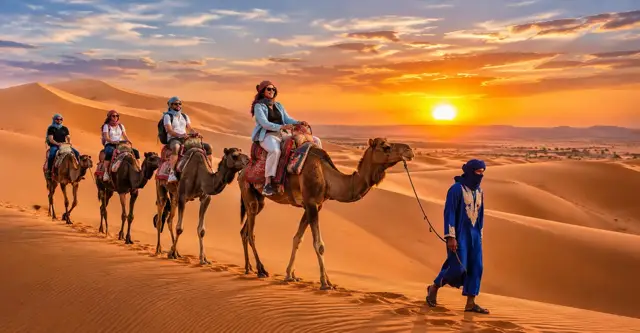
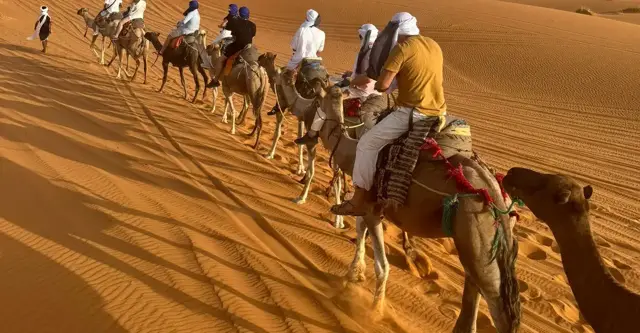
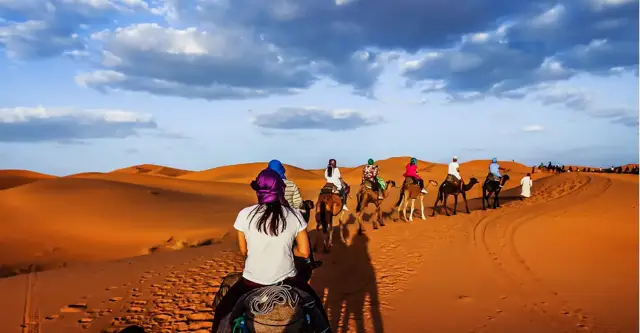
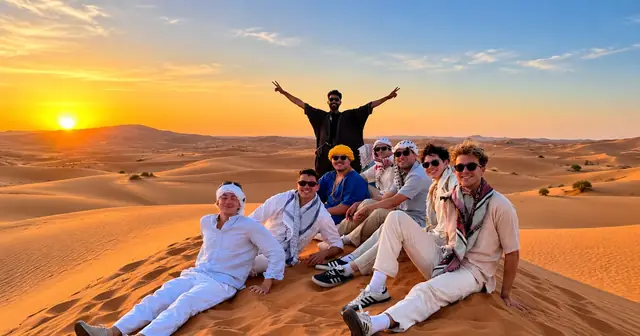
This is the part we know best. In Merzouga, the sun is strong, the sand is fine and the temperature changes a lot between afternoon and night. Dress like the Berber guides: long, loose clothes in light colours and a scarf around the head. They keep you cooler than shorts and a vest, because they block the sun and let air move.
After sunset the desert cools quickly. Even on a warm day, you will want a jumper or fleece by the fire, and from November to March a warm jacket, a hat and socks for the night and for sunrise on the dunes.
- Loose long-sleeved shirt and light trousers in pale colours.
- A cheche (Berber turban) or large cotton scarf: our team will happily show you how to tie it.
- Sunglasses, a sun hat and high-factor sun cream.
- Sandals with straps or light trainers. Barefoot is lovely on the dunes in the morning and evening, but the sand burns at midday in summer.
- A fleece or warm jacket for the evening; a beanie and gloves in winter.
- Clothes you do not mind getting sandy for sandboarding and 4x4 tours.
Things to do in Merzouga
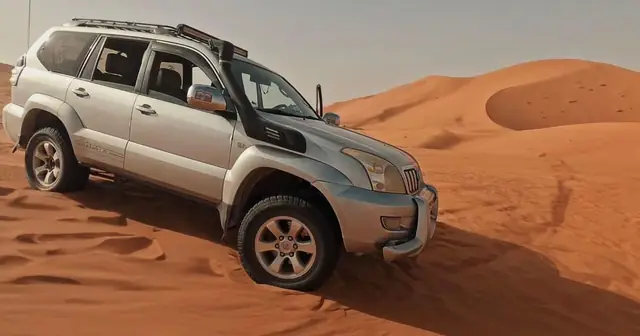
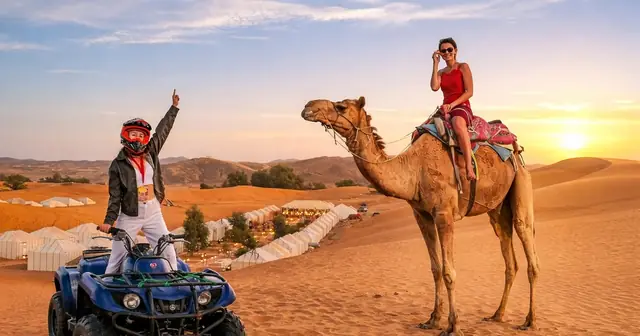
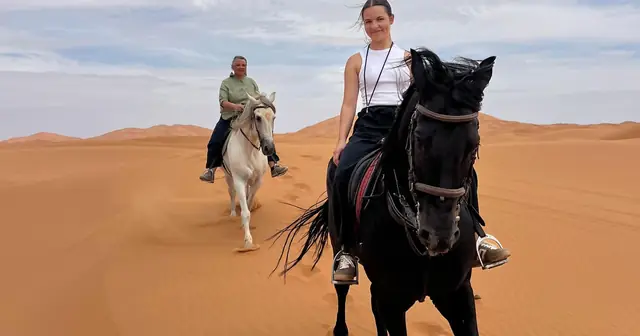
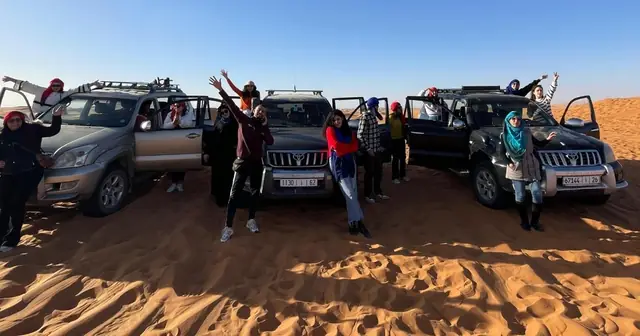
Partner links: if you book through GetYourGuide we may earn a small commission, at no extra cost to you. Tours are run by independent operators.
What to wear in Morocco, season by season
Morocco is not hot all year. Winters are cool and nights in the desert and mountains can be cold, while summers are very hot inland. Here is what to pack for each season.
| Season | Weather | What to wear |
|---|---|---|
| Winter (December–February) | Sunny days of 15–20 °C, cold nights, snow in the Atlas | Layers, a warm jacket, scarf, beanie and closed shoes |
| Spring (March–May) | Warm days, cool evenings, some wind in the desert | Light layers, a fleece, scarf for sand and sun |
| Summer (June–August) | Very hot inland and in the Sahara, milder on the coast | Loose linen and cotton, hat, sandals, a light layer for AC |
| Autumn (September–November) | Warm days, cooler nights from late October | Light clothes by day, a jumper or jacket at night |
General guide. Temperatures vary by region and altitude.
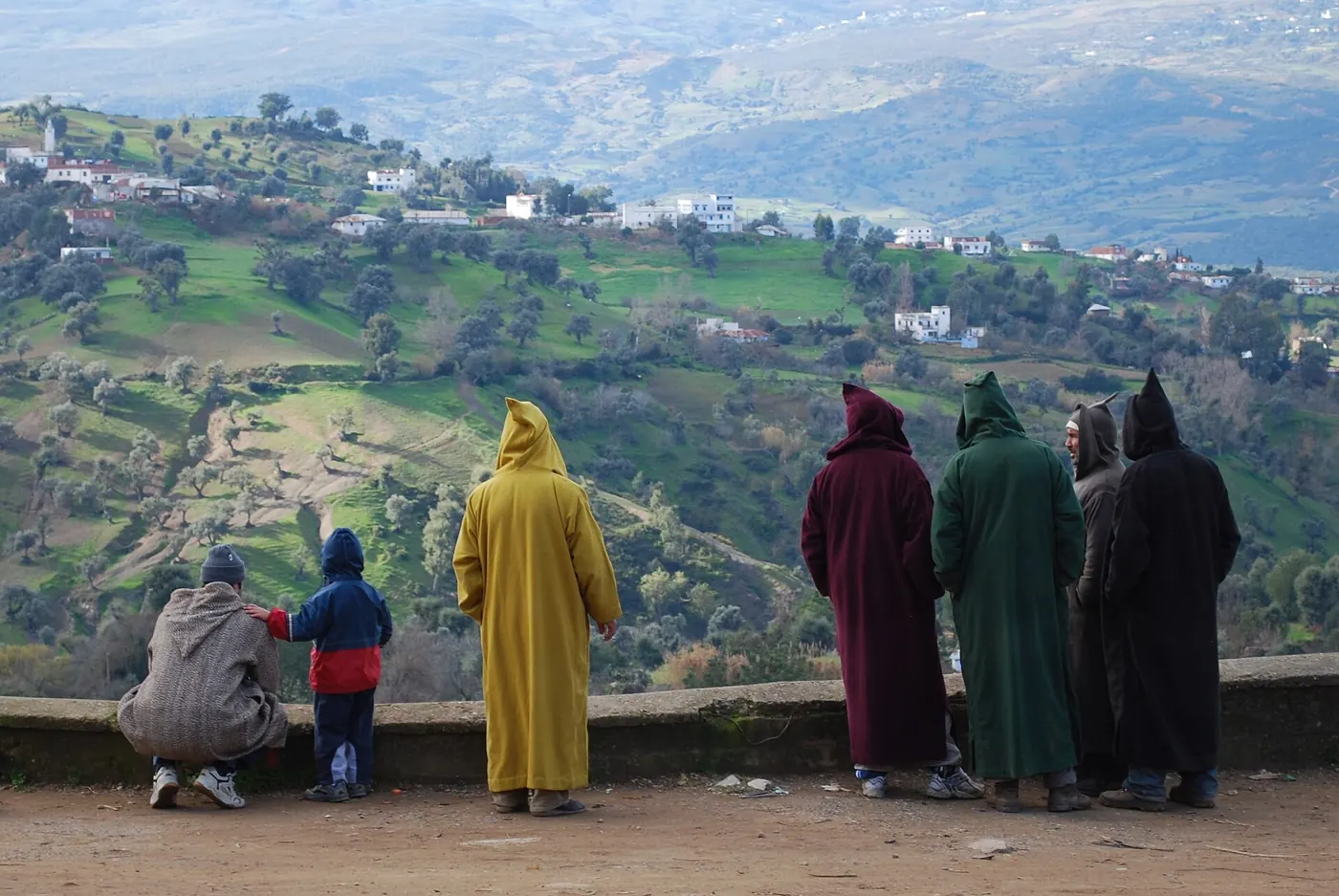
What to wear in the Atlas Mountains
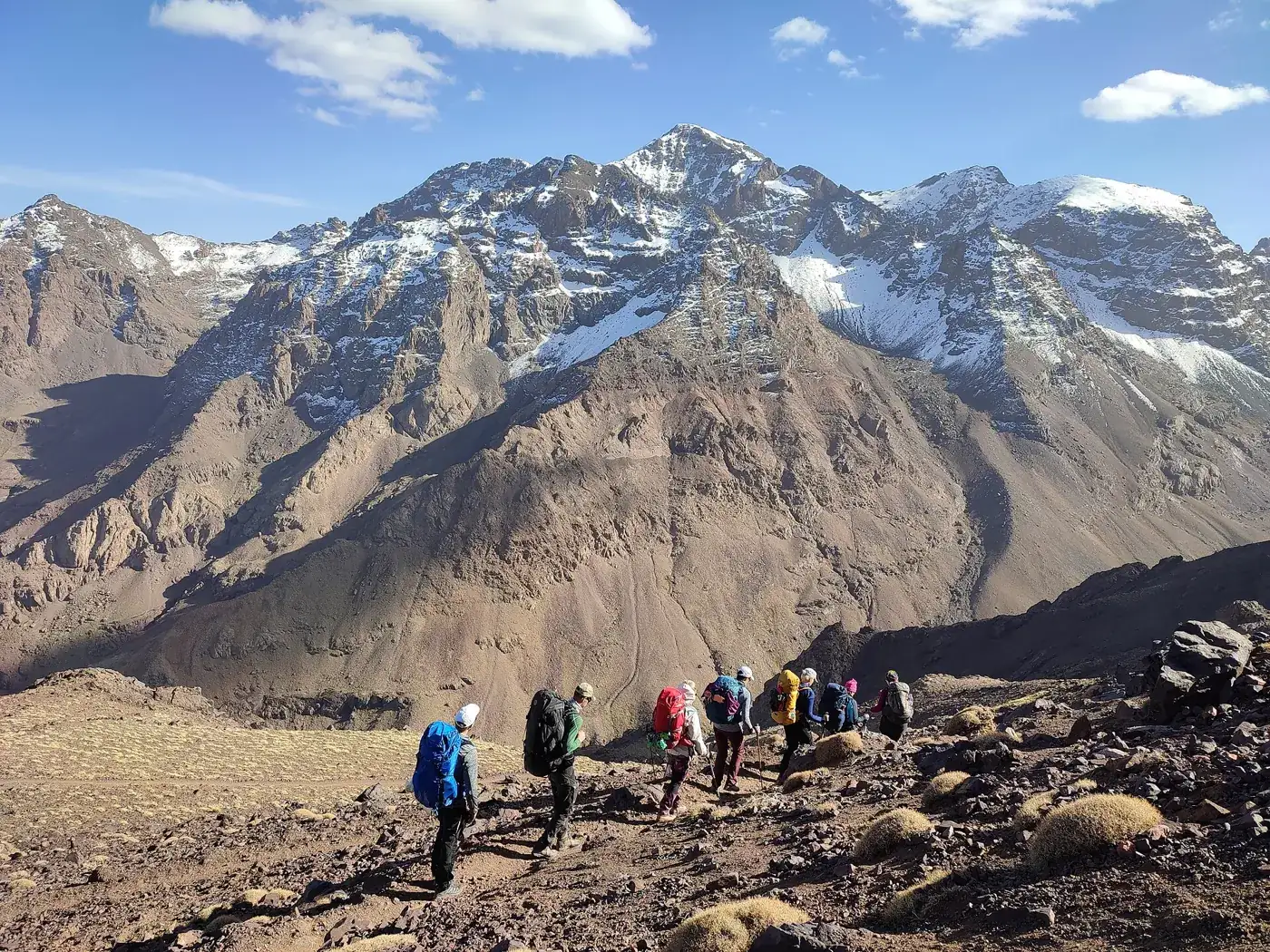
For a day trip to Imlil, the Ourika Valley or the High Atlas, wear comfortable walking shoes with a good grip and dress in layers. It can be warm in the valleys and cold and windy higher up.
From November to April, there is often snow above about 2,000 metres. If you plan a longer hike or Toubkal, bring proper hiking boots, a warm jacket, a hat and gloves, and a waterproof layer. In Berber villages, keep shoulders and knees covered.
What to wear at the beach and the pool
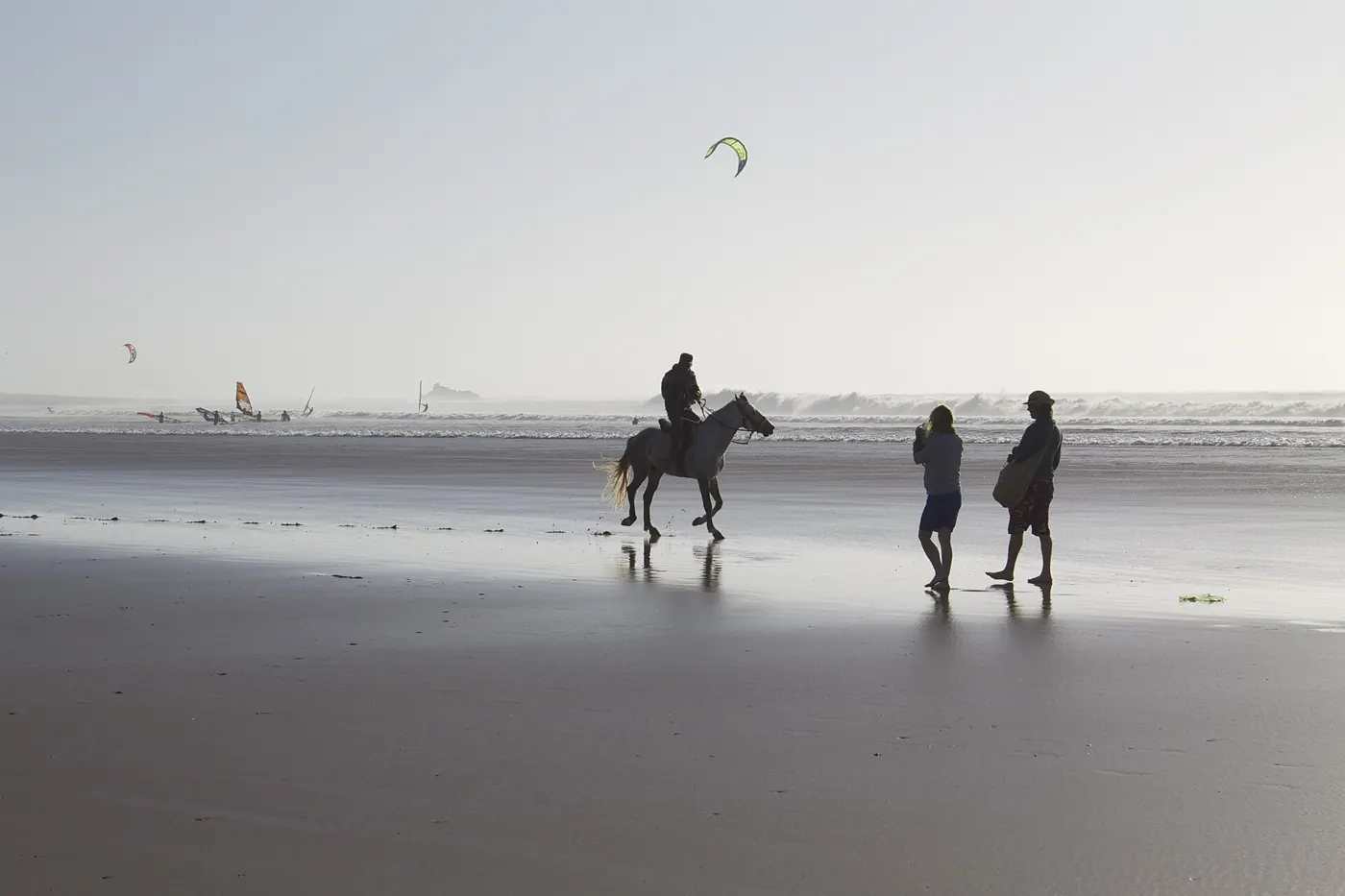
On the beaches of Agadir, Essaouira and Taghazout, and at riad and hotel pools, normal swimwear is fine. Topless sunbathing is not acceptable. When you leave the beach, put on a T-shirt and shorts or a cover-up before you walk into town or into a café.
Essaouira is often windy, even in summer, so bring a light jacket for the evening. Local beaches away from resorts are more traditional, and many Moroccan women swim in long clothes there.
In a hammam, people usually keep their underwear or swimwear bottoms on. Bring a spare pair and a pair of flip-flops.
What to wear during Ramadan
During Ramadan, many Moroccans fast from dawn to sunset, and the mood is more religious. There is no special dress code for visitors, but it is kind to dress a little more modestly than usual, especially in medinas and villages, and to be discreet about eating and drinking in public during the day.
Ramadan moves about 11 days earlier each year. In 2027, it is expected to start around 8 February; check the dates for your own trip.
Shoes, and what to buy in Morocco
Medina lanes are uneven, sometimes slippery and shared with carts and donkeys, so comfortable shoes with a good sole are the most important thing you pack. Light trainers or walking sandals with straps are ideal. Leave high heels at home.
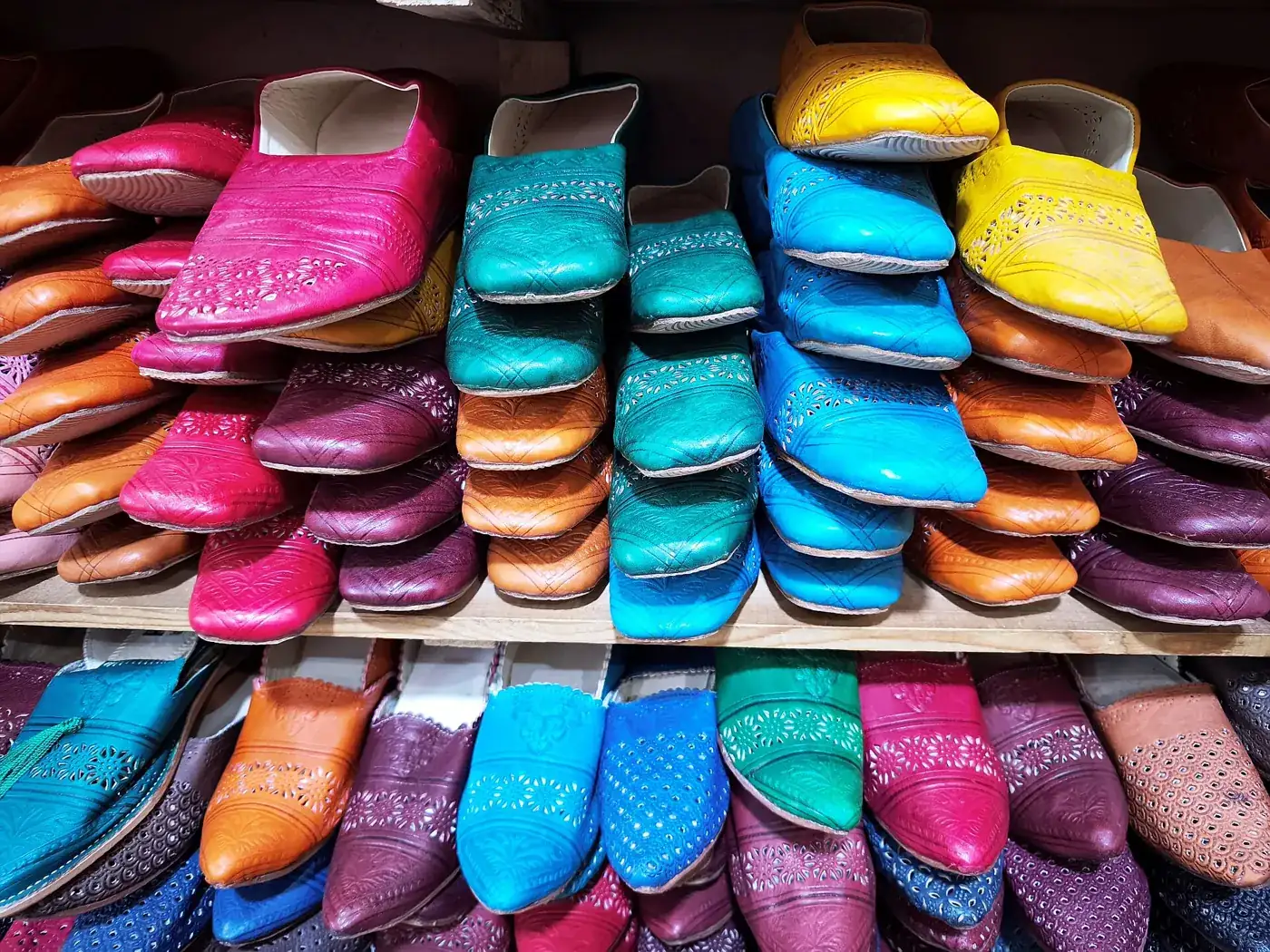
You can also buy clothes on the way. Babouches (leather slippers), a cotton scarf, a light djellaba or a kaftan are lovely souvenirs, and you can buy a cheche in Merzouga before your camel ride. Bargain calmly and with a smile; the first price is rarely the final one.
A simple packing list for Morocco
- 2–3 pairs of loose, light trousers or long skirts.
- 4–5 T-shirts or tops with sleeves, and one or two long-sleeved shirts.
- A dress or outfit for a nice dinner in a riad or restaurant.
- A light scarf (or two) and a sun hat.
- A fleece or jumper, plus a warm jacket from November to March.
- Comfortable walking shoes and strapped sandals; flip-flops for the hammam and pool.
- Swimwear and a cover-up for the beach and pools.
- Sunglasses, sun cream, lip balm and a small daypack.
Desert tours to Merzouga
If you are planning a desert trip, these hand-picked tours go to Merzouga and the dunes of Erg Chebbi: a 3-day and a 4-day tour from Marrakech, a 2-day tour from Fes and a 3-day tour from Fes to Marrakech.
Pack a small overnight bag with a warm layer, a scarf and your sunglasses; the big suitcase can usually stay in the vehicle.
Hand-picked desert tours to Merzouga
Partner links: if you book through GetYourGuide we may earn a small commission, at no extra cost to you. Tours are run by independent operators.
Dress code at our desert camp
At Merzouga Glamping there is no dress code at all: wear what makes you comfortable. Our private ensuite tents have heating in winter and air conditioning in summer, running day and night, and dinner is served in our indoor restaurant, so a jumper is enough for the evening. A sunset camel ride and sandboarding are included.
Stays start from €70 per person per night, and a single tent is €85. Our camp can be reached by normal car. After we confirm availability, a 20% deposit is paid in euros by PayPal; the balance is paid at the camp by card in dirhams, or in cash in euros or dirhams.
- What a night at a luxury desert camp is really like
- Can you reach a Merzouga desert camp by normal car?
- See our tents
- See all activities
Not sure what to bring for your dates? Message us and we will tell you what the weather is like at the camp.
Ask about your datesNotes and photo credits
This guide is based on our own experience hosting guests in Merzouga and travelling around Morocco. Ramadan dates are estimates and can change. Tour listings were checked on GetYourGuide on 22 November 2026; prices and inclusions can change.
- Djellabas in Chefchaouen photo · Honza Chovanecek · Public domain
- Fes medina photo · Michal Osmenda · CC BY-SA 2.0
- Marrakech souk photo · Jorge Franganillo · CC BY 2.0
- Djellaba photo · Csakeba · CC BY-SA 4.0
- Hassan II Mosque photo · Lou-Anne Brisebois · CC0
- Berber guide photo · Mustang Joe · CC0
- Camel caravan photo · Fbrandao.1963 · CC BY-SA 4.0
- Winter djellabas photo · Honza Chovanecek · Public domain
- Toubkal hikers photo · Kurinurm · CC BY-SA 4.0
- Essaouira beach photo · Patrick Nouhailler · CC BY-SA 2.0
- Babouches photo · Simo.Albo80 · CC BY-SA 4.0
Frequently asked questions
What should I wear in Morocco as a woman?+
Loose, light clothes that cover your shoulders and knees: wide trousers, maxi or midi skirts and dresses, and tops with sleeves. Carry a light scarf. You do not need to cover your hair, except in a mosque.
Can I wear shorts in Morocco?+
Yes, at the beach, in resorts, at the pool and on desert activities. In medinas, villages and religious sites, long trousers or a long skirt are more respectful and attract less attention.
Do women need to cover their hair in Morocco?+
No. Tourists do not need to wear a headscarf. Women may wish to cover their hair when visiting the Hassan II Mosque, and a scarf is useful against sun and sand in the desert.
What should I wear in the Sahara desert?+
Long, loose clothes in light colours, a scarf or cheche, sunglasses and sandals or light trainers by day, and a fleece or warm jacket for the evening. Long trousers are best for a camel ride.
Can I wear jeans in Morocco?+
Yes. Jeans are common in Moroccan cities. They are hot in summer and heavy in the desert, so light cotton or linen trousers are often more comfortable.
Is there a dress code at Merzouga Glamping?+
No. Wear what makes you comfortable. Our tents are heated in winter and air-conditioned in summer, and we recommend a warm layer for evenings by the fire.
Plan the rest of your desert stay
Stay with us in Merzouga
Private ensuite tents with air conditioning and heating, dinner and breakfast, the sunset camel ride and sandboarding — all included.
Request availability